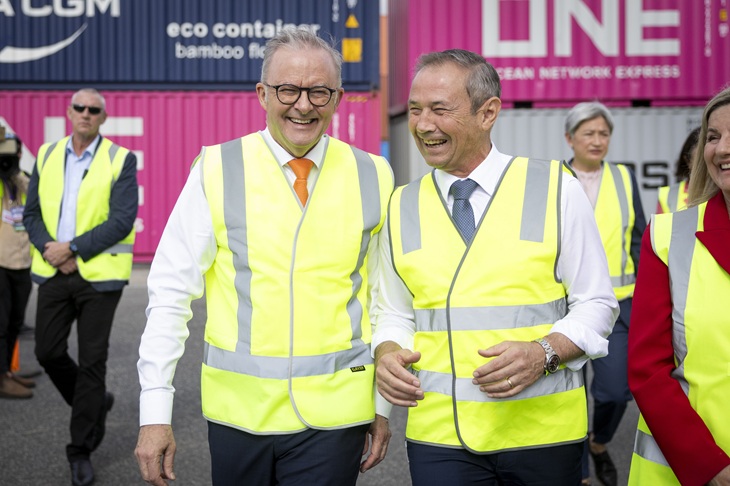
The Albanese government appears to have frustrated one of its state Labor allies. Western Australia Energy Minister, Amber-Jade Sanderson, has expressed concerns about the impracticality of the current fuel stockpile logistics.
Calling the system ‘not optimal’, the minister added:
‘What we found with the stock obligation is that not every fuel supplier had their store in Western Australia. We had the majority with BP, they had their storage in Western Australia, but other operators, Viva and Ampol for example, they do not keep their stock in Western Australia – it’s in Queensland.’
With a nation the size of Australia, and with Western Australia geographically isolated from other major cities (and fuel stockpiles), there is a very real concern about what the mining centre of Australia can do to protect itself from a future fuel shortage.
As bad as things have been in the past few months, few would dare claim this is the extent of the risk. If anything, most believe we have only tested the edge of fuel insecurity on the back of an Iranian crisis.
At the beginning of April, Western Australia decided to enact emergency powers. At the time, the state government raised significant concerns about visibility across complex, largely privately-operated, supply chains and where the weaknesses might be. The Premier, Roger Cook, encouraged the state to remain calm.
‘Let me be very clear, we are not declaring a state of emergency. We are using the emergency powers under the Fuel, Energy, and Power Resources Act. This is not what people experienced under Covid. It’s a completely different Act of Parliament.’
Whether or not it is valid to use emergency powers without an actual emergency, or if there was an emergency and the government didn’t want to acknowledge it, remains up for debate. The point is, the government used these powers to determine if an emergency situation was brewing. What they learned has obviously concerned them enough to justify the news this week about the state’s intention to set up its own domestic reserves for diesel.
When it comes to a fuel emergency, there are several layers.
States can do what Western Australia has done, and use emergency powers to achieve transparency and oversight. Then there is the half-way situation we’re currently in federally, where the Prime Minister is intervening with, but not commanding, fuel markets. Sales and distribution remain commercial (under scrutiny). It would take the declaration of a liquid fuel emergency (from legislation created in 1984) for Commonwealth powers to start directing those sales. This is what would be required to begin giving preference to essential services and enact rationing. These powers have never been used after they were drafted in response to the 1970s fuel crisis.
Did we come close this time around? Maybe. The sigh of relief being heard around the country is not strictly from the efforts of the Prime Minister to secure new deals in Asia, it has been from America bombing Iran to the negotiating table in Pakistan. Albanese cannot make deals for oil that doesn’t exist, and our Asian partners are getting theirs from the Strait of Hormuz. If the situation were to collapse, and the war endure for months, then Australia would largely be in the same position it was in early April.
It is perhaps thanks to the swift and ruthless action of state government that Western Australia is doing comparably well.
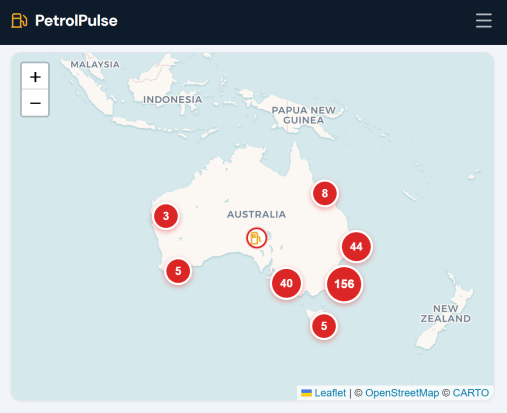
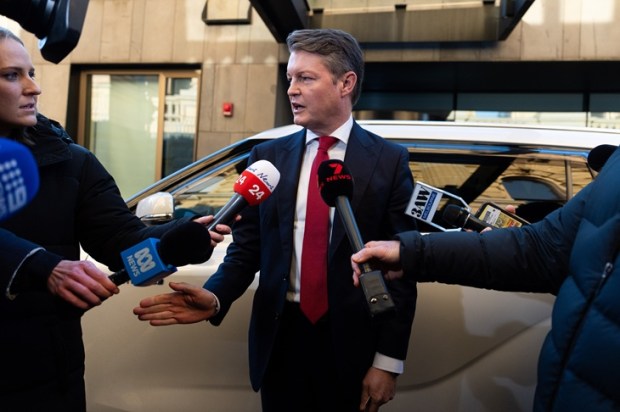
Speaking to the media, their state Energy Minister explained: ‘The first point of failure of the supply chain was the independent spot market, that a lot of those agricultural operators and smaller mining operators rely on.’
Their solution appears to be the creation of a new fuel stockpile in Western Australia that would be capable of holding millions of litres of diesel. Keep in mind, Western Australia accounts for a quarter of our diesel consumption.
This stockpile ‘would allow us to release fuel onto that spot market as required, if we see another spike in demand and that spot market evaporates. It will also provide extra resilience in regional and remote areas, in particular, our remote communities’.
In order to achieve what would be a significant construction, the state government revealed they had been in talks with the mining industry, who obviously have a vested interest in the fuel security of the region.
‘I expect as those discussions come to a conclusion, we’ll be able to be transparent about those volumes, but we’re in discussions currently at the moment.’
It was also explained by the minister that this additional stockpile ‘would be solely for Western Australians and be directed at the discretion of the state government to areas that need it most’ this would be, for example ‘agricultural areas at the end of those supply chains, or remote communities that still rely significantly on diesel’.
There is nothing preventing a state government from making additional fuel stockpiles. Queensland, under Liberal Premier David Crisafulli, has made incredible progress on the opening up and pursuit of new oil in the Taroom Trough which, if successful, would give Queensland fuel security without the need for stockpiles reliant on Middle Eastern and Asian supply lines. Queensland may even end up in the position of selling its domestic reserves to neighbouring states.
Western Australia remains focused on diesel, as it is critical for the mining industry, agricultural activities, and remote areas that survive on diesel generators.
The minister was quick to say that these state-based plans will not interfere with any action the federal government is currently undertaking to shore-up contracts with nations such as Singapore.
‘It is a requirement for states to receive their fair share [of fuel]. What we have done as a state is move quicker than any other state to establish the architecture we need to understand the supply chain, but also be able to move the fuel from A to B where there are complex situations.’
For his part, Federal Energy Minister Chris Bowen has come out today effectively encouraging the other states to follow Western Australia’s lead and start creating their own reserves.
‘Certainly, where a state takes positive action, they’ll have our full support … I think it’s appropriate they have ensured that it’s additional supply. So it’s not taking off another state. They have sought and received assurances it’s additional supply to Australia, helping them manage. Four million litres is not a huge amount, but it’s material and useful,’ said Bowen.
Having the states come to the rescue is probably a best-case scenario for the Energy Minister.
The question is not whether the states will find a way to store a small buffer of fuel (which is an extension, not a solution), but whether Bowen will now make the required legislative changes to allow domestic exploration and economic refining unencumbered by excessive environmental and Indigenous protection policy.