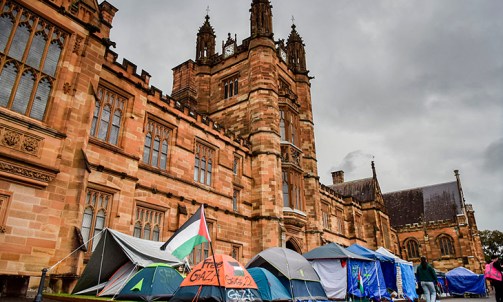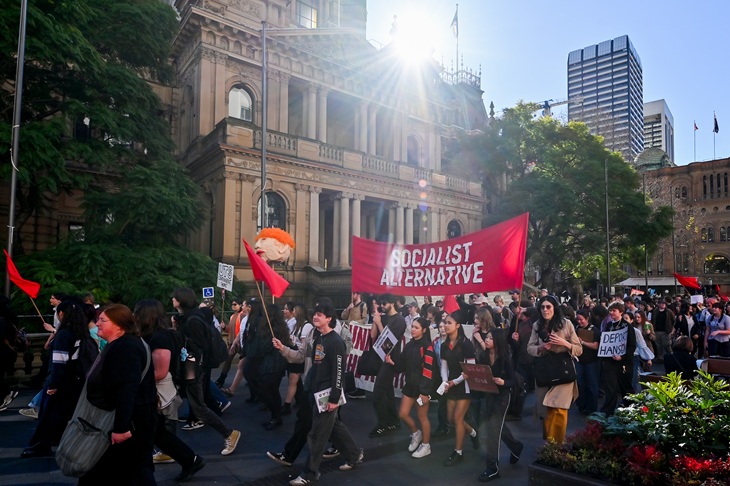
Imagine the following scenario: you are a conservative of some sort (church group or conservative political party) and you have rented a hall for the purpose of a meeting. Soon after the meeting starts a bunch of thugs storm in. They harass attendees, then march to the front and then commandeer the microphone. Pretty soon, it’s clear that the meeting cannot continue and the attendees are forced to leave.
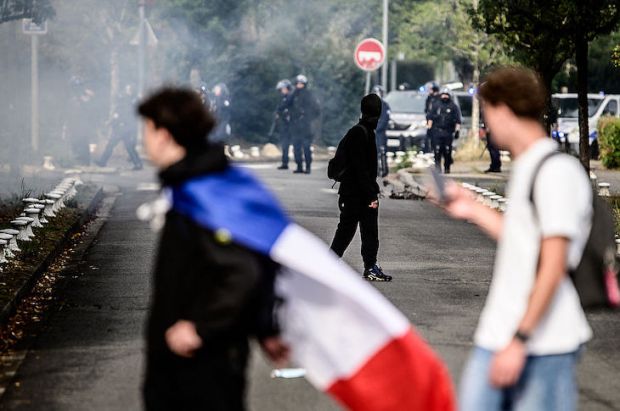
This sparks two questions: firstly, who are the thugs that broke up this lawful gathering? Are they Hitler’s brownshirts, or are they Antifa? The answer is of course very easy to answer, based on how they are dressed. If they are wearing snappy brown uniforms, they are the ‘brown shirts’, but if they are dressed in black with masks on their faces, they are Antifa.
The second question, which is much more difficult to answer, is why the actions of the ‘far left’ and ‘far right’ are at times indistinguishable?
Left and right are by definition opposites, so why is the behaviour not also opposite?
This is a question that many, mostly conservatives, are asking, not only in the light of the thought experiment named above, but also in the light of several phenomena that have been observed in recent times:
- The unwillingness of the feminist movement to criticise the culture that most clearly and obviously inhibits women’s rights, namely Islam.
- The unwillingness of the political left in general to criticise any aspect of Islam, no matter how obvious or egregious. In recent weeks we saw a Muslim drive a truck into a Pride parade in Germany, killing one person and injuring many others. I have not seen a single criticism of Islam as a result of this. Rather, astonishingly and bizarrely, many on the left have somehow managed to use this to criticise ‘the right.’
- The unwillingness of those who have the most to fear from Islam (anyone of any sexual orientation other than heterosexual) to criticise Islam – ‘Queers for Palestine’ and so on.
Various people have attempted to use the left/right model to account for this, and I’ve seen two versions of it. In one, the spectrum is considered as a circle. Beginning at one extreme, we move around the circle. Initially, the model works as we are moving away from one extreme until we get to 180°. But then, we begin moving back to where we started, the idea being that extreme left and extreme right are right next to each other.
The other version is to recognise the spectrum as a horseshoe. It’s the same in principle as the circular model except the two sides never actually join.
The problem with both of these models is that they do not recognise that the terms ‘left’ and ‘right’ imply linearity. That is, in popular political discourse we hear of a person or a party moving ‘to the left’ or ‘to the right’. We also hear of degrees of leftness or rightness – for example, ‘extreme left’ or ‘extreme right,’ or ‘soft left’ or ‘centre/right’ or ‘centrist’ and so on. That is, the left/right model implies a number line with a measurable metric of some sort.
For example, if we considered a Gaussian distribution in which the metric was height, on the far left we would have very short people and on the far right we would have very tall people – two groups that are clearly opposite. One group goes through life being the butt of short jokes and the other group goes through life complaining about legroom on planes. There is no crossover or common ground at all.
So with the left/right model of politics outlined above, what is this metric?
There clearly isn’t one. If there was we wouldn’t arrive at the phenomenon of the behaviour of the extreme left and extreme right being identical.
Thus the traditional imagining of the political spectrum in terms of left and right no longer applies. An entirely new model is required. This ought to come as no surprise to us if we consider the origin of the terms left and right. It was nothing to do with a measurable metric as described above but simply the side of the chamber on which French politicians sat in the years leading up to the French Revolution.
In other words, it was a qualitative distinction, not a quantitative distinction as implied above. That is, to use scientific language, this is not the first time in history where a model has proved inadequate to explain observed phenomena.
What model, then, can we use? Is it possible to construct a model that adequately explains the qualitative nuances between different political parties, using a metric of some sort?
I believe there is, and the metric that I propose to use is degree of government control. We may speak of those that want the least government control as being on the far left and those that want the most government control as being on the far right. The test of the model is whether groups that are located in a similar location behave in a similar manner. Let’s have a look at it.
Let’s now imagine our number line. On the far left, essentially at zero, we have anarchists. They essentially want no government at all. I have no idea how they imagine that society could function, but these people appear to be starry-eyed idealists without a clue.
Next in line we have libertarians, in Australia the Liberal Democratic Party and so on. These people recognise the need to have a government to run essential services but seek to minimise government control in private lives. These people are strong supporters of free speech but are generally very socially liberal. The free-speech absolutism of this group often has them marching with terrorist groups, not because they are terrorists themselves, or supporters of it, but they believe that terrorists and terrorist sympathisers ought to be free to publicise their views.
Moving to the right on our spectrum the next group would be traditional conservatives. In the Australian context this will be One Nation, and overseas it will be reform or MAGA Republicans. This group will be the most natural home of practising Christians, and will comprise people who still strongly believe in free speech and individual liberties, but are socially conservative.
The next group, implying increasing government control, are groups like the Australian Liberal Party and British Conservative Party – groups who used to belong in the previous category (under leaders like Margaret Thatcher) but have now steadily adopted more authoritative stances, limiting free speech and individual liberties. A pleasant exception to this rule is the current leader of the British Conservatives – Kemi Badenoch, who seems to be moving the party in a more conservative direction.
Now as we move towards the right of our spectrum the next group would include mainstream socialist parties – the ALP, the British Labour Party, the DNC, and so on. These people now wish to exert control over social media platforms and the media, while still claiming to believe in free-speech. They do, however, still support the concept of democracy, at least in theory.
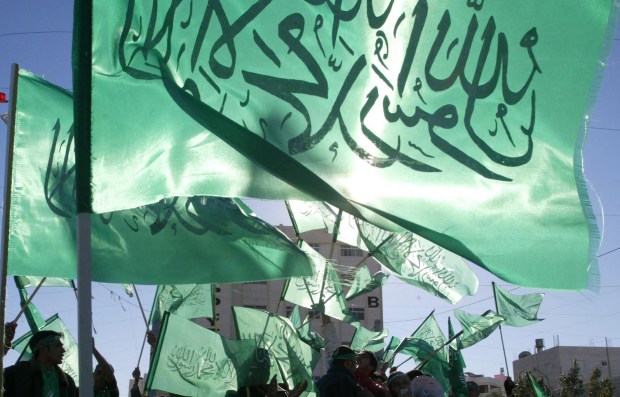
Finally, we move to the extreme right – groups that wish to exert complete control over every aspect of our life. This includes fascists, communists, and Islamists. Each of these groups wants to rigidly control all aspects of the media and our lives, and of course democracy and elections become a thing of the past. That is, these are totalitarian states.
Of course these groups all have different agendas in terms of what they wish to do with that government control, but the mechanism, nonetheless, is the same. National Socialists want to breed Aryan supermen, with the active or passive elimination of Untermensch (subhumans). Communists want a society where everyone works not for their own benefit, but for those of the anointed leaders. And the Islamists want a caliphate where the entire world is under sharia.
The other thing that these three groups have in common is that they hate Christians, and this requires some examination.
Of the groups named above, the one that is the most natural fit for Christians is the third one – conservatives. These people recognise the heritage of our Western culture based upon the individual liberties as championed by the Enlightenment, whilst still acknowledging the necessity of government.
This then explains why socialists refuse to criticise Muslims. They are birds of a feather. We saw this during the Iran Revolution in 1979. The socialists were on the side of the Muslims, little realising that they were nothing more than useful idiots.
So far so good, but how do we explain ‘Queers for Palestine?’ How do we explain the propensity of the left to promote the very people who want to kill them – as happened in Iran in 1979, where the socialists that helped the Islamists get into power were summarily dispensed with. To get an answer to this we turn to Dietrich Bonhoeffer.
Bonhoeffer was the German pastor whose criticism of the Nazis saw him jailed and eventually executed. While he was in jail, he had cause to consider the question of how the entire population had given themselves over to a despotic madman, doing everything he said and even naming him the Führer (the guide). What happened, he wondered, to the ability of people to think critically? Had the entire nation suddenly lost their mind?
He published his thoughts in an essay simply entitled On Stupidity amongst his ‘Letters and Papers from Prison’.
His take on this falls in the category of ‘there is nothing new under the sun’ as it describes the situation in which we find ourselves today so exactly it’s hard to believe that it’s almost 100 years old.
Essentially, he attributed this phenomenon to stupidity, but used in a very specific sense. Generally, stupidity is understood to refer to people that don’t have much between the ears. That is, people that we would think would perform poorly on an IQ test. This definition clearly did not apply to the German people, as their collective IQ had not suddenly diminished.
Rather, he resolved the issue of stupidity in terms of people’s behaviour – that is, things that they chose to do. These choices resulted in three identifiable behaviours, and it was the commission of these three behaviours that resulted in very poor choices being made (in this case, believing that Hitler was a leader they should follow). These three behaviours are summarised below:
- outsourcing of critical thinking
- wilful ignorance
- compliance
Right away we can see how they apply to Australia, and the entire Western world in general, but let’s go through them.
The first of these phenomena accounts for the rise of ‘experts’ in the modern narrative. The most prominent of these is probably the IPCC, and we have been told for years now to accept the opinion of the ‘experts’ that make up this body. Critical thinking was tossed out the window, as the credentials and credibility of the people on this panel was never called into question – that is, wilful ignorance resulting in compliance.
Those that did question discovered the people on this panel were not appointed for their scientific credentials, but for their adherence to the narrative. The CVs of this cadre of ‘scientists’ was anything but impressive, but because of the wilful ignorance of the media class, they were accepted as ‘experts’ whose opinion was not to be questioned.
We saw the same thing with Covid. Those who questioned the narrative for either the disease or the cure based on primary data (like me) were ostracised, and doctors that did so often lost their licenses to practice. It became the norm to outsource your critical thinking. The health ministers of the various governments became the new propaganda enforcers, and their opinion was never to be questioned, but followed to the letter by the governments of the day.
Thus, in light of the present discussion, it is now normal for many people, most notably those on the left, to not think for themselves. It is normal for them to be wilfully ignorant (in this case of the history and agenda of radical Islam) and to act in accordance with that, even to the point of being thrown off buildings…
Thus, in reimagining the political spectrum through the lens of government control rather than conventional left-right labels, the extremes of both camps reveal themselves as strange bedfellows: each demands absolute authority over the individual, subordinating personal liberty to the imperatives of the state.
Whether enforced through collectivist redistribution or authoritarian hierarchy, the result is the same – the erasure of genuine freedom in favour of total dominion.
True liberty, therefore, lies not at either pole but in the rejection of both, in the consistent defence of the individual against the overreaching power of government in all its forms.
I’m not exactly sure how, using this concept, we express the location of various political parties on this spectrum. Perhaps the simplest, however, is to simply refer to parties as being pro-West or anti-West. The use of the term ‘West’ implies the embracing of the Enlightenment, and all the liberties that go with it. The use of the term ‘anti-West’ therefore refers to any party that wishes to curtail these liberties, such as Nazis, communists, and Islamists.