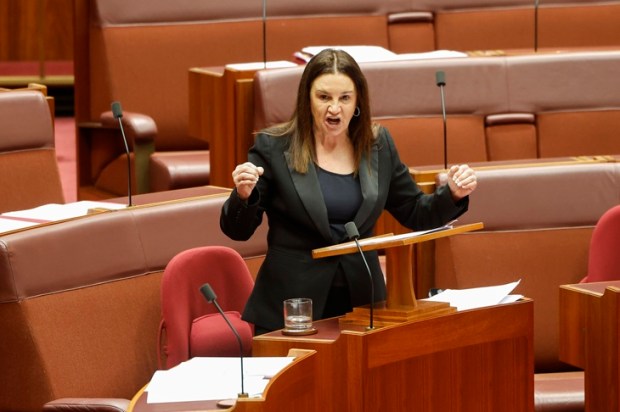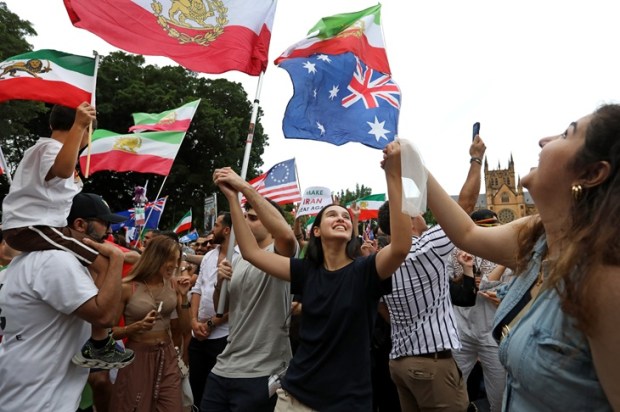
Four of the great membership institutions of Australian life are emptying out at once, and we explain each one differently.
The church’s decline is called natural – secularisation, the tide of history, nothing anyone did wrong.
The union’s decline is called economic – deindustrialisation, casualisation, the gig economy, work-from-home.
The party’s decline is called irrational – populism, misinformation, angry voters who don’t properly understand their own interests.
The family’s decline we don’t, in fact, call a decline at all – we call it liberation: marriage became a choice.
We have four separate theories even though the trend, itself, is so coincidental. The census share reporting no religion rose from 22 per cent to 39 per cent across the last three counts. Union density fell from roughly half the workforce in the mid-1970s to 40 per cent in 1992 to 13 per cent now. The marriage rate has roughly halved since the mid-1970s.
The establishment parties’ combined first-preference vote fell from 85.5 per cent in 2010 to 66.4 per cent in 2025 – my engine’s numbers, first preferences, every seat, every election – and in the June round of polls, fifteen months later, it fell below half for the first time: 48 in Redbridge, 46 in YouGov, with the Coalition at record lows in both Newspoll and YouGov’s history of asking. Polls, not ballots.
The direction and coincidence are not subtle. Same decades, same country, same shape – and when a single shared phenomenon requires four diverse explanations, it is probable that we’ve missed the wood for the trees.
One mechanism
Here is a single story. All four institutions were built on default membership. You were born Catholic or Anglican. You were unionised on your first morning at the plant or inducted into the club shortly after joining the workforce. You were Labor because your father was, and his father, and the parish.
And you were married by twenty-five, because everyone in the street was. Membership was inherited, not chosen – and each institution built its entire operating model on that inheritance: low demands, automatic renewal, a standing army it never had to recruit.
These default memberships declined together because the world as natural order, life as inherited meaning, history as destiny – this combination of views – has gone. It is hard to envision today the suburb or town for generations, the denomination at birth, the job for life, the wedding as a matter of course. What replaced this world is a voluntary market.
Yet it is a change that we can understand. Voluntary markets have a known economics. The sociologist Dean Kelley documented it back in 1972; the economist Laurence Iannaccone formalised it in 1994: strict churches grow or remain strong. Asking more of members filters out the free riders, and filtering out the free riders raises the value of belonging for everyone who stays.
The finding scandalised the mainline denominations then, and it still scandalises institutional leaders today. It says that the intuitive survival strategy – widen the door, lower the barrier, meet people where they are – is exactly backwards.
It is a lesson both my wife and I quickly learnt over thirty years ago in our different experiences as teachers. It was a lesson echoed back to me only two weeks ago, during the winter school break, by a Head of Maths and Science for a large NSW high school who said that students advanced from year to year regardless – so they saw no need to study or do homework; and he, in turn, had tired of playing Sisyphus. The students’ fate was their concern.
An institution that asks nothing eventually means nothing. And people do not get out of bed on Sunday, or pay dues, or letterbox in the rain, or open their books for organisations which mean nothing.
We should note what the variable is. It is not the idea itself, or the doctrine, or its association – it is the price paid. The strict-church effect does not care whether the demands are conservative or progressive; the Greens, one of the strictest parties in Western politics, stand as the proof. The party’s members are one of the few groups willing to knock on doors in the rain.
What the effect punishes is undemandingness.
There is a rival explanation for the emptying – a highly sophisticated one. Robert Putnam’s book, Bowling Alone, documented the same synchronised curve a generation ago. He blamed the context. The social fabric that nurtured the idea of membership frayed, tore, and eventually disintegrated – the neighbourhood, the club, the shops staffed with locals, the shared evening, the dinner.
An American woman in her mid-twenties recently visited our home with a group of 8-10 others. I cooked a series of dishes, as I normally do – for those who eat everything, those who are vegetarians, and those who are vegetarians but don’t like tomatoes. She told us it was her first experience of a shared, sit-down dinner. Putnam linked the development first to television; more recently it is linked to work-from-home.
The tide Putnam describes is real; my engine carries an atomisation index for every federal electorate in Australia. Increasingly people are alone – even alone together: in the gym or the cafe. But the tide cannot explain the surviving organisations. If ambient desocialisation were the killer, then it would affect everything. And the institutions that demand the most would also suffer the most, because they cost. Instead some organisations are growing, and more often than not they are the exacting ones.
What Putnam actually documented was the death of the free ride. Institutions that price belonging at zero have been living off the ambient social tissue – you attend because everyone does – and when the tissue dissolves, the institutions have nothing of their own to offer.
My model’s bleakest number makes the point: Christianity is collapsing fastest not in the post-religious inner cities but in the outer-suburban and regional seats, where the church was the last civic institution left standing. In the novel I wrote, The Gospel Engine, my research showed attendance in communal worship had fallen by 30 to 40 per cent in America since 2000 while the share of households giving to charity tracked almost the same downward curve: a decline of 30 to 35 million households.
The high-demand institutions survive because they manufacture their own belonging; they have their own contact zone. Putnam explains the tide going out. But some boats float, and the entry price or attendance cost explains which ones. His own data conceded as much – he noted the exception: the evangelicals.
The fourth member of these dying institutions – marriage – is the largest of all, and it deserves a closer look. This winter’s hit Netflix romcom is Voicemails for Isabelle. My daughter, Alix, and I enjoyed it immensely. The film tackled the modern doctrine regarding partnership with unusual candour.
The heroine declares: ‘I don’t need a man.’ Then, after the entire machinery of the film has laboured for two hours to deliver her one, he closes with the benediction: ‘You don’t need a man … but I sure as hell need you.’ The creed and the appetite in a single sentence – the independence recited precisely so the need may proceed.
Nothing about the desire has lessened; it has been repackaged, the way the Victorians once repackaged nudity as tableaux vivants. The appetite stays, so the permission structure must change. You may still have the marriage plot, provided everyone first swears nobody needs it.
If we run the institution itself through the pricing lens, we notice that we have repriced it backwards. The wedding has become a mind-numbingly expensive luxury good – a capstone we hope to afford before thirty-two – while the marriage itself has become a subscription, cancellable without fault since 1975. We priced the ceremony and unpriced the covenant.
Marriage still has a creed – the vows are the one doctrine many Australians still recite in public – but since 1975 the words and the law have not been on speaking terms: we promise until death parts us, inside a statute that asks only for twelve months’ separation and a day.
The ceremony once did more than celebrate; it deputised. ‘Speak now or forever hold your peace…’ was an inquisitorial summons – the vow before witnesses gave the community jurisdiction to intervene, and the old regime might use that jurisdiction without mercy.
Even then marriage was mispriced: belonging by default, exit ruinous – coercion doing the work of meaning. In 1975 we did not correct the situation so much as flip to the opposite corner: a ruinous entry, an easy exit. At the same time we externalised instruction and formation: courtship’s rules, the banns, the pre-marital instruction gave way to the counsellor, usually hired after the decision or act – conviction formed became advice billed. Not far from where legacy parties are today.
The same survivors appear almost on cue. A congregation which is demanding runs some variation of the pattern I keep finding on the winner’s side: real formation before you enter, real demands while you stay, and a seminary behind rather than an Inquisition in front. Meanwhile, my engine’s atomisation index continues to spread across the country – the number of households with a lone person increases, census upon census. This is the fourth collapse, counted.
And here the stakes stop being political. Eight decades of Harvard’s adult-development study say that close bonds are the strongest predictor of health and happiness we possess – that regular congregants and the married live measurably longer. Case and Deaton gave a name to what happens to a class that loses church, union, party and marriage inside a single generation: deaths of despair.
Of course, selection explains part of the phenomenon, but the best longitudinal designs say not all of it. Undemanding institutions do not merely empty. They shorten lives.
The control case
If this mechanism is real, history should contain at least one institution that faced the full walkout and survived it. And history does contain one. The parallel is uncomfortably precise.
Rome, 1517. A priesthood grown worldly: pluralism – one man holding several offices, drawing the income from all, doing the work of none (perhaps writing a book, 1,000 words a day); absenteeism – bishops who never saw their dioceses; and indulgences – cash for grace – which were marketed with ambitious sales targets. A new information technology, the printing press, let the faithful read the book for themselves and compare it with the men preaching it. And a high-intensity insurgency arose – one that demanded more, not less.
Luther and Calvin did not survey their communities or check people’s preferences. They did not say if you are bored with Netflix, how about Stan? They went out and demanded people’s entire lives.
Rome’s first response is the one every legacy institution today would recognise, because it is the one they are all running: prosecute the critics. Excommunication, the Index of Forbidden Books, the tribunals. And read honestly, the record of that instrument is worse than failure. The Inquisition held Italy and Spain – the territories where Rome already held the state. It failed elsewhere – indeed, everywhere Rome’s church lacked an army. New York today springs to mind. Coercion did not convert a single principality back. Half of Europe was gone within a generation.
Then Rome did the other thing. The Council of Trent, 1545 to 1563, performed a double move no Australian institution has yet managed: it conceded the diagnosis while refusing the schism. And its programme, examined closely, ran on four instruments.
The first was doctrine: define what you are – the decrees spent as much energy clarifying belief against Luther as correcting behaviour, because an institution that cannot say what it is cannot ask anyone to join it. This was Starmer’s problem.
The second was formation – the seminary. Despite what some people assume today about the past bastions of civilisation, before Trent a priest might be barely literate. After it, a priest required years of training. A new elite order arose, the Jesuits, whose entry price was total.
The third was practice: the disciplined liturgy, the confession, regular observance – what a member actually did each week, the habits that made belonging a whole life, a genuine experienced identity, rather than a label. Trump has done more than any Western leader these days to head, perhaps intuitively, in this direction.
The last element was the inquisition: what you punish, the one instrument Rome already had, and the only one that didn’t work.
Price is not a fifth instrument. Price is the currency all four mechanisms use. Doctrine is the cost of assent; formation is the price of leadership; practice is the cost of belonging; and inquisition is the price of dissent.
The pricing rule that the Council of Trent stumbled into was the genius behind its recovery. A healthy institution sets a high price on belonging and a survivable cost on dissent. It is ironic: since our dying institutions have pursued the opposite equation – belonging is increasingly easy, but dissent is costed at infinity. And this situation has created precisely the membership they now have: silent, disengaged, and leaving.
Of course, Trent did not win back the north. Germany, Scandinavia, England – they were gone for good. What the counter-reformation achieved was not restoration but survival through reform: a smaller, more serious, more demanding church that stopped the bleeding, deepened its core, and lived another five hundred years with considerable, but not absolute, power.
Where did the genius come from?
A fair question about any comeback is where did a corrupt institution find the people to execute this plan? The answer is that it didn’t. It licensed them. The new orders predated the council – the Capuchins in 1525, the Jesuits in 1540. Trent did not open until 1545. And the new personnel were disproportionately Spanish, because Spain had already run its own reform under Cisneros before Luther posted anything.
The capacity for reform was stored in the provinces that never stopped charging for kinship: the strict orders, the already-reformed national church, the lay confraternities the centre had not yet colonised. Rome’s genius at Trent was not some ‘zero-to-one’ invention, it was franchising – it was recognising the reservoirs for change that already existed and opening the gates.
Every dying Australian institution can find similar reservoirs today: the school or seminary that never closed, the unions that still train organisers, the diocese or parish that demands more from its congregants, the party cadre that door-knocks in the rain, the migrant congregations where nobody ever belonged by default, the marriages where both parties believe it is the struggle, itself, which makes the togetherness more worthwhile.
If scope for change exists, why have the legacy parties baulked from pursuing it? Most likely, I guess, because support shrinks before it regrows. It is like pruning a bush for better growth ahead. It is the infamous ‘J’ curve in economics. Raise the demands and the free-riders jump off. The optics look bad before the converts arrive, and no leader voluntarily survives the resulting trough. Rome accepted it because the schism had already caused the pain – half of Europe was gone. The options had vanished. This, I suspect, will be the Liberal party after the following election.
Institutions worry about survival. They do search for new ideas, but only after they have experienced their own 1517. Labor, winning on a 33 per cent primary – a sentence that would have read as satire back in 1983 – has no reason to look for new thinking. The Coalition, recently running at 17 per cent in the polls, is approaching its 1517 – which makes the next five years the live test of this entire article.
One of my engine’s named endgames is that – ultimately – Labor and Liberals will ally, as the left and right have done in Germany, France, Japan, and elsewhere. My hunch in people terms is different – Taylor will lead the Liberals into the next election. The results will force him to resign, and Hastie will take his place. Continued weakness in national polling will force Hastie’s departure and, in crisis, the party will turn back to Abbott. If only Abbott had his own, separate, organisational strength, as Loyola did or as Joseph Chamberlain did when he created the Liberal party caucus and invented the modern election machine.
The Catholic church, almost alone in organisational history, eventually recognised its crisis and found its solution with just enough time left to right the ship.
The Anglican Church
And here is one of the greatest ironies. It is the whole situation in one sentence: the church born of the Reformation now needs a counter-reformation of its own.
The Church of England was the original low-demand national default – membership by birth, duties near zero. The church was once described as the Tory party at prayer; and the two institutions are now dying of the same disease, which might settle any paternity question. Australian Anglicanism inherited the model intact, and popular identification with the church fell from 17 per cent to under 10 in a single decade of censuses.
The dominant response of the church has been accommodation: soften the demands, align with the culture, meet people where they are. The invitation has been there – yet people continue to leave while the broader society remains uninterested. Why rise early on Sunday for an institution that agrees with you? You can agree with yourself out in the sun somewhere like Balmain, enjoying coffee and croissant. Sydney is so beautiful in the mornings when the city is a little quieter.
But Australian Anglicanism has, in fact, run its own experiment, and almost nobody on the outside has looked at the numbers. The Diocese of Sydney – the most demanding, most doctrinally unfashionable wing of the national church, the one its more trend-conscious critics have been burying for forty years – is geographically the smallest diocese in New South Wales and by attendance the largest in the country, holding more than a third of the national church’s weekly attenders.
The mechanism is not a mystery: Sydney is the diocese that kept its seminary demanding. Moore College and its ministry apprenticeships are a formation pipeline – years of it, before anyone is entrusted with a parish – of a rigour most of the national church quietly abandoned. Sydney has not been immune from decline: attendance fell about 7 per cent over the decade to 2023.
But if we set that against a national collapse in religious identification of nearly 30 per cent over the same period, slow decline is the signal, not the noise. The gradient inside the Anglican institution points exactly where Kelley and Iannaccone said it would, and its logic is found in the seminary.
Sydney did not stop there. It went on and did something remarkable. At the 2024 Synod, the diocese did not commission a rebrand. It passed a resolution of confession and repentance – its own words – for having failed at its core task, and followed it by developing a five-year plan demanding 5 per cent annual growth through conversion, with formation of the young at the centre.
Attendance has since grown two years running – 11 per cent, then 4.5. Whether that holds is an open question, and I make no prediction on it. However, notice the sequence, because it is Trent’s own sequence to the letter: confess first, then demand more. Somewhere in Sydney a synod knew its history.
The unions
The union story is told as economics, and the economics is real – the factories did close. But economics cannot explain the gradient inside the movement and, once again, the gradient is where the information is.
Union density collapsed from half the workforce to 13 per cent. But look at where it held: education and training at 27 per cent, professionals at 20 – the unions fused with a professional identity, where the union is inseparable from the standards of the craft and the card certifies something about its holder.
The unions that evaporated were the passive-insurance model: a payroll deduction you forgot about, a service you might claim someday, an institution that asked nothing and was taken at its word. When density ticked up in 2024 – the first rise since 2011 – the growth came from the young: membership up 53 per cent among workers under 25. These young were not joining because of inherited loyalty; their inheritance had already died. They were joining because somehow membership now meant something.
The trap in this lesson is to mistake militancy for strictness, and the CFMEU is the cautionary case. Of Trent’s four instruments the CFMEU has emphasised one, and it is not the best one. The union has kept the Inquisition but not the seminary. It is strict the way the tribunals are strict, but demanding of its enemies rather than of its members.
Under administration, some of the union’s branches lost a fifth of their membership in a year, which is what happens when the glue was fear and the fear lifts. The prescription for the movement, if the CFMEU wants to survive and possibly grow, is the other three instruments: doctrine worth the dues, entry standards and training, a card which certifies. Implementing a seminary does far better than pursuing an Inquisition.
The parties
The parties’ decline is the one still explained as voter irrationality, which is convenient, since it locates the defect in the electorate. The accommodation strategy here has a name and a control case, and the answer is in.
Keir Starmer is the purest specimen of the low-demand thesis ever fielded – sand off every belief or commitment; stand for an abstraction, ‘competent management’, and a cliche, ‘the adult in the room’.
The result was a landslide of seats, but won on 600,000 fewer votes than the total on which Jeremy Corbyn lost in 2019, on the second-lowest turnout since 1885 – and, scarcely two years later, net favourability collapsed to minus 50 and an insurgent party led in the national polls. In the end, the party forced Starmer’s resignation, and the ‘adults’ of British politics threw a Hail Mary, one of the greatest punts in the country’s political history.
Labour’s accommodation produced a majority of seats and an evaporation of members, meaning and consent, in that order.
We can see the same pattern arriving here, because the June polls contained both halves of it at once. The same surveys that put the majors’ combined primary below half for the first time also showed Labor leading 54-46 on two-party-preferred – one model projected a near-record ‘landslide’.
Both numbers are true. The counting method still manufactures a two-party winner while the two parties’ actual support falls under 50: seats without members, preference flows without belief, a Potemkin majority assembled from other people’s second or third or fourth choices.
Political science got here first, as it happens: Peter Mair called it ruling the void – parties that withdrew from their members into the state, governing everywhere and representing nowhere. What his account could not explain is the part this article tries to uncover: why, in the same void, the demanding vehicles are filling while the accommodating ones empty.
The two-party-preferred outcome is the surface temperature; and all the pressure is underneath. While normality continues only in that Labor and Liberals assert they are the establishment and dictate the conversation, the one high-demand vehicle is filling its pews: One Nation now claims more grassroots members than either major party – a claim the majors, tellingly, have struggled to rebut – with over a hundred branches opened in under a year, meetings drawing crowds of one and two hundred while the legacy parties struggle to fill a dozen chairs.
It is like comparing a yoga meet in the park, or even on Kingston green in Canberra, with a Catholic church I entered one Sunday in Italy: there was a single genuine congregant of an advanced age while the priest, a friend of a friend, was valiantly conducting mass despite his long-term struggle with Alzheimer’s – his brother helping him through the service with a guide-sheet.
The pricing law finds its limit case in Australian politics. The major parties have achieved something remarkable: they are simultaneously among the most coercive parties in the democratic world and the least demanding. Labor expels members who cross the floor; the Coalition merely ends their careers.
Prime ministerial power and Cabinet discipline today would have baffled the Victorians, in whose parliaments – at the very peak of British government – both ministers and backbenchers had considerably more flexibility, along with a deeper expectation of personal ownership and responsibility.
Here, caucus discipline is total, preselection purges are routine, dissent is priced at infinity. Meanwhile, belonging is priced at zero – a five-dollar subscription that lapses unnoticed, no formation, no practice, no doctrine anyone could recite. Maximum enforcement, minimum meaning. The rational member of such an institution is silent and disengaged, and then gone – which is a complete description of a major-party branch meeting.
The legacy parties should be considering Trent’s playbook. They should concede the diagnosis – the critics are broadly right about what the parties have become, and every prosecution of the messenger, run without an army, simply reads to the electorate as just more confirmation. They should reform the clergy. Make membership cost something and mean something. They have to offer a doctrine that is distinctive.
And ‘distinctive’ does not mean the label a committed, even senior, journalist attaches to the platform, like a reviewer attaches ‘good’ to a commercial film. Distinctive means enough to be worth the price, rather than a focus-grouped copy of whoever could be collected into a room or online – as we know, the collectible are neither representative nor, under observation, entirely truthful.
Voters for Trump in America, or for One Nation here, famously decline to be collected. From a Liberals’ perspective the ‘noisy’ few dominate what they hear, while the quiet majority – almost by definition – also includes voters of Labor heritage whom the party never meets.
And the majors should accept Trent’s price, which is the part that no party leader wants to hear and no strategist interested in his or her career wants to emphasise: the ‘north’ is not coming back. Nobody is restoring a 45 per cent primary to our legacy parties. The realignment which is now taking place here is a dissolution of the old axis. It is not a pendulum, swinging one way before heading back again. So the prize on offer is to be the reformed church – more focused, more serious, still standing – and not the universal one. That era for the old parties, in their traditional guise, has gone.
The missing order
There is an obvious objection at this point. We plainly possess the modern inquisition – every institution named above runs one. Where are the modern Jesuits?
The answer, as suggested earlier, is that the Jesuit orders are outside. Loyola was a layman with nine companions. Trent did not create the Society; it deployed one that conviction had already built. And once you look for orders in the world outside rather than create them with resources that you don’t have, the fragments are visible. Sydney’s Moore College pipeline is one example. The Greens run the only genuine political cadre in the country, formed through discipline not staff work, which is a large part of why the party has often outperformed its polling on the ground.
Australia has already seen the proof-of-concept: Santamaria’s Movement. Whatever else history says about it, and history says plenty – the Movement was explicitly built on Catholic lay-order lines, cells, formation, and discipline. It did what cadres do, out-organising the Communist Party’s own faction in the unions. The precedent is not an endorsement. It is evidence.
The lineage even reached the Lodge. Tony Abbott – Jesuit-schooled, seminary-trained, mentored by Santamaria himself – is the most effective opposition campaigner of the modern era in Australia, and his toolkit was visibly the formation toolkit: apologetics under fire, repetition without embarrassment, the concrete image over the framework, lived presence over abstract spirit.
Abbott’s three-word slogans are liturgical discipline, not a failure of imagination. Barnaby Joyce, Riverview’s other export, can hold together a packed room out in the sheds for the same reason.
Now contrast their background – a church which has one doctrine held against all comers, argued before unpaid audiences – with the trades typically feeding legacy parties.
Consulting and the legal world train position-agnosticism – argue either side, bill the hours – for people that have an interest to protect and the money to do so. Starmer, the barrister, is a control case twice over: the skills which can prosecute a position without an anchor for the highest bidder cannot hold a congregation.
Even others, such as Andrew Hastie, show that the type of formation matters: military training teaches battle-readiness and command of conscripts, not the rhetorical persuasion of outsiders. The legacy parties in Australian politics depend heavily on staff who come from professions least like a seminary.
And the fullest modern solution belongs to a group nobody in Australian institutional life would dare to study: the Latter-day Saints, who solved the Jesuit problem by universalising it.
Every young member is expected to do missionary work – two years for the men, eighteen months for the women, at the family’s own expense, facing door after door of rejection. Sociology’s most persistent finding is that the project’s true, most reliable convert is the missionary him or herself.
Once you add an unpaid lay clergy in which every member is expected to hold a calling, you get an institution where free-riding is structurally impossible, since the price of belonging is full participation. Mormon growth has stalled, as it happens. More than anything else, these days, the church reflects a formation-and-retention case. It is not a growth miracle. But retention is precisely the disease ailing our institutions.
And the Mormon case neatly highlights part of the challenge that legacy institutions face here. Once upon a time, there was branch apprenticeship and a union-organiser track: decades of learning on the floor and around the room to hold an audience – whether in a shed in Mildura or factory in Geelong. My father-in-law, a metalworker, only just now retired at eighty because he knew the business and the people better than any transient replacement.
Legacy parties have transformed their career pipeline into channels where newcomers with symbolic degrees from humanities to law, often skilled in discourse and meta-criticism, become office staffers then election candidates. This is anti-seminary. Genuine and rigorous formation does occur – just, as Ostrogorski predicted, in the wrong practices.
The party structure today teaches how to brief a minister, manage a grid, survive a reshuffle, and fight for the win – against all convention or grace. It is learning about organisations and the individuals in them. Cadets learn organisational behaviour in congratulatory ‘executive’ courses; and they learn, above all else, to manage upwards.
The party does not teach how to grab and hold a public audience; it does not offer insight into the value of team action or customer value. The hopeful entrant tells HR they are all about teams, and is rarely, if ever, asked to prove it afterwards. The party selects with great precision for a biography that is agnostic about voters. And, as I wrote before, it even discourages – if not outright rejects – those who are overly zealous about serving the electorate.
Of course, the same lens exposes the insurgent’s weakness, because One Nation has the inverse challenge: it has full pews and no clergy – a personality vehicle whose every previous surge died of the succession and candidate problems that a formation pipeline would exist to solve. One Nation’s reported backroom overhaul is, in effect, an attempt at founding some order, and we can check the progress in real time.
In any case, whoever founds the right structure for a counter-reformation – a real one – wins the next generation.
How this fails
The argument is falsifiable, and shortly. The census runs next month; the religion tables follow. If ‘No-Religion’ growth among the under-30s rolls on undiminished while the demanding wings – those that are Pentecostal, Orthodox, or similar to the Sydney diocese – fail to keep the young, the strict-church mechanism is not operating in Australia and my argument is weak.
If a major party recovers primary share while lowering its demands ever further – the path legacy churches have taken – I’m wrong again. If the union revival accelerates among those that reflect a passive-insurance model more than a professional-formation one, I’m wrong a third time. And if Australia’s census shows that the marriage-and-fertility advantage of demanding congregations is now dissolving, then the fourth component of my argument loses its credibility.
Meanwhile, if One Nation converts full pews into a durable clergy without a clear order, or if the majors revive without touching preselection, the formation instrument matters less than I have argued. I will report the results either way.
For thirty years Rome waited for Luther to burn out. He didn’t. Then it stopped waiting, looked in the mirror, reformed everything the critics had named and demanded more – of the institution, of its clergy, of everyone who might be interested. Our organisations in Australia are all stuck in the waiting phase.
They are waiting for secularisation to exhaust itself, for factories to come home, for populists to implode on schedule, for people to want families once again. But history’s advice is there and it is short – stop waiting. The greatest comeback in institutional history began with a confession.