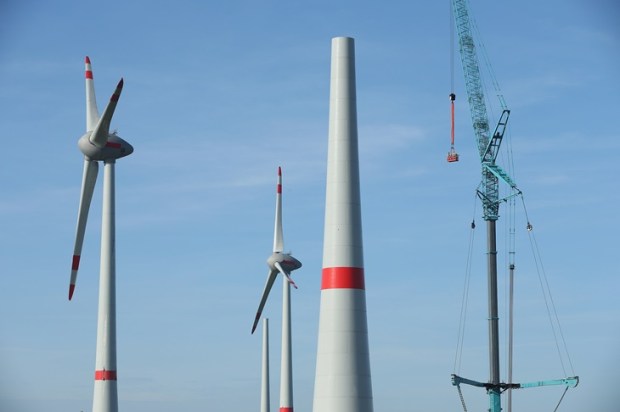
Paul Kelly’s imminent book The Twilight of Exceptionalism clarifies the dominant role that what President Trump labels ‘the climate con’ has played (and continues to play) in Australian politics. Prior to the 2022 Glasgow climate conference, Prime Minister Morrison decided Australia had to accept the position being promoted by the EU, UK, and Biden’s US presidency that Net Zero and its concomitant replacement of coal and gas by wind and solar for electricity supply was essential.
The political elites of the left, including many Liberal and National Party Parliamentarians, continue to promote the climate con.
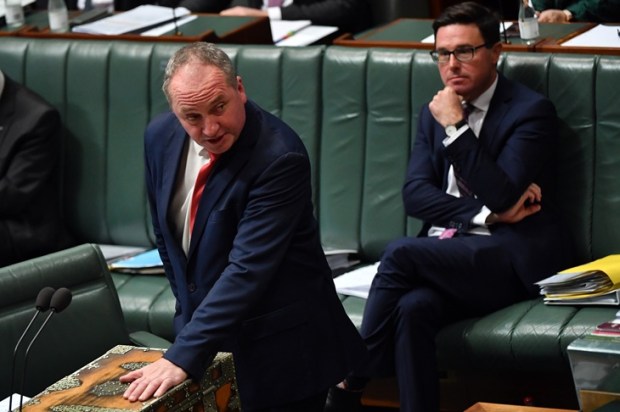
Reverting to his Country Party roots, Barnaby Joyce (with Matt Canavan), to their now-acknowledged shame, went along with the decision after securing vast sums (Barnaby claims $32 billion) for their rural constituents. This corroborates the view expressed three centuries ago by England’s first Prime Minister Robert Walpole, who declared of his Parliamentary colleagues, ‘All these men have their price.’
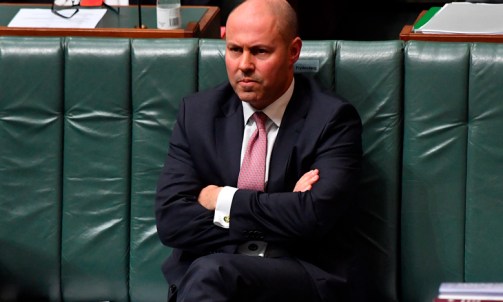
Morrison and the Liberal Party leadership (including Taylor and Frydenberg) buckled under an alliance of bureaucrats, national elites, and business leaders. Though adopting a paler shade of green and embracing a (distant) nuclear future, the Morrison government jumped aboard the global warming agenda. The ALP and, of course, the Greens had already fully adopted this and, with characteristic indifference to economic well-being, were pursuing it far more aggressively than the conservatives.
What motivated the preponderance of politico/economic advisers to urge Morrison to abandon the cheap energy on which the economy had been built, thereby creating a hollowed-out septic pool of dying energy-intensive industries and a nation with falling levels of productivity and income levels?
Advisers maintained (and Morrison bought the claim) that Australia would face a foreign investment strike and diplomatic ostracism unless we joined Biden and Britain’s Boris Johnson in embracing the need for a more intensive CO2 emission abatement.
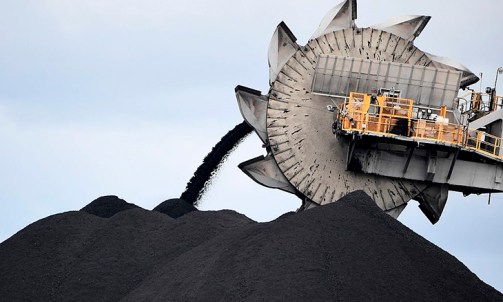
But an investment strike against solid, profitable opportunities is difficult to envisage. While flights of fancy often motivate business leaders, fundamentally investment decisions are driven by hard-nosed assessments of profit potential. No individual, bank, or investment fund can, in great measure, elect to forgo profitable opportunities and embrace those based on sentiment. This pursuit of profit – the residual reward after payments of labour and other inputs – is the essential building block for wealth creation. Profit is the key metric of those handling our savings. Irrespective of what they may say at the grand global conferences, investment and business leaders generally must pursue real opportunities, not contemporary fantasies, or see themselves without a job. And the same financial resources behind the 649 coal plants presently under construction or planned across the globe would find Australia a secure place to invest.
For business organisations, the support for Net Zero characterised the infiltration of the leading representative bodies by business-servicing firms and green energy suppliers, all of whom profit from the subsidies required for wind and solar. Many other businesses also claimed – out of self-interest or in some cases misplaced conviction – that the replacement of fossil fuels by renewables would mean cheaper supplies; nuclear interests used the climate con (as they had done 40 years earlier) to promote their own carbon-free alternative.
For the public service, the advice to adopt Net Zero follows from its politicisation over the past 50 years. There appears to have been no alternative advice that recognised the economic destruction that Net Zero entails.
This reflects senior public servants nowadays being appointed if they are politically acceptable and share the general dispositions of the government of the day. For the most important Department, Treasury, of the ten Secretaries since John Stone was ousted in 1984, eight have been ALP/green stalwarts; only Phil Gaetjens and John Fraser, presiding during less than five of the 42 years, were untainted conservatives advising Ministerial prudence to counter their spending proclivities. (Fortunately, for 11 of those years, Australia had a Treasurer in Peter Costello who did not need such advice.) Departmental leadership infects the entire Department, and Treasury has long spearheaded the climate con, advising in support of the taxes and regulations necessary to wean us off fossil fuels, and has conjured up the requisite modelling to prove that this will cost the nation little, if anything.
Diplomatic ostracisation of an Australia not moving strongly to Net Zero is even less likely than an investment strike. Although officials interfacing with similarly minded diplomats might feel uncomfortable not being in the leading pack of global green ‘bien-pensants’, this would not translate into any sense of security risk. Would a Biden-led US really decide that it is better off driving an Australia that was dragging its feet on global decarbonisation into an even closer association with China? Why did advisers not point out the unlikelihood of this? Again, the composition of the bureaucracy is a key reason.
Moreover, the Commonwealth has an escape mechanism from any such international coercion. It is constitutionally ill-placed to take a leading role in energy and environmental issues. Energy is not mentioned in the Constitution (which means it is solely a state government matter) and the environment is in much the same position. In the case of energy, the electricity market is governed by the National Electricity Act (1996) passed in the South Australian Parliament and referenced by the other eastern states. All could readily leave and, indeed, Queensland is contemplating this and has already announced it would not support a national agreement on gas, causing the collapse of previous plans.
Had the government so wished, it could have played the traditional diplomatic game that all other countries play. It could have crafted a policy setting grounded in Constitutional realities as a basis for deferring action on climate matters (though even under the Liberals, the Commonwealth has sought to magnify its role). This could have been married to goals contingent upon breakthroughs that brought real reductions in renewable energy costs (reductions that are ludicrously claimed by Lazards).
We have been and continue to be ill-served by our politicians, who have so denied themselves unimpassioned political advice that they leave their decision-making hostage to extremists. The measures against CO2-emitting energy continue to grow – recently, funding by the taxpayer-owned Clean Energy Finance Corporation has been used to blunt productive activity by converting Tasmania’s largest dairy farm into a carbon subsidy-earning plantation.
Australia’s downward economic trajectory has been long in the making and has been intensified by the Albanese government’s radical agenda on energy, as well as Industrial Relations, the Voice, and social transfer payments.
Will the nation be saved, as have the US and Argentina, by a revolution that delivers us politicians divorced from those seeking counsel from members of the global wokery?