Listen to Australian politicians opine on business for five minutes and you will hear the expression ‘social licence’. All too frequently.
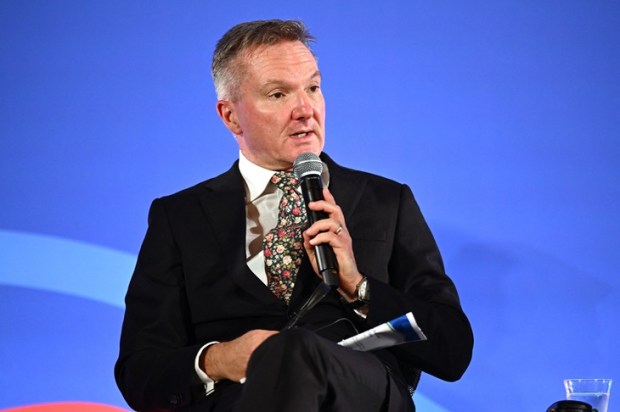
Several times last month, Prime Minister Anthony Albanese claimed that AI data centres must first earn their social licence, then maintain it. Resources Minister Madeleine King warned gas producers about a decline in their social licence. Energy and Climate Change Minister Chris Bowen warned the forestry industry it was at risk of losing its social licence.
But what is a ‘social licence’?
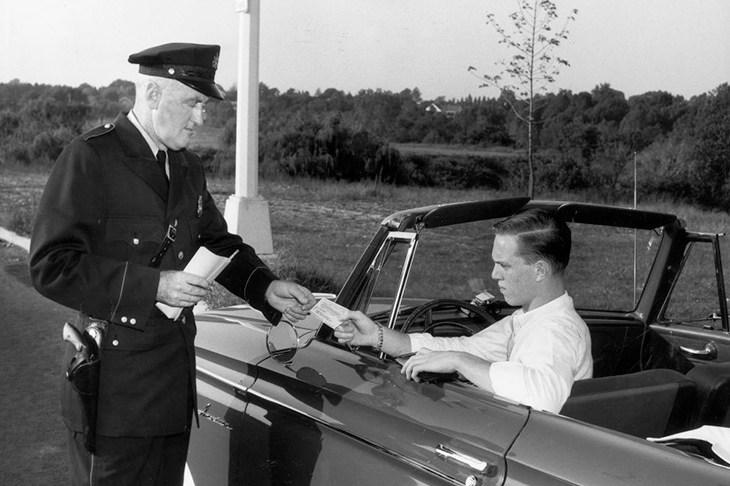
A licence is a specific, revocable grant of permission issued by an authority with the power to issue it. A liquor licence, a financial services licence, a gaming licence, a broadcasting licence, a driver’s licence. Each has a named issuer, usually a minister or a department. Each has published criteria and an application process. There is a clear revocation process and, crucially, a right of appeal.
You know who granted it. You know what you must do to keep it. You know where to go if it is unfairly taken away.
A social licence has none of this. There is no issuer; nobody can point to the minister, department or authority that grants it. There are no published criteria a business can meet to secure it. There is no appeal when it is denied or declared lost. A company can comply with every law, hold every approval and permit, and still be told it has lost its social licence to operate.
A social licence is not a governance framework. It is a rhetorical trick that claims the authority of law without any of law’s discipline.
The concept has a traceable origin, emerging in the mining industry in the 1990s, credited to consultants brought in after community conflicts damaged the industry’s ability to operate with local consent. The original idea was modest and unobjectionable: invest in genuine relationships with the communities you operate in, because ignoring local sentiment is bad business. But like many well-intentioned ideas it escaped its origins and mutated. What began as a process for building goodwill is now a quasi-legal standard that politicians and activists hold over business, and that boards genuinely fear breaching.
Consider the legitimate routes by which a person or group can influence what a company does. A customer can withdraw their patronage, an employee their labour or an investor their money. Each spends something of their own and bears the consequence. A citizen who dislikes a business or a project can lobby their local member, vote out the government that approved it, or seek judicial review if the approval was unlawful. Every one of these is an accountable route to influence. The person exercising it has either something at stake or a vote at risk.
A social licence campaign is another thing entirely. It is a request that a regulator, a minister, or a business act on the campaigner’s behalf, at no cost to the campaigner. It seeks the powers of a shareholder without ever buying a share, and the powers of a regulator without ever standing for office. Influence without ownership and a veto without electoral consequence.
Social licence is the vocabulary that dresses this up as governance. But it bypasses the accountability mechanisms a democracy provides.
Good management has always required judgement about public sentiment, and no sensible executive ignores it. But there is a vast distance between ‘we should manage our reputation wisely’ and ‘an undefined and unaccountable licence constrains our legal rights’.
The first is ordinary prudence. The second is a fiction that has acquired the trappings of law. The line is crossed when the claim stops being you may lose customers and employees and becomes you lack permission to exist.
Governments have been happy to let this happen, and many are keen to encourage it. It is far easier for a minister to let a campaign kill a project than to defend a lawful but unpopular approval, or to legislate a clear position and answer for it at the ballot box.
Look at how this has worked. Banks quietly withdraw services from lawful customers and lawful industries. Insurers decline cover to businesses that have broken no law. Boards fold to noisy minorities because the cost of the fight is immediate while the cost of surrender lands on somebody else. Otherwise viable businesses never form at all, deterred by a risk nobody can define or insure against. All in the name of a licence regime no parliament ever wrote, and no court could ever adjudicate.
Directors and executives might also ask for whom they actually work. Their job is to deliver lawful, sustainable, risk-adjusted returns to the shareholders whose money they are spending. The job is not to be popular. A chief executive told for a decade that his company needs a social licence will conclude that the people who issue it are worth cultivating, and that the cultivating is itself a form of work. It is not work. It is a seat at the prime minister’s table at the next Business Council dinner, bought with shareholders’ money.
There is enough red, green, and black tape smothering the Australian economy. It does not need another roll of magic tape, issued by vague coaltions, to dampen what little growth the economy still manages. Politicians and regulators should confine themselves to actual laws. Directors and executives should stop using the phrase and stop behaving as though it binds them.
If communities object to a lawful project, the answer is the ballot box, the courts, or their own wallets. Not a manufactured licence policed by whoever holds a microphone.
Unless, of course, that is the point. Perhaps a social licence has never been a licence to operate at all, but a licence to lobby. The company that says the right things loudly enough in public gets heard quietly enough in private. That would explain why so many boards chase a permission slip nobody can produce.
There is only one body that issues licences in this country, and it is called government. Everything else is just an opinion, no matter how loudly it is expressed.
Got something to add? Join the discussion and comment below.
You might disagree with half of it, but you’ll enjoy reading all of it. Try your first month for free, then just $2 a week for the remainder of your first year.