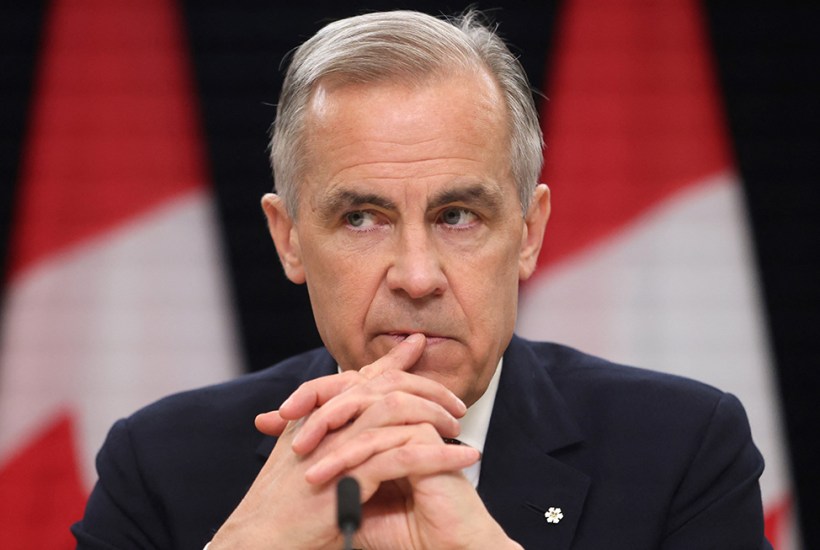
Mark Carney never much liked Brexit. As the Bank of England’s governor during the 2016 referendum, Carney was limited in how political he could be but he still managed to brand a Leave vote the ‘biggest domestic risk to financial stability’ Britain faced, one that would leave us relying on the ‘kindness of strangers’. Since returning to Canada as its Prime Minister, he has not become more complimentary. The referendum, he said in May, had been a ‘dangerous bluff’; the UK was still trying to undo what people didn’t think they were voting for, but which they ended up having.
Yet for someone so antipathetic, Carney is performing a remarkable Brexiteer tribute act. He is reeling off the Eurosceptic greatest hits in Canada’s trade war with Donald Trump: sovereignty matters; preserving it, whatever the cost, is better than surrendering to an over-mighty neighbour; no deal is better than a bad deal. Carney’s appointment at Threadneedle Street was considered a George Osborne triumph. Nowadays, has Carney decided it was Boris Johnson and Nigel Farage who were on to something?
Canadians merely wish to have supreme authority over their own nation and territory
Not quite. Instead, he has discovered that defending sovereignty at the expense of trade ties seems rather more worthy when the person threatening it is Donald Trump. The President’s disdain for Canada is long standing. In the 1990s, he branded Bill Clinton’s North American Free Trade Agreement a disaster for US manufacturing; in his first term, he ripped it up and replaced it with a new agreement he called the ‘largest, fairest, most balanced’ ever made – ‘a colossal victory’ for American businesses and workers.
But Trump has decided this victory wasn’t colossal enough. Canada, he claims, ‘wants the benefits of being a state without being one’. Like Michel Barnier and Donald Tusk warning Theresa May against ‘cherry–picking’ EU membership, he has made clear that if Canada wants unfettered access to the American market, it must become the ‘51st state’. Carney is now showing that Canada would never accept this in a ‘dollar-for–dollar’ trade war with its southern neighbour and largest trading partner, to whom it has always been a diligent friend.
Canada’s negotiators walked away from talks last week after the US demanded changes to rules requiring companies operating in Quebec to provide French-language products. Carney was ‘not prepared to compromise Canada’s sovereignty’ or the ‘preservation’ of her culture. She had been ‘attacked’, he said: ‘You’re at war when you get attacked.’ The US has imposed a 50 per cent tariff on around $20 billion of Canadian goods; Carney is responding in kind. No deal was better than a bad deal (for scrapping Francophone protections, read keeping Northern Ireland in the Customs Union).
Canadians back Carney, with one poll showing 76 per cent support walking away. Social media is awash with videos of beavers dressed as Mounties squaring off with eagles. ‘The coming period will be hard and the damage may be awful,’ declared the Globe and Mail, Canada’s most popular newspaper, ‘but no one should ignore what is at stake. A free Canada is worth the sacrifice’ – a sentiment to stir Brexiteer hearts. Carney will be counting down the clock until November’s midterms, when a likely Democratic victory will limit Trump’s freedom.
Canada’s Liberals were set to lose last year until Carney became the face of patriotic resistance; support for Quebec independence has fallen to its lowest level in decades. He has been acclaimed internationally for positioning Canada as the champion of ‘middle powers’ against an errant hegemon. The EU and its cheerleaders are four-square behind Carney – the usual suspects of Alastair Campbell, the New Yorker and the Economist have talked up the idea of Canada being admitted as a member. That tone–deafness only shows that the Brussels Bourbons have learned nothing and forgotten nothing since Brexit. They still struggle to grasp why sovereignty matters.
Sacrificing sovereignty is exactly what Carney is fighting against; there would be no point in pushing back Trump’s pursuit of a 51st state only to embrace a new dominance from Brussels. Canadians merely wish to have supreme authority over their own nation and territory. Those who can’t grasp that should look to Iceland. Just as Canadians have made clear they will not surrender sovereignty for freer trade with the US, Icelanders have declared the same about the EU.
By a familiar margin of 52.8 to 47.2 per cent, Icelanders last week voted against their government’s desire to begin EU accession talks. They were not prepared to surrender sovereignty – not least control over their fishing waters – to a distant superstate; when a European official suggested Iceland’s financial contribution could offset the cost of Montenegro joining, many realised Brussels was focused less on European solidarity and more on what could be extracted from its wealthy maritime neighbour. Plus ça change, plus c’est la même chose.
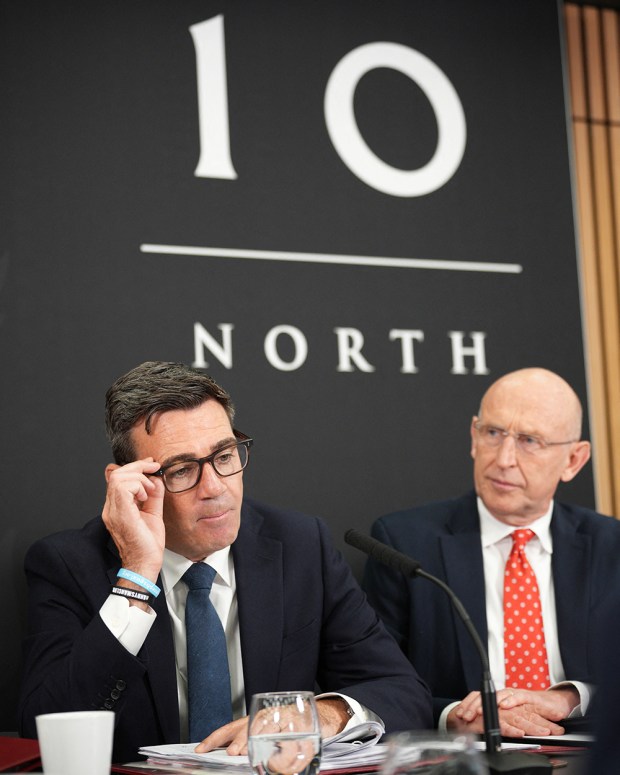
In Britain, bashing Brexit has become par for the course. Andy Burnham has blamed Brexit for ‘a decade of low growth’ and is continuing Keir Starmer’s policy of negotiating closer ties, having expressed a desire to see Britain rejoin. But Burnham does not have to like Brexit to learn from old allies on both sides of the Atlantic the nature of the sacrifice that would entail. Whatever mistakes have been made in Britain’s first years outside the EU, sovereignty should never be sold cheaply. In reminding us of that, Carney – of all people – is proving himself the true King of the North.
Got something to add? Join the discussion and comment below.
You might disagree with half of it, but you’ll enjoy reading all of it. Try your first month for free, then just $2 a week for the remainder of your first year.