In my previous article, I argued that engaging with Crown Prince Reza Pahlavi was not simply an act of support for the Iranian people, but a strategic decision that served Australia’s national interests.
National security was central to that argument.
The Islamic Republic has repeatedly projected power beyond its borders through terrorism, espionage, proxy groups, and intimidation. Recent developments have made the need for a serious Australian strategy even clearer.
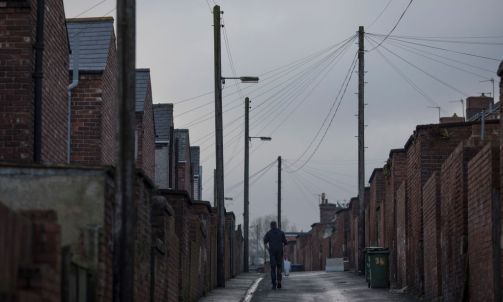
British reporting alleges that Iranian state-linked networks have used established people-smuggling routes to move suspected operatives into the United Kingdom, including through small-boat crossings of the English Channel. The reporting relies on unnamed officials, smugglers, and security sources, and some claims remain unverified. Even so, the method described is consistent with a broader pattern: Tehran uses intermediaries, criminal networks and deniable channels to operate beyond its borders.
Australia should pay close attention. For decades, illegal maritime arrivals have been treated primarily as an immigration and border-management issue. The British allegations add another consideration. A migration route controlled by organised smugglers can also be exploited by a hostile state seeking to move its agents without proper scrutiny. There is no public evidence that IRGC operatives have entered Australia by boat, but Australia’s own experience with irregular maritime arrivals should make it clear that border integrity and national security cannot be separated.
The Islamic Republic does not depend on any single route or method. It can move people through legal routes, use false or misleading identities, recruit local criminals, transfer money through intermediaries and issue instructions through encrypted channels. Strong borders matter, but they are only one part of the defence. More importantly, the threat to Australia is no longer hypothetical.
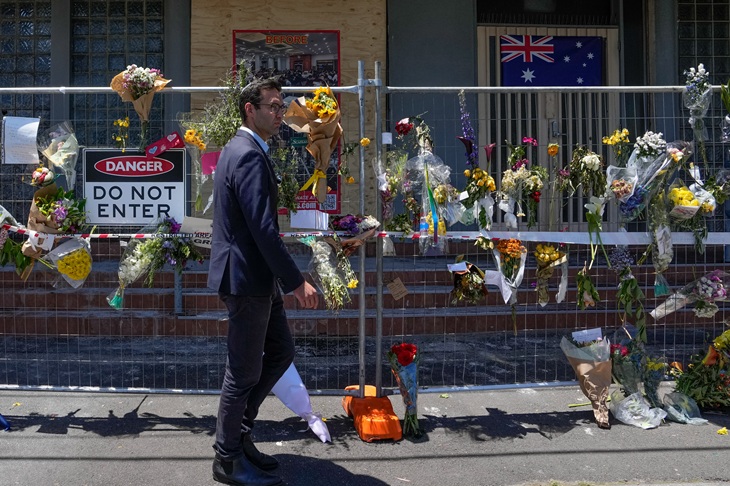
Australian intelligence concluded that Iran directed the October 2024 arson attack on Lewis’ Continental Kitchen in Sydney and the December 2024 firebombing of the Adass Israel Synagogue in Melbourne. The attacks were allegedly carried out through layers of criminal proxies intended to conceal Tehran’s involvement. ASIO also assessed that the Islamic Republic was likely responsible for other attacks.
These incidents expose the limits of even a capable security system. Australia has extensive counter-terrorism laws, strong intelligence partnerships, and substantial law-enforcement powers. Yet a hostile state was still able to recruit criminals, pass instructions and money through intermediaries, and cause damage on Australian soil before investigators reconstructed the chain of command.
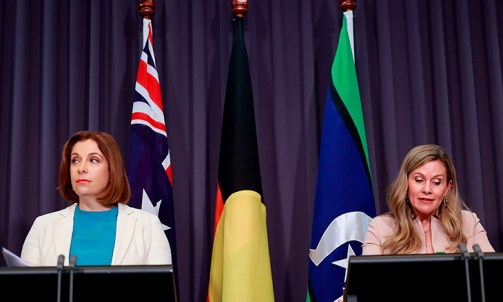
The Albanese government eventually expelled Iranian diplomats, suspended operations at Australia’s embassy in Tehran, created a new state sponsor of terrorism framework, and listed the IRGC under it.
Those measures were necessary. They were also late.
A Senate committee recommended in 2023 that the government formally categorise the IRGC as an organisation involved in supporting and facilitating terrorism. The government declined, relying on advice that the existing legislation did not cover an organ of a foreign state. It took attacks in Sydney and Melbourne before the law was changed and the IRGC was listed.
That response strengthens Australia’s ability to prosecute support for the IRGC, disrupt its financing and restrict its activities. It does not alter the nature of the threat. The IRGC is not a rogue organisation operating at the margins of the Iranian state. It is a central pillar of the Islamic Republic and carries out the regime’s internal repression and hostile activity abroad. Its overseas operations are part of how the regime protects itself, punishes its opponents, and pressures other countries.
As long as the Islamic Republic remains in power, Australia should expect the IRGC to continue testing its defences. Individual plots may be disrupted, operatives prosecuted, and financial networks closed, but the organisation directing those activities will retain its resources, authority and motivation.
Australia must continue its current defensive strategy, strong counter-intelligence, closer scrutiny of financial and migration risks, cooperation with allies, aggressive disruption of proxy networks, and full enforcement of the IRGC listing. These measures are essential, but they manage the threat rather than remove its source.
The Islamic Republic is increasingly vulnerable. It has lost much of its domestic legitimacy, faces deep economic and social pressure, and is more isolated internationally than at any point in recent memory. Its long-term survival is increasingly doubtful. But a weakened regime is not necessarily a less dangerous one. Like any wounded authoritarian system, it is more likely to lash out, escalate abroad and search for ways to impose costs on the democratic countries it regards as enemies.
The period before its collapse may therefore be one of heightened risk. The sooner a stable democratic alternative is ready to replace it, the sooner the IRGC’s capacity to threaten countries such as Australia can be dismantled at its source.
In that context, Crown Prince Reza Pahlavi has become the most prominent figure associated with a structured transition. A Transition System under his leadership is ready to assume responsibility when the Islamic Republic falls, restore order and security, and prevent the collapse of essential state functions. In practical terms, this is a shadow government, a transitional leadership bringing together expertise in security, economics, law, and public administration.
Australia’s interest is not confined to managing the IRGC threat. It lies in helping to ensure that a credible democratic alternative is ready to replace the regime as quickly and orderly as possible. That requires direct engagement with, and support for, the shadow government led by Crown Prince Reza Pahlavi.
Engagement should be practical. Australian officials should establish direct channels with the shadow government and coordinate with allies on the support required for a stable transition. The objective should be clear, to help ensure that the collapse of the Islamic Republic is followed by a functioning democratic government, rather than uncertainty that prolongs instability and delays the end of the threat. This would not amount to recognising an alternative government or deciding Iran’s political future. It would be strategic preparation. Governments routinely build relationships with those likely to shape major transitions.
A democratic government in Tehran would not automatically solve every regional problem. It would, however, end the political system that created, finances, and directs the IRGC. That would remove the source of the threat rather than merely disrupting one operation at a time.
For Australia, the central strategic point is simple, the most robust protection from the IRGC is the replacement of the regime that sustains it. Australia should therefore support the Iranian people in bringing about that change, not only in their interests, but because it is firmly in Australia’s national interest.
Pejman Amirnejad is a Sydney-based Australian-Iranian, community advocate.