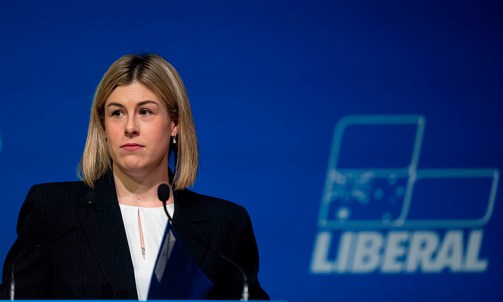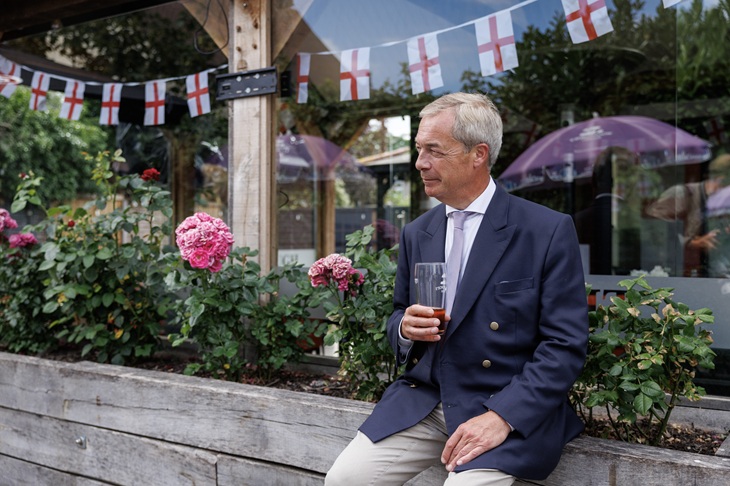
The establishment has a single reflex for dealing with insurgents like Pauline Hanson. Only one leader, at the LNP State Convention in Brisbane, has attempted a different approach. He might have found the only move that works.
On Sunday July 5, the Sunday Times sent its standard Editor’s Choice email to subscribers. Nigel Farage, the paper alleged, had banked £5 million from a crypto-tycoon but failed to declare it. The paper’s Insight team, they went on, had spent its week on ‘another character that Farage would rather not talk about’ – Posh George Cottrell. The message ended with a modern touch: the paper had launched a podcast series about him. Britain’s institutions duly responded and initiated two parliamentary inquiries.
Nine time zones away, the Prime Minister of Australia stood in Sydney Town Hall and told the NSW Labor conference that the Liberals, the Nationals, and One Nation were ‘the axis of grievance’ – three parties in a race to the bottom, ‘each trying to be more anti-fairness, more anti-worker, more anti-aspiration’.
One Sunday, two hemispheres, but a single reflex. The investigation and the epigram are the same instrument in different registers: the establishment’s standing response to an insurgent it cannot out-argue.
Given that the anatomy is identical in London and Canberra – Washington and Paris – let’s do what my headline promises and dissect this reflex: who reaches for it, why one charge and not another, what the reflex is expected to achieve, and what it actually achieves, since usually the target ends up stronger, not weaker. I’ll end by noting the one figure who seems now to have understood the dynamics.
What the scandal is for
Start with the theory to which the latest scandal is put in service. A Spectator colleague put it plainly this winter: ‘Reform is nothing without Farage.’ If that is true, the strategy writes itself. You don’t need to answer the movement; you need only discredit the man. Shoot the driver, the bus goes off the road, and the passengers go home. The strategy is inspired by a different era: the history of Wat Tyler and the Peasants’ Revolt in 1381.
The latest Farage scandal, and seemingly all others around insurgent leaders in Western politics, rely on a common premise. The £5 million, Posh George, the undeclared house – none of it is addressed to voters behind Reform as an argument. It is addressed to Farage as a demolition job. The unstated belief is that voters are attached to him the way a crystal forms around a speck – remove the dirt, the structure falls apart.
Let me be fair before going further. The journalism itself is legitimate. Rules demand that certain money is declared, these rules exist for good reasons, and a newspaper that digs out potential wrongdoing is doing its job. Similarly, institutions are duty-bound to review if circumstances warrant.
Nothing that follows is a complaint about scrutiny in itself. The anatomy in this article concerns something else: what the political class expects the scrutiny to accomplish – and the strange, repeated failure of that expectation.
The choice of weapon
Notice, first, what kind of sin we are talking about. Not a lie about wages, or housing, or immigration. A failure to disclose. A form not filled in, a record not updated, a gift not entered in the proper book.
I have written elsewhere that Australia runs two economies, two eco-systems, under one currency: an economy of things, which makes and grows and builds and drives, and an economy of words, which administers, credentials, litigates and curates. Britain and America are little different. So the charge is not random; it is class-marked.
Process is the word economy’s home turf. The symbolic economy’s assets are procedural literacy; its daily work is registers, declarations, and compliance. To that world, an undeclared donation is among the gravest imaginable offences – and it is also, not coincidentally, the offence it has some of the most practice prosecuting, having spent decades pursuing it in Britain: the Ecclestone affair late 1997, cash for honours in 2006-07. Sir Keir Starmer’s alleged freebies are barely cold in the ground.
But walk the same charge into the economy of things and it changes weight. A form not lodged. To a voter who already believes the whole game is rigged by the people bringing the charge, this is not a revelation; it is what happens. The establishment reaches, by pure reflex, for the one weapon that most impresses its own class – but one which means less to the target audience.
Australia has run a similar set of plays over the past month or so, proving just how reflexive the attack is. Hanson was ‘caught out misleading voters’ – and over what? Over the procedure for having policies costed by the Parliamentary Budget Office. The charge was literally an office process rule.
And the charge was made in a country where real wages have suffered a five per cent decline over five years while the rich world has enjoyed an average five per cent increase – in a country buffeted by housing and energy problems, facing a mortgage crisis, and bearing inflation that has outstayed every official reassurance – underlying price rises at the highest levels in the developed world.
A senior minister declared in early June that Hanson thinks she is ‘above the rules that apply to everyone else’. In my opinion, it is the flip-side of attacks on Trump and Farage that try to undermine their status as a ‘man of the people’. How absurd these statements are; how typical of the establishment bubble. I wager that in Australia this cynical view of Hanson and her predicament would not even enter the minds of a displaced electorate most interested in finding a new home.
And for the hatchet character work, newspapers supplied the local Posh George: a profile of James Ashby, Hanson’s chief of staff, as her ‘Svengali’ – the (imagined) disreputable fixer behind the curtain, the man readers are invited to find sinister. Much as parties in each capital look at each other for inspiration when desperate, London and Canberra did not coordinate tactics. It wasn’t necessary. It is the same reflex in response to the same stimulus.
The elasticity law
Now to the part the establishment never properly audits: what scandal actually does to an insurgent’s vote. The record – Australian, American, British – obeys one law, and it is worth stating precisely.
A scandal moves votes only when it violates the electorate’s image of their candidate. When it confirms that image, it is already priced in.
Farage’s voters do not believe he is a Presbyterian accountant. They hold shares in a rogue – a saloon-bar buccaneer who winds up the right people. A story that says your rogue is a rogue settles no bets. Worse: the attempt itself pays him a dividend, because ‘the establishment will do anything to stop him’ is not an accusation his voters must be argued out of – it is the very thesis they bought.
Farage understands this. So he notes this time that the process charge is the system prosecuting him for seeking protection that they declined to offer in the face of attacks that simply don’t happen in the same range and scale to elite politicians.
Indeed, Britain has already run a similar experiment before: when Coutts debanked Farage, the affair did not diminish him; it resurrected him, and it was the bank that came off worse for wear.
Almost every front page in Britain’s elite press has, for years now, confirmed the electorate’s conviction regarding their candidate’s quality. Most high-profile media outlets lean heavily against mavericks like Farage and Trump.
And the law is asymmetric. This is what makes it so lethal. Scandals against the establishment bite, every time – because ‘they’re all the same, they’re in it for themselves’ is precisely the substrate’s theory of the elite. Each article about wealthy children from privileged backgrounds securing special dispensation for academic exams, each article showing celebrities gaming the system for their convenience, just buttresses this existing view.
Every expenses affair, every undeclared gift that sits on the establishment side of the ledger, is seen and remembered. This ability to recall something that fits the preconception is so common and happens so often to us all that it has a name: ‘confirmation bias.’
So the machinery of scandal faces a wretched arithmetic: those scandals against the outsider are priced in, almost welcomed as evidence the crowd has not picked another ‘phony’, while those scandals against the establishment are seen as more mud in the swamp. It is heads she wins; tails they lose.
If we wanted to illustrate further, we need only imagine MAGA’s view of America’s DoJ charging Trump and investigating Biden. The point is not the validity or otherwise of the charges. It is how the displaced electorate interpret the developments. Each indictment of Donald Trump lifted him like a tide in the mind of his base.
The Australian control experiment
Indeed, Australia and America have run some of the strongest versions of this experiment a democracy can. They did not limit themselves to a hostile podcast. Australia reached for handcuffs; America for the courtroom.
In August 2003, Pauline Hanson was convicted of electoral fraud over the registration of her party – the allegation being, in essence, that 500 listed members were mere supporters – and sentenced to three years. She served eleven weeks. Later, that November, the Queensland Court of Appeal quashed every conviction, unanimously: the evidence did not support fraud at all.
The sentencing judge had already conceded that Hanson gained no personal benefit. The Chief Justice, in releasing her, admitted there was ‘no easy answer’ to the obvious question of why she had been jailed in the first place.
America ran its version with Trump: the full apparatus of prosecution, ending in an actual conviction – 34 counts, just months before the 2024 presidential election. Trump became the 47th President in January 2025, having won the electoral college and the popular vote, while the Republicans won both houses of Congress.
And we know the political results at home. Hanson walked out as – in her telling – Australia’s first political prisoner. She returned; she rebuilt; she entered the Senate in 2016. This winter One Nation’s primary vote touched 31 per cent – ahead, for a moment, of the legacy parties and those descended from the establishment who had put her inside.
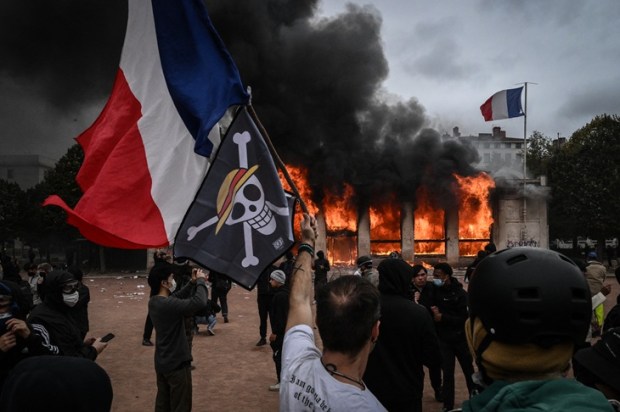
The British elite believe they have a ‘gotcha’ moment which this time Farage cannot escape, pursuing tactics already used against Trump in America or Le Pen in France. However, if 11 weeks in a Brisbane cell produced a negative return on scandal while the full force of the DoJ and leftwing media in the US created a two-term President – and if Le Pen is back to contest a presidential election despite a conviction, ban, and threatened ankle tag – it takes a special kind of optimism to believe that an article or a podcast or even a set of parliamentary inquiries will end the insurgent threat to the comfortable class in politics.
The Australian media has, to its credit, occasionally glimpsed its own reflection. 10 days of fury ran one recent post-mortem of the monoculture eruption – an analysis conceding that Hanson’s enemies ‘are often her biggest boosters’ and handing her the one currency which matters: dominance of the cycle.
The media identifies the certification effect. They see that the pile-on does not shrink the insurgent, but rather certifies him or her as the thing worth piling on. But they simply cannot help themselves.
The witticism wing
Which brings us back to the Sydney Town Hall, because if jail is the heavy artillery, exposés the mobilised combat, then the zinger is the light infantry. Our Prime Minister loves the zinger. Albanese has recently minted the finest specimen of the season: the axis of grievance. It deserves a full dissection, because everything about the reflex is found in it.
Note, first, how the phrase is composed. ‘Axis of’ is the most famous construction in modern conservative speechwriting – a Republican wordsmith’s coinage made for George W. Bush. The Labor government’s sharpest anti-right epigram runs on borrowed right-wing machinery. And the term ‘grievance’ is the 20-year charge against Labor’s own politics of recognition and identity – the accusation worn smooth by use against the accuser’s side.
The four words from the Prime Minister are parasitic and self-revelatory at the same time: political partisans, like people in real life, reach instinctively for the indictment that describes their own signature move.
Note, second, what the phrase does – because this is the new development and interesting. Labor is no longer merely insulting One Nation; it is lumping the Liberals, the Nationals, and One Nation into a single named bloc. Think about what that concedes. It announces that the organising principle of the entire opposition is One Nation’s complaint. It promotes Hanson from fringe irritant to the definer of the bloc, coequal with – arguably even senior to – the legacy parties that now orbit her word.
I argued recently that Hanson’s project is to weld one link fast: the link that says One Nation equals the material economy. On Sunday 5 July, the Prime Minister did some of that welding for her, from the stage of the Town Hall, with Labor disciples blissfully applauding.
And note, finally, what the insult tells voters in the target electorate: that their displacement is no more than a mood. That message – it’s nothing but emotion – has a distinguished pedigree: the deplorables, people clinging to what they cling to. Each entry in that lineage has ended as a recruitment poster for the other side.
The deepest thing about the witticism, though, is that inside the economy of words it is sincerely experienced as action. The speaker’s professional life consists of interventions made through language; a well-turned phrase is what a completed task feels like. As he sees it Albanese is not avoiding a response. Like a manager who understands his job as sending out endless emails, cc-ing the whole world from a corner office, Albanese views his witticism as work done – he is performing his role as a great nation’s Prime Minister.
The man who talked about biscuits
It is useful if there is a control group – to see what the alternative looks like. Fortunately, the same weekend supplied one – a day earlier and nine hundred kilometres from the Town Hall.
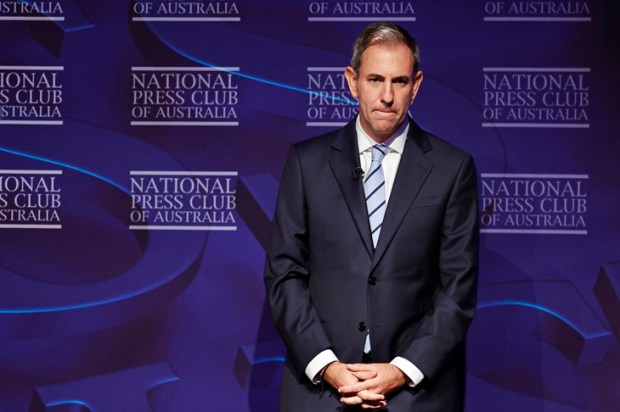
On Saturday 4 July, Matt Canavan addressed the Queensland LNP’s state conference in Brisbane, and the press coverage arrived pre-written as a scolding: the Nationals leader, ran the report, ‘ignores One Nation’ – stayed silent on the threat the polls say conservatives cannot ignore. The reflex has become so entrenched that declining to attack the insurgent is itself reported as a failing. Non-participation in the machine has become news.
What did he do instead? He held up a packet of Tim Tams. Seven times, by the exasperated journalist’s count. Six dollars for nine biscuits at Woolworths, he told the hall – against $4.08, converted, at a Walmart in Ontario. An Australian biscuit, almost 50 per cent more expensive in Australia than in Canada. ‘Did we lose a war?’ he asked.
Then he summarised the rest of the inventory: power bills up a thousand dollars per family in four years, ‘Net Zero madness’ fuel, and a closing platform of exactly three points – use our resources, lower taxes, limit migrants. ‘That’s it.’
Consider the object he chose. A Tim Tam is recognised as distinctly Australian, and it should be found in every store. The price is checkable by any voter in any suburb this afternoon. It is the economy of things compressed into a supermarket item – the perfect rhetorical artefact for the electorate actually in motion, as alien to the symbolic economy as the Prime Minister’s ‘axis of grievance’ is to the checkout queue. While the Prime Minister evidenced his searing wit and minted an epigram, the Nationals leader focused on real life and quoted a docket.
The weekend then sharpened the contrast on its own. While Canavan was pricing biscuits, the Prime Minister’s other contribution to the national conversation was a comedy podcast filmed at the Lodge – a version of the game of shag, marry, or date, with Kylie Minogue his answer – followed by a Monday spent apologising for it.
I have little sympathy for Albanese apologists – it is astounding to me how nice his treatment compared with Howard in his time. And just imagine if Abbott had got caught in the same trap. In any case, one leader stood up to recognise how costs had changed; the other was desperately trying to produce content, and then almost more desperately chasing a correction.
Indeed Canavan did even better. He not only addressed his target voter but also tackled his key rival in a move, it appears, too subtle for other leaders. He did nothing – and it was everything. He made not one mention of her name, while net zero and migration, the spine of Hanson’s Press Club platform, ran straight through his speech. Her themes contested, so her customers courted. But no attack, so no validation; and no name, so no free publicity. Days earlier, he had made the method explicit on Sky: voters have ‘legitimate grievances’ he argued – and the authors of these grievances are those making the decisions.
Canavan accepted that the key to current politics is a displaced substrate. So he redirected his complaints at the government and opened up competition with One Nation for those passengers looking for the right bus. He did call Albanese ‘Captain Status Quo’. I’m not sure the epigram worked, but the context was good: his quip revolved around the bill for living in a material economy.
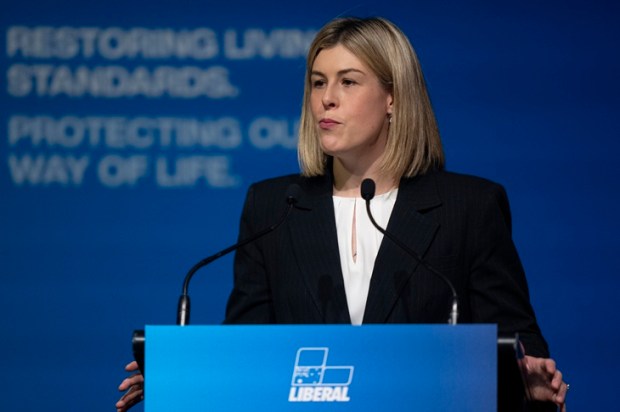
Whatever one makes of the National Party or its leader’s positions, his method is the only one on display this fortnight that my SynthPol model would endorse. Set Matt Canavan against the bumbling field: Angus Taylor relentlessly reaches for character, conduct, and capability, declaring in whatever fashion he can that Hanson is unfit. Andrew Hastie reaches for the language of war – Sun Tzu quotations and battle metaphors – as if the voters were terrain to be retaken rather than customers to be won back. The Prime Minister, of course, asked his speechwriters for a witty epigram and his PR for a social media moment.
All three are the same reflex – discredit the vessel, insult the cargo – and the elasticity law prices all three at zero or below. Canavan alone is running the other strategy. It is, for this article’s purposes, a documented conversion: in March, on winning his party’s leadership, he attacked One Nation, and Hanson accused him of joining ‘the woke pile on’.
By July Canavan was talking about biscuits and pretending Hanson does not exist – which is, professionally speaking, the most dangerous thing anyone has done to her for some time. Somewhere between March and July, the Nationals leader found his footing and changed his method.
The scandal that would actually work
Here is the anatomy’s final finding, and the one the establishment machine would least enjoy. There is a scandal that kills an insurgent – the record shows exactly one. It is not corruption, which the voters have priced. It is not the disreputable friend, whom the voters rather enjoy. It is collaboration. The photograph with the insider. The moment the outsider is caught holding a signed agreement with the very elite, the establishment, which her voters hired her to menace.
The historical register my engine keeps is unambiguous: insurgent actors who become junior partners in establishment coalitions shed their voters with brutal regularity – the vote does not transfer, it evaporates, because the deal violates the one point that the voters hold dear. And Australia is currently demonstrating the corollary in real time: the angriest fight in conservative politics this past month is not about Hanson’s word but about preferences – whether the Coalition should deal with her at all.
The only scandal that can stop Hanson is not found in legal accusations or gutter press for urbane intellectuals. Nor is it found in the Prime Minister’s trusted quotation dictionary or in Hastie’s battered copy of Sun Tzu. It is found in Hanson’s own choices – the standing temptation to be reclaimed amongst the respectable. But her enemies cannot force this upon her. It is a lure which only Hanson can swallow.
So the machine grinds on, in two hemispheres: the revelations, the podcasts, the Svengalis, the epigrams minted in Town Hall – the procedural inquiries. Let’s see what they all produce. My engine’s registered wagers stay where they are. However, I will offer the falsifiable observation plainly: if the latest Cottrell revelations put a big dent in Reform’s polling this month – or cost Farage voting levels below 2024 results during the Clacton by-election he triggered – the shoot-the-driver theory scores its first point in a decade, and I will record it.
If, instead, the by-election produces a powerful endorsement of Farage, even though key parties won’t participate, what then? Legacy parties and the establishment media call it farce – but that’s because the instrument of popular acclaim works for Farage, as it does for Trump.
It’s all part of the same game. Attempt to trick your opponent into renouncing their strongest cards. Farage argues ballot; the establishment argues process. And the relevant electorate probably sees it in this light. ‘The elite won’t even face him – just as they tried to duck local elections in vulnerable districts for 2025 and again, less successfully, for 2026.’
My wager is on the substrate – on the passengers who choose the destination before they pick any driver, those who read or hear the news as just one more confirmation that the ticket they already bought is the right one.
The anatomy lesson reveals a lot about those who put the body there. Every scandal the elite selects is a self-portrait – of what it fears, what it values, what it has to lose or gain. And more – the lesson reveals the establishment’s own predilections. The elite prosecutes process because process is its native tongue. Its games are all process games.
The elite attacks the insurgent because the insurgent is all its theory allows it to see. It coins the axis of grievance because, inside the economy of words, the coinage feels like the real work of governing. And it cannot use the one weapon that does work, because that weapon requires the unthinkable: making the outsider – the deplorable – respectable. Harder still, it demands out-competing her for the loyalty of those who actually buy the biscuits and worry about the price. Heaven forbid!
One man in Brisbane spent his headline speech trying an alternative path. Canavan wished his audience nothing grander than a carefree Sunday afternoon with a Tim Tam. Maybe, like Neo, he had seen the machine and found a way outside it.
The rest were back at the machine as the new week unfolded. In Britain out it came, with no sense of irony – no sense that we’d seen this ploy before. ‘Farage’s “man of the people” act finally exposed.’ And Taylor once again promised us that Hanson is unfit.