It was once the engine room of the European economy, the strongest of them all. Germany is now on its knees, with news filtering through that the massive automotive manufacturer, Volkswagen, is about to lay off 100,000 workers. Could it be possible that this once great company will cease to exist in the future?
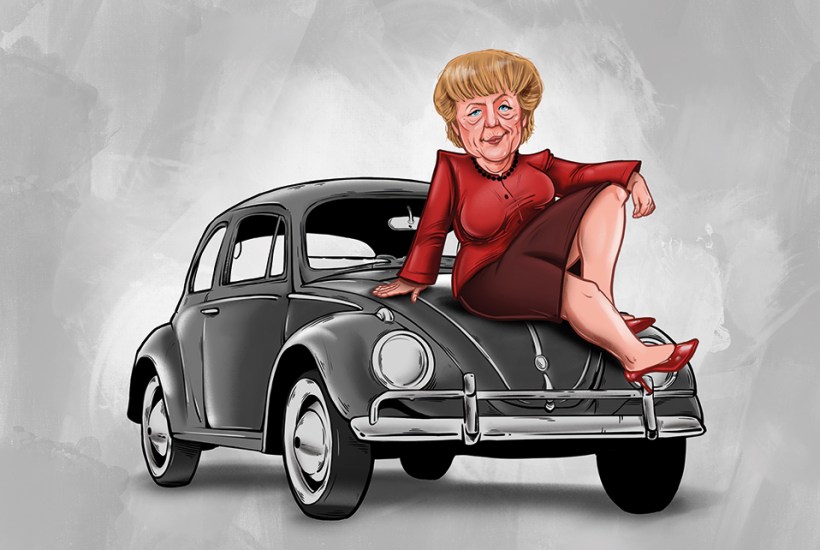
So what accounts for this sorry saga? Of course, there are several reasons, but one person more than anyone else should be held responsible. Her name is Angela. Angela Merkel, chancellor of Germany between 2005 and 2021. Born in the old East Germany, fluent in Russian as well as German, Angela’s many missteps have led the German economy to becoming a laughing stock, rather than one to be admired.
In 2023 and 2024, the German economy contracted. In 2025, annual economic growth was anaemic at 0.2 per cent. Unemployment is currently 6.3 per cent. From being a world leader in exporting complex manufactured products, including luxury automobiles, Germany’s export performance has tanked.
Its bizarrely over-regulated retail sector – basically, shops are closed on Sundays and public holidays – symbolises the mess the German economy is in. There are even retail police officers who can fine shop owners up to 2,500 euros for selling non-permitted items on non-permitted days. It reminds me of Melbourne in the 1960s.
Given that growth in consumer spending could assist the German economy to escape from its lengthy slump, it is more than passing strange that restrictions on retail opening hours have not been lifted. But opposition from the powerful trade unions as well as a dysfunctional federation have stymied any real progress of this front.
It’s worth reviewing the fatal missteps that Angela Merkel took while in charge of the third-largest economy in the world – in nominal terms, at least. She would strongly disagree with the following analysis, having written a turgid, self-serving book entitled Freedom. It was published in 2024, all 736 pages. But I’m going to ignore her tendentious propositions.
To be fair, her term in office didn’t start off too badly. Germany was happy to accept cheap gas from Russia arriving via pipelines. And whatever Merkel’s obsession with decarbonisation and renewable energy – the policy even had its own name, Energiewende – the combination of cheap gas and nuclear energy meant that energy costs didn’t hold back manufacturing industry in Germany.
The fact that the value of the euro had settled at a level that largely suited Germany’s poorer EU country cousins meant that the export competitiveness of Germany was turbocharged. It was a time of strong growth in German exports, especially to China. The trade sector assumed a disproportionate share of the overall economy.
The rot really began to set in during the second decade of the century. Angela seriously overreacted to the nuclear accident in Fukushima in 2011. Spooked by the rising popularity of the Greens as a political force, she announced the phasing out of the nuclear power industry in the country. The last nuclear plant was closed in 2023. (This year, Germany’s current Chancellor, Friedrich Merz, described the decision as a ‘huge mistake’.)
In the meantime, the invasion of Ukraine by Russia in 2022 forced Germany to cease accepting gas from Russia. In its place, much more expensive liquefied natural gas had to be imported. Energy prices skyrocketed, affecting both households and businesses. High energy prices remain one of the main reasons for Germany’s economic malaise.
Even in the face of the deteriorating economic situation, the country retained a reputation for high-quality, precision engineering. The irony here is that there have been some catastrophic failures in the construction of large infrastructure projects, on a par with what we see here, particularly in Victoria.
Take the case of the new airport in Berlin, the Berlin Brandenburg Airport, also called the Willy Brandt Airport. In the end, it took some 14 years to complete, opening in 2020. There had been a false start in 2012, but it turned out that there were massive faults in the fire safety system. (The engineer in charge of this aspect of the construction of the airport had faked his qualifications.) The initial estimate of the airport’s cost was two billion euros; it ended up costing around seven billion euros.
The rail network in Germany is also facing considerable problems as years of underinvestment have led to problems with the tracks and the IT system governing the movement of trains. A major rail project, Stuttgart 21, has involved 1,000 kilometres of cables and cable shafts being incorrectly laid. Most of them will have to be replaced.
Once upon a time, German trains ran on time, but they are now known principally for their lack of reliability.
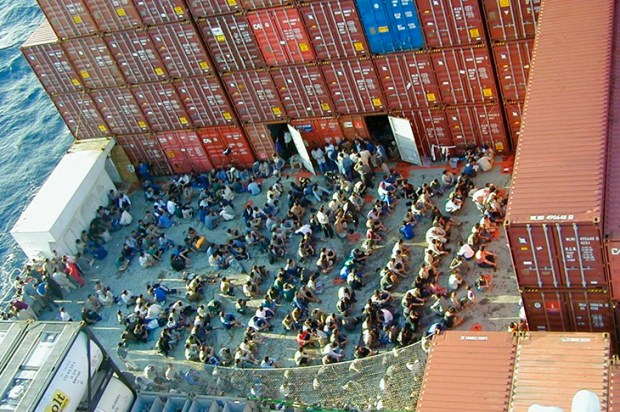
One of the biggest mistakes that Angela made was to accept very large numbers of Syrian migrants into the country, starting in 2015. In response to the troubles in Syria, the decision was taken for Germany to suspend the Dublin Convention – this meant refugees had to stay put in the first safe place at which they arrived – and to allow an almost unlimited number of Muslim migrants to arrive from Syria and other places, given the difficulty of establishing a migrant’s country of origin.
In total, over one million migrants arrived in a very short space of time. They didn’t speak the language and required accommodation and income support. Notwithstanding the obvious difficulties of accepting so many migrants in such a short space of time, Angela devised the motto, ‘We can do this’. Unsurprisingly, this cliché did not convince all Germans.
The earlier experience of Germany accepting large numbers of guest workers, mainly from Turkey, should have offered Angela some lessons. Most of these guest workers, many of whom never learnt German and were also illiterate in their own language, opted to stay, living in ethnically separate ghettos. The second- and third-generation guest workers still experience high rates of unemployment and welfare dependency.
The bottom line is that Angela was a disaster for Germany, notwithstanding her self-congratulatory tome. She failed to anticipate the country’s challenges, particularly in terms of energy costs, infrastructure requirements and the loss of social cohesion, and proceeded in an ideological, politically driven way. She lauded it over some other European countries – Greece, for instance – while the economic and financial performance of her own country was rapidly worsening.
She has left the current business-oriented Chancellor, Friedrich Merz, to deal with the challenges she failed to address. The constitutional restrictions on the budget – it was close to impossible for the central German government to run deficits – have been lifted and Merz has increased spending on defence, in particular. But it’s impossible to see Germany regaining its reputation as an economic superpower any time soon. In the meantime, watch this space on the fate of Volkswagen.
Got something to add? Join the discussion and comment below.
You might disagree with half of it, but you’ll enjoy reading all of it. Try your first month for free, then just $2 a week for the remainder of your first year.