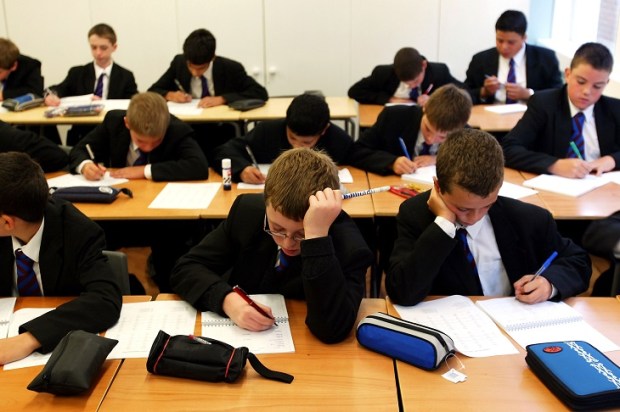
Recent warnings from Australian security agencies that hostile state actors, including the Islamic regime of Iran, are allegedly targeting teenagers for paid acts of sabotage and violence should not be dismissed as just another counter-terrorism alert. They fit a pattern consistent with the nature of the regime in Tehran, its recent proxy attacks in Europe, and echo past incidents in Australia.
This, for instance, recalls how ISIS targeted young Australians between 2014 and 2018. That campaign was systematic, targeted, and often highly manipulative. Social media and encrypted messaging created an environment described at the time as ‘grooming’. More than a decade later, the issue remains unresolved.
Current reports suggest Tehran is now using online gaming platforms to recruit children for its proxy conflict against the West. However, we know that as early as 16 October 2022, the Australian Federal Police identified extremist efforts to exploit popular online games to recruit young Australians.
Recent terrorist attacks across Europe targeting Jewish communities and Iranian dissidents have been linked to local criminals and Harakat Ashab al-Yamin al-Islamia (HAYI), a militant Islamist group believed to act as a front for the Islamic Revolutionary Guard Corps (IRGC). Tehran’s modus operandi involves leveraging the gig economy and recruiting local criminals and vulnerable teenagers to carry out acts of sabotage, arson, and violence mostly against Jewish communities and Iranian dissidents.
Australia is an obvious target for the IRGC and its proxy networks due to the pre-existing network that made the previous IRGC’s acts possible. There is already evidence of Iranian-linked actors recruiting local criminals, and they can readily exploit individuals with extremist or antisemitic sentiments.
Further, the ASIO director made another warning on June 24 that there is a realistic possibility the group that’s been active in Europe will expand its networks to this part of the world, and could conduct or inspire acts of arson, vandalism or even assassinations on Australian soil.
The recent memorandum of understanding between the US and the Islamic Republic of Iran will provide adequate funds to the regime to spread its network of violent acts against Jewish and Israeli communities. Ghalibaf, the rising figure who appears to be in charge of the negotiations, has stated on Iran’s TV that ‘we make concessions, but our ultimate revenge will be the liberation of Jerusalem’ signalling the continuation of hostility toward the Jewish state and people. We assess Labor’s welcoming of the MoU to be a miscalculation that will backfire if the IRGC continues spreading its network in Australia.
The Islamic Republic has been in power for 47 years and has never abandoned its reliance on terrorism as a tool of statecraft. They now navigate in the realm of ‘gig economy terrorism’ characterised by the outsourcing of violence to deniable, low-level actors. The regime’s strategy is to exploit open societies, weaponise their freedoms, and recruit their most vulnerable members.
Australia has already seen how this operates in practice. The alleged financing of antisemitic arson attacks in Melbourne and Sydney through criminal proxies should have been a wake-up call. These were not isolated hate crimes; it is our opinion they bore the hallmarks of foreign interference, designed to sow division and test the limits of Australia’s response.
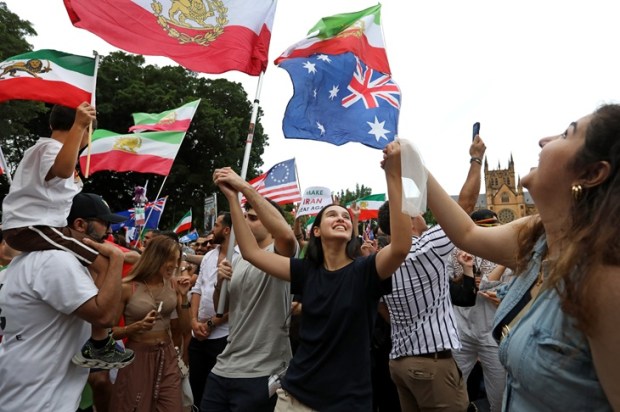
The Australian government refused to designate the IRGC in 2023 and 2024, despite sustained advocacy from the Iranian community and the recommendation of the Senate Foreign Affairs, Defence and Trade References Committee. This refusal came despite substantial evidence and warnings. Ignoring those warnings contributed to an environment in which IRGC-linked terrorist acts occurred in 2025.
As we warned the Australian government in March 2025 and again in April 2026, it is a strategic necessity, grounded in both national security and national values, for Australia to align with a policy of maximum pressure against Tehran. Subsequent developments have only reinforced our assessment.
There are always warnings issued by the community and security agencies, but delays in acting on them remains a major shortcoming in Australia. For example, it has been alleged that individuals connected to the IRGC may have been able to obtain passports for some time after the organisation was designated a terrorist entity, which raises questions about how seriously government considered the security threat.
What is unfolding now is more sophisticated and more dangerous. This is not merely a law enforcement challenge; it is a national security priority.
It is also a call to action for all free countries whose citizens – particularly Jewish and Iranian communities – may be targeted. Australia must be willing to publicly name and confront the Islamic regime for what it is. The recent joint statement by the US, Australia and twenty other states about the Iranian threat via HAYI terrorist activity in Europe, North America and Australia is a start, but far from adequate.
Australia must recognise the reality: this is a form of warfare already underway. A coherent response requires both defending against these threats at home and supporting the Iranian people in their struggle to bring an end to the regime.
Reza Arab is a lecturer at the University of Queensland and an advisor to the Iranian Prosperity Project.
Saeed Ghasseminejad is director of the Iranian Prosperity Project and a senior fellow at NUFDI.