I’ve always admired Jimmy Carr’s line on the distinction between old-fashioned communism and the newer, woker sort. ‘Instead of trying to redistribute wealth, which is a perfectly reasonable thing to want to do, they want to redistribute status,’ he explains. ‘And that is a recipe for… madness.’
Beyond the pork barrel tone we’ll have to get used to over the next few years, the most remarkable thing about Burnham’s wheeze is his ambition to equalise status between different educational tracks
Perhaps one shouldn’t be surprised at Carr’s talent for the astute given his educational pedigree. Before becoming Britain’s leading offensive comedian, Carr graduated from Gonville and Caius College, Cambridge, with a first-class degree in social and political science. After a period of marketing for Shell, he was drawn into comedy, no doubt due to the steady paychecks and attractive pension scheme.
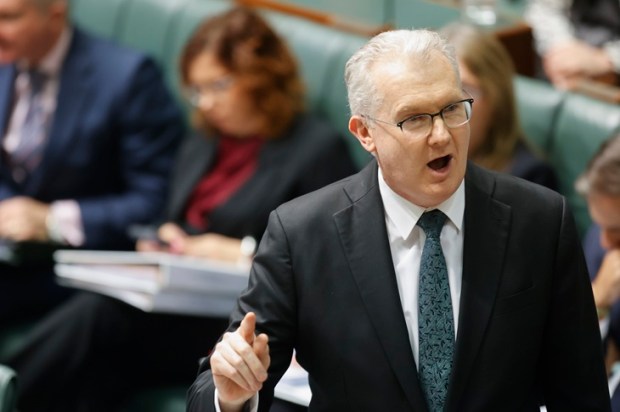
Carr is right to identify the particular American urge to level status between different groups. But the same impulse has a longer history in Britain and is currently being indulged by new Prime Minister Andy Burnham, a near contemporary of Carr’s at Cambridge, where he studied English at Fitzwilliam College.
Burnham’s early weeks in office appear to be a radical experiment in seeing if you can organise a governing philosophy around the stereotype of the chippy northerner. Drawing on his experience as Manchester mayor, where seasoned observers think he was better at gladhanding and taking credit than actually facilitating the boom in building projects and bus services, Burnham is intent on levelling inequalities across Britain, whether regional or educational.
That’s been expressed in his push for technical education, harking back to a Labour party that actually took an interest in the working class. While most secondary schools in England already offer technical education, Burnham wants to boost the quality and availability of these courses, through a combination of diverting existing budgets and the inevitable stakeholder consultations with every local man and his local dog.
Beyond the pork barrel tone we’ll have to get used to over the next few years, the most remarkable thing about Burnham’s wheeze is his ambition to equalise status between different educational tracks. ‘For too long in this country, students have been told that you must take the academic path to do well and to be respected,’ he said. ‘I want an education system based on parity between academic and technical which gives all young people a clear path in life. From today, Britain will value the hard hat every bit as much as the graduation cap.’
As mentioned, Burnham isn’t the first to lament the respect gap between technical apprentices and university undergraduates. Back in 1991, John Major noted the longstanding ‘disdain for vocational training – a superior attitude to industry, and a mild contempt for the practical man and woman’. Not much had changed by 2018, when Theresa May said: ‘There remains a perception that going to university is really the only desirable route, while going into training is something for other people’s children’ – a sentiment Keir Starmer echoed when he railed against ‘the snobbery that looks down on vocational education’.
Politicians of both left and right have similarly complained about the attention lavished on boosting university attendance, which seemed to go hand in hand with neglect of technical qualifications. Having conducted a government inquiry into technical education in 2015, the former Labour science minister David Sainsbury wrote in the New Statesman that the country’s approach to them was ‘a disgrace’.
At the risk of playing the man rather than the ball, to use a metaphor Burnham would enjoy, the irony is that so many of the vocational training enthusiasts themselves chose a more academic path. Major may have run away from the circus to become an accountant, but his successors May and Starmer both attended Oxford, albeit as a postgrad in the latter’s case. Sainsbury liked studying at Cambridge so much he eventually became chancellor of the university.
The increasingly academic self-image of British politicians made it easy for Tony Blair to fatefully call for half of young adults to go to university. That figure was achieved in 2019, eevn as the trend has been accompanied by rising doubts over what the dons might term ‘benefits to human capital’, to say nothing of the value for money arguments that became hypercharged during the Covid pandemic.
Speaking as someone who didn’t attend university, my prejudice has always been that outside of medical and law degrees – vocational courses, but high-status – the signs of intelligence and diligence that white collar employers are looking for are amply demonstrated by A-levels, if not sooner. As the academic Bryan Caplan would say, university for most is an expensive signalling exercise.
That many grads and non-grads would agree with me doesn’t change how attractive attending university is as a status marker. When Neil Kinnock asked why he was ‘the first Kinnock in a thousand generations to be able to get to university’, he wasn’t outraged about the practical disadvantage his ancestor suffered during the last ice age from being snubbed for a Cornwall College degree in surf science.
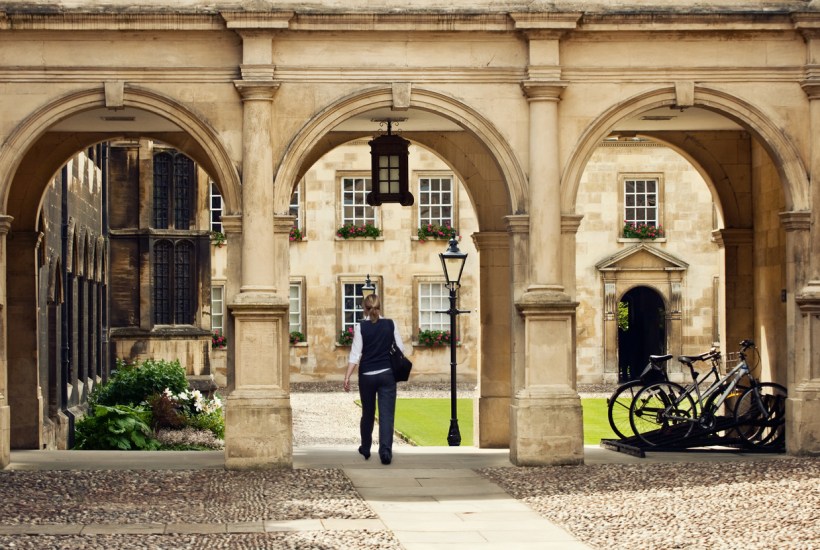
British universities have done their best to erode the status boon they confer on graduates, whether by lowering entry requirements, turning themselves into visa mills, or hiring clearly unsuitable professors. But the fact is that however much Burnham shuffles the funding, re-writes the curriculum or moves plumbing schools into Gothic buildings, there’s only one type of higher education institution that aspirational British parents will brag about to their peers.