Australia’s housing market is sending a warning the Albanese Labor government cannot afford to ignore.
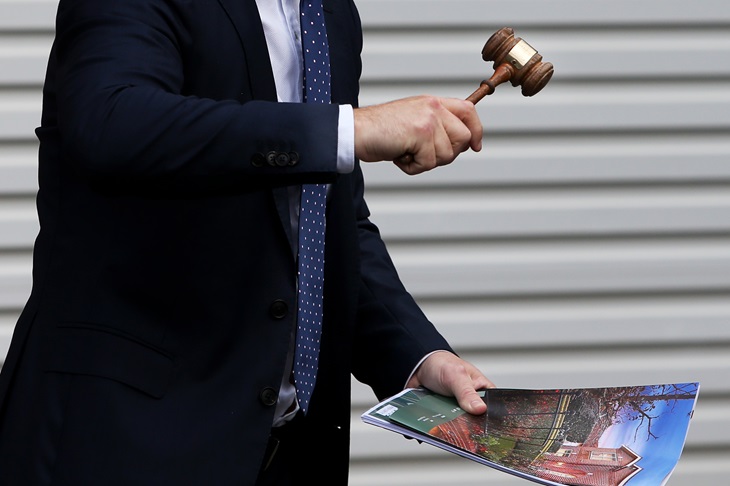
Across the capital cities, more homes are now failing at auction than selling, pushing clearance rates below 50 per cent for the first time in six years.
That is not merely a statistic for property analysts, it is an early warning that buyers are retreating, vendors are losing confidence and the housing market is entering a weaker phase.
Auction clearance rates are among the most reliable, real-time measures of housing market sentiment.
Strong rates signal competition and rising prices. Weak rates point to softer demand and downward pressure on values.
When clearance rates fall below 50 per cent, markets are typically losing momentum.
That is the new reality for Australia’s housing market.
Cotality’s latest data showed a combined capital city clearance rate of just 49 per cent for the week ending May 31, 2026.
Sydney recorded 46.5 per cent, Brisbane 39.9 per cent, Canberra 38.7 per cent, Melbourne 51.9 per cent, and Perth 54.6 per cent.
While Perth’s clearance rate remains higher than eastern capitals, it is still below levels associated with strong price growth and reflects a broader softening in buyer sentiment.
More than 1,350 auctions went uncleared across the capitals, with almost 1,000 properties passed in and hundreds more withdrawn.
Behind those figures are thousands of Australians making decisions about their financial future.
Buyers are becoming more cautious, vendors are adjusting expectations and many sellers are choosing not to list.
Agents report fewer bidders, lower attendance at inspections and a widening gap between seller expectations and buyer willingness to pay.
Perth’s position is particularly noteworthy because it is one of the few capital cities still recording strong price growth despite softer auction conditions.
A clearance rate of 54.6 per cent would normally suggest a flat or weakening market, yet prices continue to rise because Western Australia remains constrained by an acute housing shortage, strong population growth and exceptionally tight rental conditions.
That divergence highlights the fundamental problem confronting the Albanese government – demand-side tax changes cannot solve a supply-side housing shortage.
In Sydney and Melbourne, values are already declining.
Cotality reported dwelling values declined by 0.9 per cent in Sydney and 0.8 per cent in Melbourne during May, while Canberra also recorded a fall.
Nationally, home values were flat, ending a period of slowing growth.
This is not yet a housing crash, but it is clearly a loss of momentum.
The reasons are straightforward.
Higher interest rates have reduced borrowing capacity, household budgets remain under pressure, consumer confidence has weakened and housing affordability is increasingly stretched, particularly in Sydney and Melbourne.
Into this already fragile environment, the Albanese government is proposing major changes to negative gearing and capital gains tax.
The timing could hardly be worse.
Housing markets run on confidence.
When buyers delay decisions, investors retreat and vendors hold back listings, the result is a self-reinforcing slowdown that weakens activity across the market.
Treasury estimates the proposed tax changes could reduce house prices by around 2 per cent over two years compared with a scenario where no changes occur.
Other economists suggest prices could be between 1 and 4 per cent lower than otherwise expected.
Morgan Stanley has warned prices could fall by 5 to 10 per cent fall if investor demand contracts sharply, while Westpac forecasts new investor demand could decline by 34 per cent and property turnover by 20 per cent.
Even if the most moderate estimates prove correct, the policy risks targeting the wrong part of the problem.
The central flaw in Labor’s policy is the assumption that investors are the cause of Australia’s housing affordability crisis.
Investors certainly contribute to demand, but they also provide most of the rental housing.
Discouraging investment without increasing supply simply shifts pressure elsewhere in the housing market.
In practice that means renters.
This is particularly concerning given rental markets are exceptionally tight and new housing supply continues to lag demand.
The government argues that investors will shift towards newly built homes.
In theory, that sounds appealing – in practice, it is far more complicated.
Elevated construction costs, persistent labour shortages, slow planning approvals, and difficult project economics continue to make new housing expensive and challenging to deliver across much of Australia.
Australia’s housing shortage will not be solved by pushing investors out of one part of the market and hoping supply appears somewhere else.
The Labor government may succeed in its objective of discouraging investors but fail in achieving the objective of making housing more affordable.
That would leave Australia with the worst possible outcome- fewer investors, fewer rental properties, and little improvement in affordability.
For first homebuyers, lower prices may initially sound attractive, yet affordability is not simply about the purchase price of a home.
A property is not more affordable if credit is harder to obtain, mortgage repayments remain elevated and economic confidence continues to weaken.
For recent purchasers there is also the risk of negative equity.
Households that entered the market with small deposits could find themselves owing more than their property is worth if prices fall materially.
That has implications for refinancing, mobility and household confidence.
Renters face an even more immediate risk.
If fewer investors enter the market and existing investors sell, rental supply tightens further.
In a country already struggling to house a growing population, that means higher rents, fewer available properties and increased pressure on families already facing cost-of-living pressures.
Housing policy should ultimately be judged by outcomes, not intentions.
Australia undeniably has a housing affordability problem.
Young Australians are increasingly locked out of home ownership and renters face unprecedented pressure.
Yet policies that undermine confidence, discourage investment and ignore supply constraints risk making those problems worse rather than better.
Australia needs more homes,
It needs faster planning approvals, lower barriers to development, investment in enabling infrastructure and policies that encourage construction.
It needs reforms that increase supply rather than simply reshuffle demand.
The danger is that the Albanese government is confusing affordability with weakness.
A weaker housing market is not necessarily a fairer housing market.
If declining prices are driven by uncertainty, falling confidence and reduced investment rather than increased supply, the result can be worse outcomes for buyers, renters and investors alike.
That is why the current market signals matter.
Clearance rates are falling, prices are weakening in the largest cities, investors are reassessing their position, vendors are withdrawing from the market, and buyers are waiting.
This is precisely the wrong time to inject another layer of uncertainty into the housing market.
Labor’s proposed changes to negative gearing and capital gains tax may be presented as a fairness measure, but their practical effect will be less investment, fewer rental properties, lower market turnover and increased pressure on an already strained housing system
Australia does not need housing policies designed for headlines, it needs policies that recognise a simple truth – the housing crisis is fundamentally a supply problem.
When the auction room goes quiet, governments should listen carefully.
The market is already signalling weaker confidence; the question is whether policy makers are prepared to hear it.
Dean Smith is a Liberal Senator for WA