The most consequential allies in the US war on the Iranian Republic (now passing the 100-day mark) are not influential, behemoth nations, but small, agile, rising powers: a glittering city-state of 11 million and the world’s newest nation, one the world is yet to recognise.
The United Arab Emirates and Somaliland (geographically and population-wise miniature states) are bringing enormous global influence to bear.
The US must reward and strengthen these small states exercising disproportionate impact – compact nations courageously repelling Iranian influence. These are bold allies indeed.
In some senses, their impassioned, outsized defence against Islamist Iran is reminiscent of the Jewish state firmly in the eye of conflict since October 7, 2023.
Israel – home to only 10 million people (and geographically comparable to the size of New Jersey) – has long punched above its weight. That is in large part because its survival depends on it and its extraordinarily martial character.
Israel’s sense of self-preservation was moulded by its people’s history, its astute founder, David Ben-Gurion and later, by its iconic leader Ukrainian-born Golda Meier who would face the Yom Kippur War of 1973. Both maintained categorical doctrines to avoid both foreign troops on Israeli soil and foreign deployments of Israeli forces. Ben Gurion charted an unequivocally strong defence policy eschewing foreign entanglements in favour of self-defence of the nascent state which has come to define the modern Jewish State. In fact, he read and later wrote of the formative army of the United States – Washington’s Army fighting the British as he considered the new IDF.
Reportedly their shared belief was to ensure Israeli forces would always be ferociously independent, self-reliant, and averse to complacency.
In the wars since October 7, while there has been intense outrage at the ferocity with which Israel has reasserted her sovereignty, I have travelled into Israel and to Iraq and Syria, in capitals and conflict zones around the region, far from the Kirya in Tel Aviv, I have found acknowledgment – and respect – that nowhere is beyond Israel’s extraordinary reach.
The remarkable, bold responses of Somaliland and the UAE in this conflict – both defending their sovereignty and deterring their enemies – share the same psyche that decades earlier would define the nascent Jewish State.
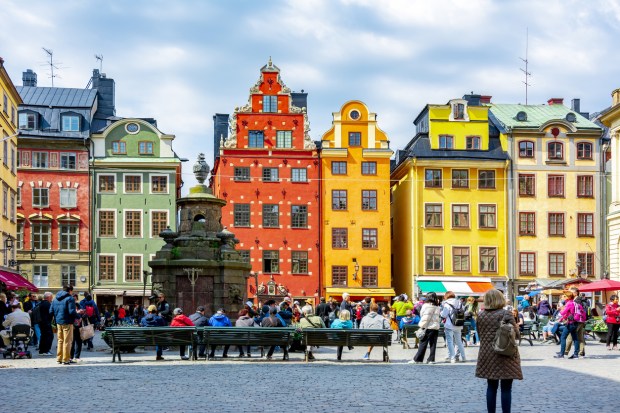
The UAE, with a population of 11.6 million, is globally known for its wealth, the premier regional financial hub, its stunning architecture, lavish marinas, tier one cultural entertainment, luxurious hotels, and the jewel in the crown of the Abraham Accords.
On a recent visit to the US, Khaldoon Khalifa Al Mubarak, Chairman of the United Arab Emirates’ Executive Affairs Authority, met with US Secretary of Commerce Howard Lutnick, committing to $1.4 trillion in investments in the US over the next 10 years.
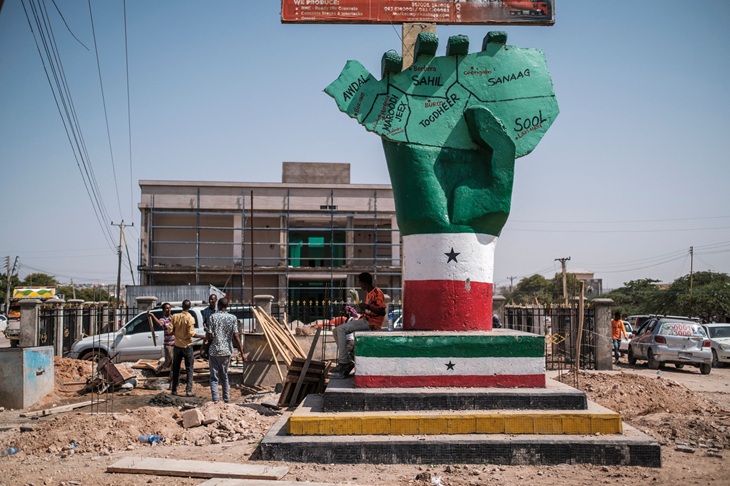
On the other side of the Arabian Peninsula, far from the Instagram-worthy glamour of the Emirates, Somaliland is a fledgling independent state of 6.2 million that gained independence from the British Empire in 1960, embarked on an ill-fated union with neighbouring Somalia and, after rejecting Somalia’s corruption, Salafist extremism, and radical Islamist Al Shabbab, finally exercised its right to its own sovereignty in 1991. Somaliland maintained its sovereign status despite being denied global recognition.
Somaliland hosts UAE and Israeli military infrastructure and plays a pivotal role in logistics including refuelling Israeli fighter jets and combating Iranian allied Houthis operating from neighbouring Yemen. Somaliland has allowed the UAE to operate the Port of Berbera with a $442 Million DP World Investment. Somaliland’s influence is poised to expand as the Houthis re-enter the fray and threaten Bab Al Mandeb just off the cost of Somaliland.
Each state is at the extreme end of the wars that have ripped through the region- the shadow war between Israel and Iran now in the open, and the incandescent enmity between Iran and the United States as each confronts its enemy of a half a century.
As the American war machine centered on Tehran sends seismic reverberations across the profoundly fraught region, at the concentric periphery, these miniature states – in an almost synchronized symmetry – ride a crest emanating from the white-hot center of conflict- the Emirates at the scorching threshold of Iranian influence, and Somaliland at almost the furthest reach of Iran’s proxy assets.
My recent travels, first to the Gaza Envelope to document the Hamas atrocities days after they were perpetrated on October 7, later to the Israeli fronts with Syria, the Sinai, Southern Lebanon, and later still to Iraqi Kurdistan and Northeast Syria all confirm the unprecedented threat Iran has posed for decades to the region. (To truly understand Iran’s regional sabotage, I needed to travel to Iraq four times.) Knowing the deep tentacles of Iranian subversion across the region renders the UAE and Somaliland’s defence even more impressive.
Each miniature state is deeply engaged with the other – reports are the UAE has brokered Israel’s diplomatic recognition of Somaliland. Precisely because of their alliance and this war, both Somaliland and the UAE will emerge stronger, globally more influential and more respected, steeled with augmented diplomatic and security gravitas that separates each of these states from heavyweight neighbours in the Arab Gulf and the Horn of Africa.
Former Undersecretary of State for Economic Growth, Energy and the Environment, and now Visiting Lecturer at Yale University’s School of Management, Robert Hormats recently observed President Donald Trump is following the ‘Monroe Doctrine’ (some quip the ‘Donroe’ Doctrine) – augmenting the United States’ influence in its own hemisphere. Hormats writes in Fortune that the natural sequitur for the Trump administration should be the adoption of a new Truman doctrine: as Truman extended US military economic and diplomatic support in 1947 to all nations defying Soviet expansionism and subversion, so too must Trump do the same – for nations defiant of Islamist Iran’s bellicose expansionism.
Deepened US support for both the UAE and Somaliland through both hard and soft power forms an intelligent, strategic doctrine that could define Trump’s second administration, one fully coherent with the 2020 Abraham Accords created in the first Trump administration.
This new Trump-Truman Doctrine 2.0 embraces Somaliland and deepens the UAE engagement in advance of dazzling ceremonies on the South Lawn such as the one I witnessed on September 2020. A thus expanded Accords resonates with the soaring, ambitious sentiments of the original landmark Accords, which committed to shared economic, trade and security goals ensnaring the volatile region in mutual, highly valuable interests forming powerful deterrents against exactly the regional fracture and open conflict within which the region is now immersed.
Empowering the most nimble, agile, assertive, and imaginative Muslim-majority, avowedly anti-Islamist states not only forms a key bulwark against the Iranian empire, but further intensifies pressure on the increasingly violently totalitarian Iranian Republic, accelerating its regime’s demise.
The Iranian republic’s intense targeting of the UAE during this war, which has even outpaced its recent strikes on the state of Israel and exceeded the combined totals of all other Gulf nations, indicates that the UAE economic footprint, global, and regional influence is a direct threat to the ambitions of the Iranian state.
Less recognised is the important engagement that has been underway between Israel and Somaliland. This month President Abdullahi of Somaliland will travel to Israel from June 15 to June 17 to open the first Somaliland embassy in Israel and to hold bilateral meetings with President Herzog and Prime Minister Netanyahu.
As the only United Nations member state to recognise the Republic of Somaliland, Israel is now formalising this valuable relationship. On December 26 of last year, Israel Prime Minister Benjamin Netanyahu and Somaliland President Abdirahman Mohamed Abdullahi signed a joint declaration, invoking the spirit of the Abraham Accords.
Somalilanders had hoped, with Israel’s recognition, that US recognition would soon follow. (This American hopes for the same.) Momentum is indeed building for this outcome which would acutely serve the present and long-term US national interest.
Because the United States-Iran conflict appears it will be an enduring one, Somaliland’s independence will become increasingly relevant to the United States, even more so as long as China maintains its hefty Horn of Africa footprint.
For now, with the US-Iran ceasefire poised to shatter, these two nimble states – one wealthy almost beyond peer, the other rich in courage, self-determination, geography and minerals – have together, clear-eyed, defied larger, more powerful regional entities and bravely engaged under volatile circumstances in a way that has benefited their national interests and America’s, while stunning their neighbours.
Their plucky and gutsy sacrifice catapults them to lasting geopolitical influence. As global Goliath, the United States must pause to salute these valiant ‘David-states’ and further cement relations which will deepen the long-term strategic benefit to the United States.