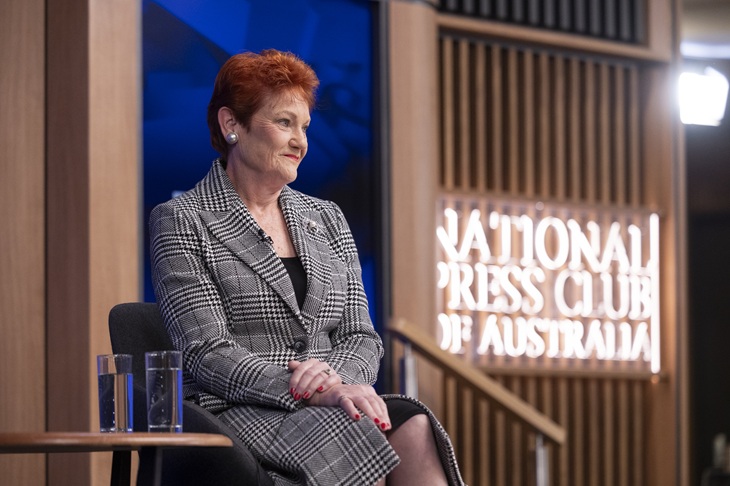
Senator Pauline Hanson recently argued at the National Press Club that while Australia is a multiracial country, it cannot and should not be multicultural. Instead, she suggested, Australia ought to be monocultural. This claim is, in a sense, both right and wrong. It captures a genuine frustration with the shortcomings of institutional multiculturalism, yet it rests on an untenable vision of what culture is and how nations function.
Hanson is correct to observe that multiculturalism, as practised in Australia and much of the Anglosphere, has significant flaws. Public policy in this domain has often failed to foster social cohesion or a shared sense of belonging. Interestingly, if you ask migrants to Australia, most already hold a clear and appealing image of the country; one that attracts people from around the world. However, the notion that a modern nation can be monocultural is implausible. Culture is not a fixed or singular entity; it is a symbolic system composed of customs, practices, and patterns of behaviour, and expression. Australia, as Hanson herself acknowledges, has been built by successive waves of migrants. The beliefs, languages, and traditions of these communities necessarily shape and diversify the national culture.
What Australia requires is a sustained institutional commitment to cultivating its genuine ‘national culture’, one that already transcends difference without denying it. It is really common sense that a nation must offer its citizens a sense of belonging to a larger whole, a shared identity that inspires pride. This identity is typically embodied in common symbols and institutions: a national flag, a national language, a national day, a unifying head of state, etc.
Yet in contemporary Australia, many of these unifying features are increasingly contested, often by people in position of institutional power. One needs only look to academia, sections of the public service, and even elected government to observe a growing scepticism toward traditional expressions of national identity. Institutions that ought to strengthen civic pride and patriotism often fall short. Rather than fostering a cohesive national ethos, they tend to emphasise group identities, sometimes elevating them in proportion to their perceived distance from a normative ‘Australian’ identity. In doing so, they risk weakening the very sense of common purpose that binds a nation together.
This shift is often justified through the language of multiculturalism. Multiculturalism itself, when considered apart from postmodern ideology, is a by-product of human mobility and the economic success of capitalism in the Western world. Yet in its contemporary institutional expression, it is frequently entangled with a broader intellectual framework that is sceptical of Western civilisational achievements and traditional conceptions of national identity. It is no coincidence that many of its most ardent proponents, from an ideological perspective, are also critics of capitalism and Western Civilisation. Within certain activist and academic circles, multiculturalism is no longer treated merely as a description of social diversity, but as a moral project, one that can be framed as a corrective to, or even a critique of, the nation-state itself, often naively recast as inherently exclusionary or oppressive.
This broader ideological current also gives rise to the increasingly common notion of the ‘citizen of the world’, a concept that, while quixotic in abstraction, can function in practice as a detachment from concrete civic and cultural obligations. Popularised in academic discourse and even invoked by public figures such as Barack Obama during his presidency, it reflects a worldview in which national belonging is treated as secondary or even obsolete.
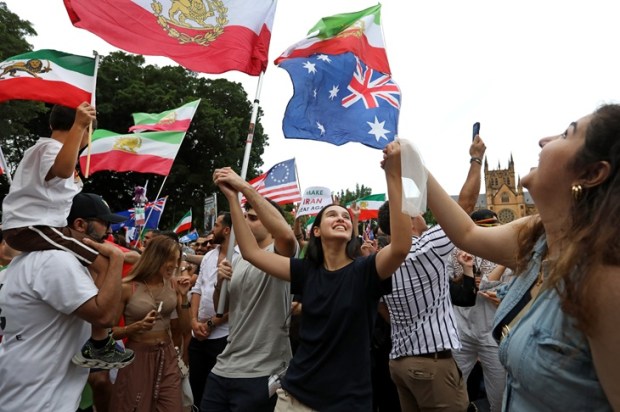
Against this backdrop of fragmentation, it is notable that new forms of solidarity continue to emerge within Australian civic life. While antisemitism and violence against Jewish Australians have increased in recent years, another, less-reported story has emerged. Across the country, Iranian and Jewish communities have developed a growing sense of solidarity. I have written with Isreal’s Ambassador in Australia on this cooperation, expressed through joint statements, shared rallies, and mutual participation in civic life. Iranian Australians have attended Jewish events, while Jewish Australians have supported Iranian-led protests against the Islamic Republic. These acts reflect a shared recognition of struggle and a commitment to common values, made possible, in essence, by Australia itself.
Such developments are not the product of government policy; indeed, they have largely occurred despite it. Official responses to key issues have often been hesitant or inadequate. The government’s initial refusal to designate the Islamic Revolutionary Guard Corps (IRGC) as a terrorist organisation, despite substantial evidence and community advocacy by Iranian and Jewish Australians, illustrates this reluctance. Only after significant harm had been done was the designation made. Similarly, there has been a persistent unwillingness to clearly identify and address the ideologies, such as Islamism, within the institutionalised policy of multiculturalism.
If multicultural policies had succeeded in fostering genuine cohesion, one would expect a decline in social tensions, not their escalation. Nor would grassroots initiatives, such as the cooperation between Iranian and Jewish Australians, remain marginal and under-recognised. In my own experience, multicultural bodies within government have refused to host community events when Israeli Australian speakers were invited, while the government refuses to call out the most radical segments of the Muslim community.
Public debate, however, often remains trapped in simplistic binaries: pro-immigration versus anti-immigration, assimilation versus integration. These recurring framings, frequently revived during election cycles, tend to offer little in the way of practical solutions. My point is that we would do better to move beyond these abstractions and instead examine successful local initiatives, considering how they might be supported, scaled, and replicated more broadly.
Australia has long been described as ‘the lucky country’, a phrase coined by Donald Horne in 1964 as a critique rather than a compliment. Horne famously observed that Australia was ‘a lucky country run mainly by second-rate people who share its luck’. His words continue to resonate, particularly in moments when political leadership appears to fall short of the nation’s potential.
As an Iranian Australian, I am often reminded of another tradition in Australian political life: one of patriotism and national solidarity across the political divide.
In 1909, Joseph Turley, a Labor senator and unionist, said something, during discussion of the Constitution Alteration Bill, that any proud first-generation Australian would agree with: ‘I am optimistic about Australia. I have always contended that it is one of the best countries in the world. I believe it to be the best country for the working man. I have found it so since I came here. I am not likely to speak disparagingly of the country of my adoption, the country in which my children have been born, and where I desire them to be able to make a decent living.’ This vision, even on the left, was neither exclusionary nor cynical, unlike the dominant discourse of the day. But that spirit endures today, not in abstract policy debates but in the lived experiences of Australians.
If there is something distinctly Australian for me in the present moment, it is not the illusion of cultural uniformity, nor the fragmentation of identity into competing groups. It is the capacity of diverse communities to find common ground, to revive old friendships, and to forge new ones within a shared national context, because Australia has the potential, capacity, and freedom to provide such a context. This is something worth protecting and defending. It reflects a deeper affirmation of what Australia can be: a nation where unity is achieved not by erasing diversity, but by transcending it, while resisting forces that undermine the Australian national identity, and its spirit of solidarity and mateship.