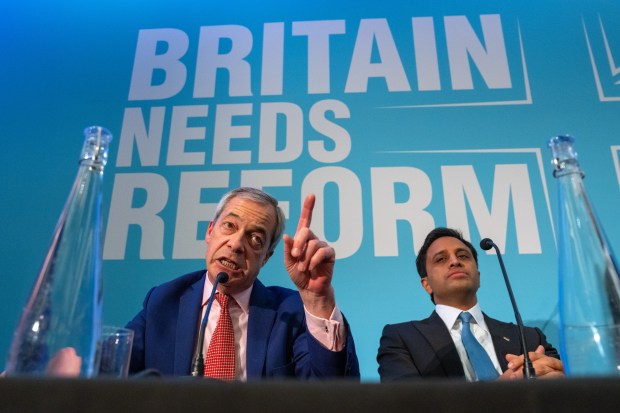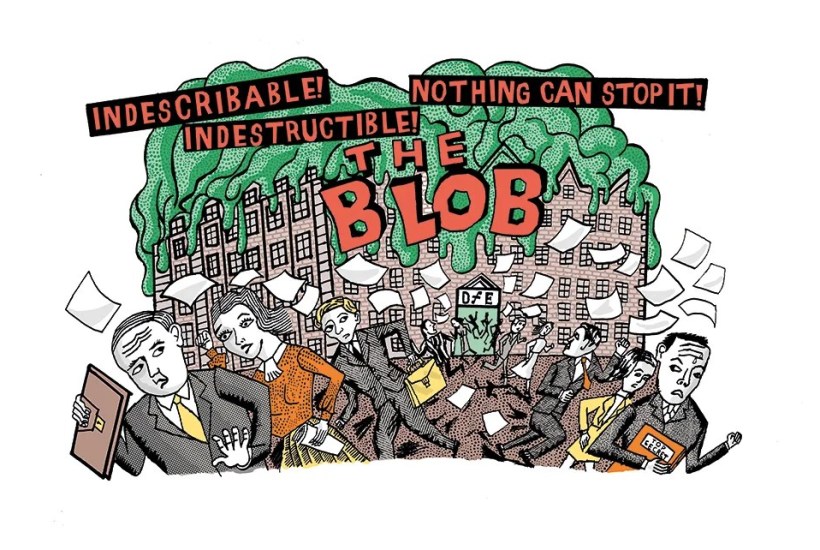
On one level it’s not exactly surprising. The idea that large parts of the civil service would treat a Farage government with horror and seek to frustrate it is what many of Reform UK’s supporters have long suspected. But the sheer brazenness with which the Blob has now declared its hand is shocking and appalling in equal measure.
Civil servants’ largest trade union, PCS, has been debating a motion to ‘counter a hostile Reform government’ with ‘sustained industrial action’. If the motion is approved, the union’s ruling NEC would draw up a resistance strategy by the end of the year. In other words, they are considering going on strike if Farage wins the next election.
PCS said the quiet bit out loud. In so doing they have given Reform an ideal opportunity to claim the moral and legal high ground
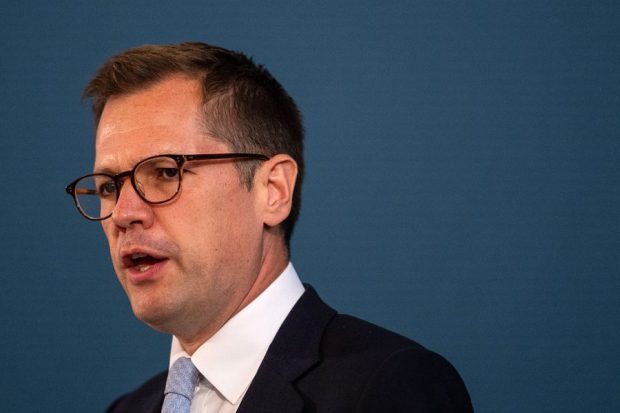
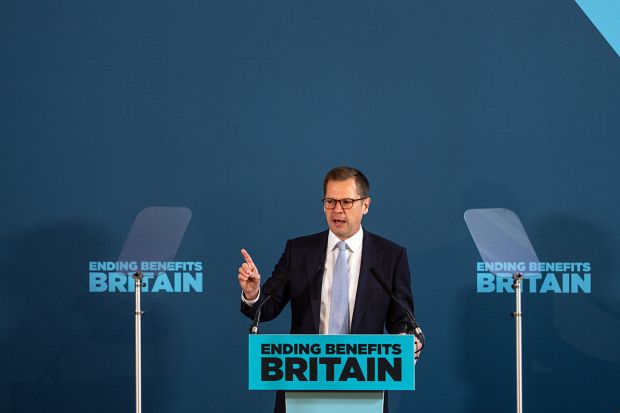
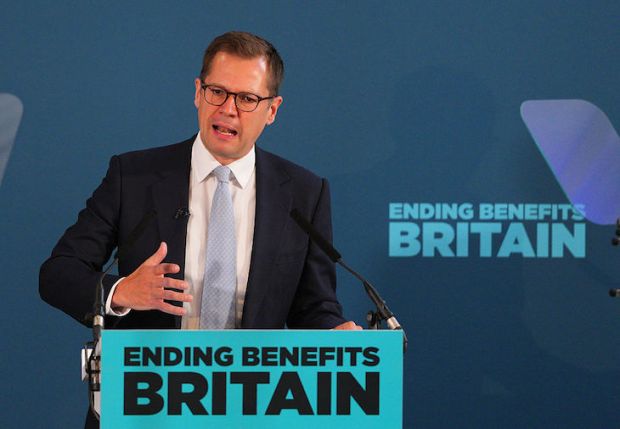
PCS said the quiet bit out loud. In so doing they have given Reform an ideal opportunity to claim the moral and legal high ground. Danny Kruger, in charge of Reform’s preparations for government, threw down the gauntlet with a steely response:
‘Any civil servant who seeks to undermine ministerial authority and the impartiality of the Civil Service through unlawful strike action will no longer have a job to return to…By publicly confirming the reason for future industrial action as opposition to a specific “hostile” government, the PCS have ensured their strikes cannot be considered a “trade dispute| and would be unprotected and unlawful.’
It follows Zia Yusuf’s warning that ‘Our legislation will mean they’ll lose their jobs and their employer pensions if they do this. And save the taxpayer huge sums in redundancy pay! Everyone wins!’ He’s not wrong.
The civil service unions are increasingly civil servants’ own worst enemy. Overnight, PCS rejected the allegations that strikes would breach impartiality. But having shown their hand in this way, it seems clear their determination to sabotage Reform is indeed politically-motivated and thereby does undermine the principle of impartiality that all civil servants are required to uphold.
PCS’s political leanings are quite clear: in a press release on its website (‘PCS pledges to continue to challenge and fight against the far right’), the union said it was continuing to work ‘to challenge Reform and their abhorrent political ideologies’. Having seen the polls, they’ve also decided they’re now in favour of Proportional Representation. A union motion expressed alarm that Reform peddled a manifesto ‘steeped in racist, far-right, rhetoric which targeted the most vulnerable, trade unions, disabled people and refugees’. Marianne Owens, who moved the motion on behalf of the National Executive Committee, said: Reform were ‘a party for the billionaire class, a home for racists, misogynists, and bigots’. Don’t hold back Marianne.
As ever, the union’s answer to deciding that half of the British population is racist is to ‘ensure its anti-racism and anti-fascism strategy was fully embedded in the workplace’. The motion was overwhelmingly carried.
There is nothing new in unions taking political positions in this way, in however hysterical terms. Civil servant unions can engage in public political rhetoric in a way individual civil servants cannot. They can also of course legally propose strikes against pay or conditions or any element of employment policy by a Reform government. But there is a crucial difference between that and plans to strike in an attempt to undermine what they see as a hostile government as an end in and of itself. It is clearly illegal for civil servants to strike in response to the politics of an incoming administration.
The irony of all this is that union leadership are increasingly on a different planet to their members. Polling has shown 26 per cent of Unite members support Reform (with many more likely to be on the fence) while up to 30 per cent of Unison members identified as ‘Reform supporters or Reform-curious’. Since this polling was done last year, the numbers may well have climbed higher.
The moves by PCS were mirrored at the recent annual conference of the National Education Union which called for the trade union to ‘throw its full weight behind stopping a Reform UK government’, again on the grounds that its policies were ‘racist’. Members probably assumed their membership dues would be spent campaigning on pay and conditions. Instead of collective bargaining, union leadership are engaged in slaying mythical beasts in obsessive anti-racism crusades.
Given the battle lines being drawn between the civil service and Reform, it is easy to lose sight of the fact that, as Kruger has said, under a Reform government the civil service would actually be a much better place to work than it is today. Of that – and speaking as an ex-official – I am in no doubt. Every civil servants should relish the prospect of working in a lean and flat organisation, where staff are empowered to deliver, and enjoy the popular support of their fellow citizens. In other words, the very opposite of the bureaucracy we have today. It is a constant refrain of civil servants that there are too many management layers, each required to ‘clear’ the output of the junior officials doing the grunt work. Yet when a party comes along proposing to slash the suffocating bureaucracy, the machine fights back.
Perhaps the best way to understand this is recalling Pournelle’s ‘Iron Law of Bureaucracy’. In any bureaucratic organisation there will be two kinds of people: ‘First, there will be those who are devoted to the goals of the organisation… Secondly, there will be those dedicated to the organisation itself… in every case the second group will gain and keep control’.
The stated goal of the civil service is to serve the democratically-elected government of the day to develop and implement its policies. If they are dedicated to that noble end – rather than fighting for the maintaining of a bloated and unproductive government machine that is patently failing – able civil servants need not fear a Reform government. In fact, they might even want to embrace it.