You don’t have to be any specific age to thrill to the Opera Australia production of La Traviata. It is beautifully sung and effectively dramatic. And by the grace of God we were just behind the conductor Giampaolo Bisanti who sang heartily with a superb cast that included Filipe Manu, the tenor from Tonga, Stacey Alleaume as Violetta who is Australian and stunning and Andrii Kymach, the magnificent Ukrainian bass, as the obstructive father. La Traviata is one of the greatest collections of tunes ever assembled and you could feel the simmering of excitement among the audience in this Hollywood rococo structure that has exhibited so many musicals and movies and currently offers shelter to the opera and the ballet. It was cheering to see the number of people in long dresses and black tie wolfing down Choc-tops with their champagne by way of dinner.
The opera and ballet are the purest form of artistic entertainment we have – art that is both magical and thrilling. Literature and drama fall into a different category and sometimes when they are adapted for the stage or screen the adaptation can be distinctly disappointing or deadly.
Fortunately you don’t have to admire Jacob Elordi’s stab at Heathcliff in Wuthering Heights to be knocked out by On Swift Horses which is a remarkably good film now available on Binge.
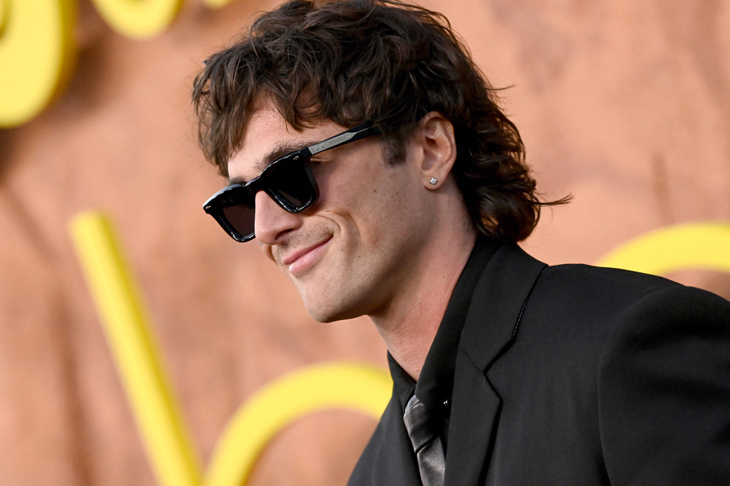
Jacob Elordi gives a beautifully modulated performance in this saga which is set at the time of the Korean war and takes place in the San Fernando Valley and Las Vegas. When Elordi was in Justin Kurzel’s streamer of Richard Flanagan’s Narrow Road to the Deep North it was a bit difficult to imagine how he could turn into the Weary Dunlop figure played by Ciarán Hinds, the immensely distinguished Irish actor (Caesar in Rome).
In On Swift Horses our Queensland heartthrob is playing a very young man and he does it splendidly and is matched by an utterly superb very young cast and the emphasis in this strange shadowy world is on sex in all its darkened intensity. The director is Daniel Minahan who made the extraordinary series Fellow Travellers about McCarthyism and homosexuality with a magnificent compositional craftsmanship. Elordi’s sister-in-law in On Swift Horses is played by Daisy Edgar-Jones who is intent on winning at the races (and who believes all you have to do to win on the horses is be well informed). She buys a house in the San Fernando Valley for her and her husband, the very straight, very likeable Will Poulter, who relishes the thought of the security they’ll have when they’re fifty. Daisy Edgar-Jones however is susceptible to the girl next door and there are scenes of uncanny intensity when they prance about in their white Fifties underwear though the sex for Edgar-Jones is a grand diversion whereas to her lover it is a thing with heartbreaking depths of possibility.
Meanwhile Elordi’s heart (and its attachments) belongs to Diego Calva and the sex is done in shadows but with a wholly convincing reality. Calva played Hugh Laurie’s son in the second series of The Night Manager (released a few months ago) and it was obvious then – from his very different performance there – that he was going to be a big star, given half a chance. He is a creature of Las Vegas with its bright lights and betrayals, and his scenes with Elordi are so nakedly intense that you feel you are trespassing on someone’s privacy.
This is, of course, because of the level of art On Swift Horses achieves. It succeeds in being startling while depicting the obsessions of the young.
It is erotically highly charged but it’s flawless in its representation of love and constantly surprising in the audacity with which it unearths forgotten worlds.
It’s fascinating – needless to say – what people are saying about the rise of Jacob Elordi. It was no less a figure than Pedro Almodovar who asked whether Jacob Elordi was ‘just a sex symbol or a respected actor’.This was in the context of the great director saying Wuthering Heights was ‘very bad’ and that it was not the fault of Margot Robbie or Jacob Elordi – ‘They do what they can,’ he said. The great Spanish director of Volver added that Frankenstein’s monster was a very convenient role for an actor.
It was disappointing recently to learn that Helena Bonham Carter looked like being the great attraction in the new season of that irresistible bit of decadence White Lotus but alas it was not to be. It’s interesting that she is to be replaced by Laura Dern – someone who’s not a million miles, one would have thought, from Connie Britton in the first season. By the way, the figure Laura Dern is to play in the next season is part of that web of Sicilian connection from the second season.
The pity of Bonham Carter’s withdrawal was highlighted by Netflix’s Agatha Christie Seven Dials which is by way of being a very highly configured bit of scenic tosh in the familiar television Christie manner. Not that it brings back the faintest smidgeon of the book which everyone must have more or less read but which is still beyond belief in this completely silly adaptation.
Helena Bonham Carter, however, who plays our heroine’s mother – is she a countess? – is large and magnificent and makes you wish no one else was allowed on screen, she has such grace and authority.
It wasn’t always so. Wasn’t she an ordinary, slightly stilted Ophelia in the Mel Gibson/Zeffirelli Hamlet? Memory suggests that it was the Americans – and Fight Club, in particular – who taught her how to act. Still, the nightmare Mrs Lovett of Sweeney Todd would not have been possible without her classical beginnings.
There is an audio recording of her as Rosalind in As You Like It – arguably the greatest comic role Shakespeare bequeathed to womankind – and a BBC recording of The Seagull with Bonham Carter as Nina in a cast that includes Diana Quick as Arkadina and Alex Jennings as Trigorin.
Got something to add? Join the discussion and comment below.
You might disagree with half of it, but you’ll enjoy reading all of it. Try your first month for free, then just $2 a week for the remainder of your first year.