Isn’t it fascinating how much we adapt works of literature? 150 years ago someone would have had a fair chance of being able to read the epics of Homer – The Iliad and The Odyssey – in the original Greek. By the 1960s only a small fraction of people who had done the classical languages at school could do this but there was still the expectation that you should read them in translation. There was an elegant translation of The Odyssey by Robert Fitzgerald and an iron-clad translation of The Iliad by Richmond Lattimore.
Some time after that they were overtaken by Robert Fagles’ translations of both epics. They are very accessible and Ian McKellen won a Grammy for his recording of The Odyssey. They also reflect the meta versions of Homer which were done in the 1960s by Christopher Logue.
Iris Murdoch once said everyone should read an unvarnished Homer. E.V. Rieu sold millions. ‘Such was the funeral of Hector, tamer of horses’ is hard to beat.
Everyone is having a go at Homer now. Troy at the Malthouse (directed by Ian Michael) spurned the very idea of a dramatic text. No Priam saying, ‘I have done what no man ever did. I have lifted my hand in friendship to the killer of my son.’
And the most sumptuous version of this foundational myth of our civilisation, Wolfgang Peterson’s Troy with Brad Pitt as Achilles and Peter O’Toole as Priam, doesn’t rise to the occasion. Peter O’Toole back in the 1960s was the ideal voice for Achilles just as Vanessa Redgrave sounded like a goddess doing Logue’s imagistic lyricism. ‘Remember, wolves.’
At the moment we have David Wenham doing a one-man Homer under the undogmatic title An Iliad and Yann Martel – the author of The Life of Pi – has just released Son of Nobody which is a kind of crypto-Homer using horizontal bracketing a bit like Nabokov’s Pale Fire.
The upshot seems at a glance like a cartoon of an imagined Homer who is quite unlike the hypothetical epic poet we might see as the ground of our literacy. In that respect it’s as far from Nabokov’s crabbed and literal version of Eugene Onegin as the fluent and crisp translation by Sir Charles Johnston – the sometime British High Commissioner to Australia – who gave Vikram Seth his verse form for The Golden Gate. But Martel is improvising a Homeric precedent.
Translation is a mystery. Think of how the Reformation and Counter-Reformation translators of the Bible – from Tyndale to the Geneva and the Catholic Douay to the King James – did such a formidable job for the simple reason that they tried to capture the word of God. Think of Christopher Marlowe at his plainest. ‘The air is cold, and sleep is sweetest now.’ Imagine that as the medium for a translation of Homer. Or, for that matter, the stand-out moments in Pope’s Homer: ‘They fall successive, and successive rise.’ But Bentley, the great classical scholar of the eighteenth century, said, ‘A pretty poem but you must not call it Homer.’ The Bible translators are so good because scripture was to them a necessity, not a dream.
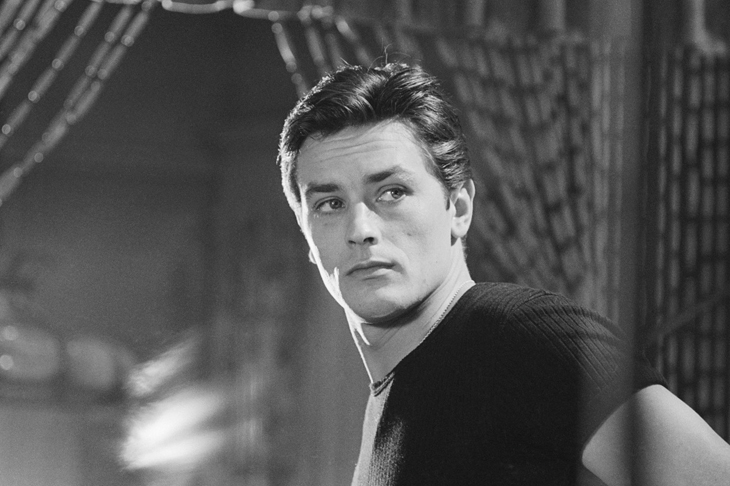
Is this what we’re going to find in François Ozon’s film of Camus’ L’Étranger (The Outsider)? It’s a fact of cinema history that Visconti was the most successful adaptor of literature in cinema that the world has ever known. Think of Burt Lancaster as Don Fabrizio, the Prince, in his film of The Leopard with Claudia Cardinale and Alain Delon as the nephew Tancredi. Visconti contracts the ball scene, he changes and modifies and modulates but we feel with amazement that we are in touch with the same sensibility that wrote Il Gattopardo in the first place. It’s as if Visconti is possessed by Lampedusa. And this quality is – if anything – even more marked in his film of Death in Venice: he turns Thomas Mann’s Aschenbach into a composer instead of a writer – and he uses Mahler’s Symphony No. 3 and Symphony No. 5 but the climax of the film – and the use of Björn Andrésen throughout – creates one of the very greatest death scenes in the whole of cinema and Dirk Bogarde’s performance is staggering.
(Returning to the Biblical parallel – Thomas Mann’s original translator Helen Lowe-Porter – in her version of the Joseph Tetralogy and Doctor Faustus masters various pre-Shakespearean and Jacobean idiolects into a fully resonant diction, never mind the risks of archaism or decadence.)
And yet Visconti failed with The Outsider. He wanted to get Delon who would have been perfect but he was unavailable and too expensive. The upshot was a film of scrupulous fidelity that doesn’t work because Meursault instead of being the fiery youth Delon would have incarnated is played by Marcello Mastroianni who is completely out of his depth. But the effect of this extraordinary high comedian – think of 8½ and La Dolce Vita – as Merseult is like watching Rex Harrison play Raskolnikov.
It’s one of those lost opportunities in the history of cinema and you can only hope that Ozon captures the blazing youth of the hero and the power of the passion of this book.
It’s very satisfying to be in the throes of the TV version of Michael Connelly’s Lincoln Lawyer. It’s marvellous to see Mickey Haller using every wile he has to get those he represents off. There’s also the complex soap quality that presents him in relation to his former wives Neve Campbell and Becki Newton who are devoted to him.
It’s a hell of a show and the current series shows Haller in gaol because of a stitch-up by corrupt cops. There’s a deeply creepy performance by Constance Zimmer as the prosecutor Dana Berg and a wonderful cameo from the great Elliot Gould. There’s also a judge, with magnificent diction – Scott Lawrence – who by the grace of God appears to be on Haller’s side.
Manuel Garcia-Rulfo, who plays Haller, is also in the Netflix adaptation of Pedro Páramo which is a vastly influential work of post-modernism by Juan Rulfo (a distant relative).
Lincoln Lawyer, incidentally, uses Spanish in the way War and Peace uses French – in snippets but constantly.
Got something to add? Join the discussion and comment below.
You might disagree with half of it, but you’ll enjoy reading all of it. Try your first month for free, then just $2 a week for the remainder of your first year.