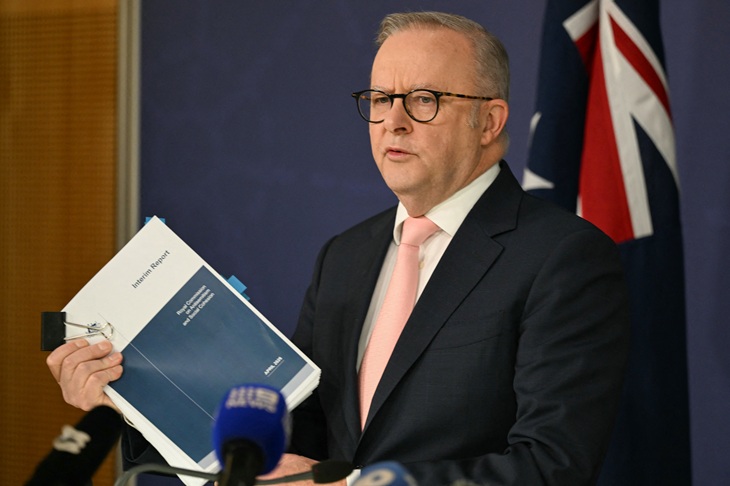
The Royal Commission on Antisemitism and Social Cohesion released its Interim Report on April 30, 2026, less than four months after the Prime Minister announced the establishment of the Commission.
Although it is fanciful to expect that an Interim Report would deal comprehensively with all relevant issues, identified in the Terms of Reference, there is still an expectation that the most pressing recommendations, implementation of which cannot wait, would be contained in it.
This Interim Report has 14 recommendations, but five of these (Recommendations 8 to 12) have been redacted and are contained in the confidential interim report which remains unavailable to the public, being omitted due to ‘classified material and any material that might prejudice pending criminal proceedings’.
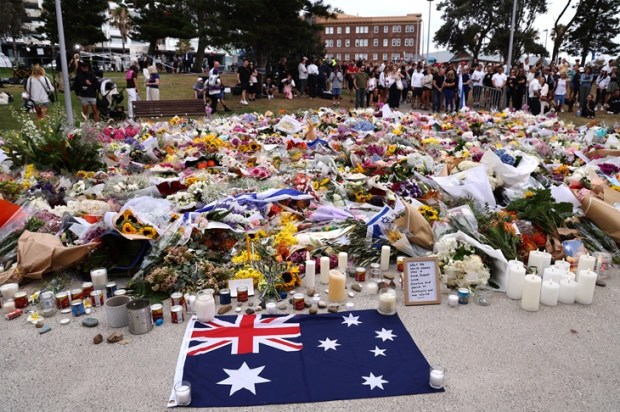
Excepting material that could prejudice criminal proceedings, this redaction is problematic because the slaughter of 15 victims, mostly Jewish people, on Bondi Beach on Sunday, December 14, 2025, has traumatised all Australians and diminished their rights, especially their freedom of speech, freedom of religion, and freedom of movement. Although the Report does not deal with all relevant issues in a transparent manner, it is nevertheless still possible to provide our readership with some preliminary conclusions.
The Report distinctly adopts a historical approach, listing and discussing the efforts of governments to repel the threat of terrorism. As such, it is a useful refresher course on the history of terrorism in Australia. It also helpfully discusses the security arrangements for Chanukah by the sea.
It is our personal view that the recommendations are predictably shallow and lack sophistication and imagination. For example, they concern the need for enhanced police protection (Recommendation 1), regular updating of the Counter-Terrorism Handbook (Recommendation 4), and a proposal ‘to consider whether National Security Committee ministers, including the Prime Minister, should participate in a counter-terrorism exercise, along with all National Cabinet ministers within nine months of each federal election’ (Recommendation 7).
But why should the electorate elect a government that needs ‘training’ in terrorism?
Do not electors elect a government in the expectation that it will be able to keep people safe? Surely, securing public safety is the number one obligation of any elected government?
Recommendations 13 and 14 deal with the finalisation and implementation of an ‘updated and nationally consistent National Firearms Agreement’ and the prioritisation of efforts to ‘implement the proposed National Gun Buyback Scheme’ respectively. Such recommendations are superficially appealing, but in our view they do nothing to alleviate the antisemitism problem, and they may well penalise the most law-abiding citizens – those who genuinely need a rifle to protect their cattle, for example.
Indeed, it stretches belief to think that criminals will forfeit their weapons and willingly hand in their guns. The dismal failure of the machete amnesty program in Victoria provides evidence of this unrealistic expectation since machete-wielding savages keep attacking people and shop owners in that state.
It is also our view that the Report shied away from a discussion of the real causes of the Bondi Beach attack: the existence in our society of radical Islamist movements that seek the destruction of Israel and the extermination of all Jewish people.
Morally defective hate preachers often exhort vulnerable believers to commit heinous crimes; they do not value human life. The Report addresses the issue of radicalisation in a general way; but it does not identify radical Islam as the proximate cause of the Bondi Beach massacre. ‘Islam’ is only mentioned eleven times in the Report and never in the context of understanding the ideological and religious hatred that led to the slaughter of 15 innocent people on December 14, 2025.
However, to be fair to the Commission, it has been hamstrung by the Terms of Reference. When reading these Terms, it is obvious that there is a distinctive focus on ‘social cohesion’.
Not only is there a reference to ‘social cohesion’ in the Commission’s title, but the Commission is also directed to ensure that the inquiry is ‘conducted in a manner that does not … undermine social cohesion’.
It goes on to say that the Commission is expected to make recommendations, arising out of the Inquiry, that ‘would contribute to strengthening social cohesion in Australia and countering the spread of ideologically and religiously motivated extremism in Australia’.
In another publication, we have argued that the use of the conjunctive word ‘and’ rather than ‘by’ or ‘through’ is relevant because it implies the severing of the causative link between religiously motivated extremism and erosion of social cohesion.
As such, the use of the word ‘and’ discloses two separate goals the government wants to advance: first, achieving social cohesion and second, countering ideologically and religiously motivated extremism.
Obviously, in order not to compromise the achievement of ‘social cohesion’, any recommendations pertaining to the second goal should not threaten social cohesion. So, although the Commission can discuss ‘religiously motivated extremism’, it might be reluctant to identify radical Islam as a cause of Australia’s deteriorating social cohesion.
The Commission’s Interim Report, to promote the elusive goal of ‘social cohesion’, has thus been drafted to obfuscate this causative link. It is our opinion that the Commission cannot identify and deal with the real issue – radical Islam and Islamic hate preachers – because the Terms of Reference effectively foreclose any discussion that would compromise ‘social cohesion’.
The reason this is a serious omission was explained by the late Dr Ian C. F. Spry, a prominent Melbourne King’s Counsel, legal author and academic, in an article published about two decades ago:
‘There has been a tendency amongst left-liberal groups in the community to champion the cause of Moslems in Australia and to dismiss concerns by others about aggressive statements by some Imams, the fact of Islamic terrorism in many parts of the world and specific threats by terrorists that they will target Australia and Australians.’
This tendency seems to have continued, if not intensified. Also, the Report often mentions the problems of ‘Antisemitism ‘and ‘Islamophobia’ together, thereby suggesting that they are both equally morally objectionable, whereas radical Islamists are those who commit the heinous crimes against Jews. Hence, in our opinion, the Report is completely in line with the ‘social cohesion’ goal of the government, as expressed in the Terms of Reference. But it will do nothing to remove the problem of antisemitism in Australia.
Additionally, if the Report is to be taken seriously, it also needs to link the Bondi massacre with the issue of immigration, especially immigration from the Middle East. However, this too is unlikely to happen because it would undermine the ‘social cohesion’ the government is so determined to preserve. But, in doing so, the government and the Commission simply perpetuate the problem without offering meaningful solutions capable of protecting Australians, except by muzzling their free speech, freedom of religion and freedom of movement.
Of increasing concern in Australia has been the rising tide of draconian legislation that prevents freedom of speech and freedom of expression. Recently, Jewish and Islamic lobbies have jointly demanded the enactment of federal laws to prohibit religious vilification. Senior figures appear to have welcomed federal laws that give powers to ban so-called ‘hate speech’.
The term ‘hate speech’ is itself an artifice.
Initiating ‘contempt,’ ‘repulsion,’ or ‘severe ridicule’ might be enough. Hence, it becomes enough to express disgust at Islamic terrorists, for example, who on the ground of their ‘religious belief or activity’ murder a large number of innocent civilians. Likewise, many statements by the more extreme Muslim religious spokesmen should be treated appropriately with contempt or revulsion. But to react in this way is potentially to act illegally.
One also wonders if any criticism of the Israeli government could now be construed as a form of ‘anti-Semitism’.
Of course, criticism of any government does not amount to an attack on the group that inhabits the jurisdiction of the government. For example, the government of Israel was the world’s first country to make the notorious mRNA vaccines a mandatory requirement for its entire population. To criticise the Israeli government for such disgraceful behaviour, and for instituting one of the most horrendous lockdowns on its victimised population during the pandemic, does not involve the attribution of any blame to its innocent citizens. Likewise, one can perfectly criticise the unpopular Australian government for a vast array of human rights violations, especially over the last few years, without having such criticism to be labelled as being ‘anti-Australian’, and quite to the contrary.
But let us return to the main topic of this opinion paper. The preparation of the Report is an expensive endeavour, and we predict that, eventually, it will be a spectacular whitewash. In failing to analytically probe the real causes of the problem, the Report, whilst readable, could easily have been written by a clever first year law student, who does not have the courage to probe the causes of one of Australia’s major social problems.
On the other hand, the ‘Labor-Liberal alliance’ that control our government might make use of this ordinary Report to enact more federal laws that further undermine freedom of speech and freedom of association. Expect more of these reactions when the final report will be presented to the government later this year. And, of course, another disturbing aspect of this apparently useless exercise is that the security of Australia is not to be protected, and quite to the contrary.
Gabriël A. Moens AM is an emeritus professor of law at the University of Queensland and served as pro vice-chancellor and dean at Murdoch University, and as Garrick Professor of Law at the University of Queensland.
Augusto Zimmermann is foundation dean and professor of law at Alphacrucis University College. He served as associate dean at Murdoch University. He is also a former commissioner with the Law Reform Commission of Western Australia.
Moens & Zimmermann are the authors of The Battle for the Soul of Western Civilisation (Connor Court Publishing, 2026).