The English journalist Matthew Syed has written about the quiet tribalism that seeps into parts of modern Britain – the kind that prefers cousin to neighbour and clan to country. His father came from Pakistan, his mother from Wales, and theirs was once the model of post-war integration: hard work, aspiration and the conviction that Britain was a place where character mattered more than caste. What unsettles Syed now is how quickly that civic confidence has curdled into group loyalty. When belonging shrinks to bloodline, you get enclosure disguised as community.
The same unease has begun to surface in UK politics. In June, Conservative MP Richard Holden called for a ban on first-cousin marriage, describing how the practice endures through systems of pressure that are intimate and inescapable, especially when repeated across generations. His argument had moral clarity and data behind it: children of first-cousin marriages face more than double the rate of serious genetic disorders; in parts of Bradford, half of Pakistani-heritage mothers are married to cousins; the Born in Bradford study found one-in-fifteen children of such unions born with severe birth defects. Harvard’s Joseph Henrich has shown that when families marry outward, societies build institutions beyond blood. Holden’s point echoed that insight in a moral register: where marriage remains trapped within kin, freedom narrows. Choice becomes illusion when defiance means rejecting not just a partner but an entire family.
Holden was right to call silence complicity. This wasn’t about condemning a culture; it was about rescuing individuals from systems that call obedience tradition and coercion family honour. Freedom, health, civic decency – three reasons are enough. What followed was more revealing than the speech itself. Parliamentary Under-Secretary of State for Victims Alex Davies-Jones promised that the government would ‘take the time to properly consider our marriage law’. That’s modern politics in miniature: a moral question met with procedural empathy. Children are born with preventable disorders, and the state responds with a consultation period.
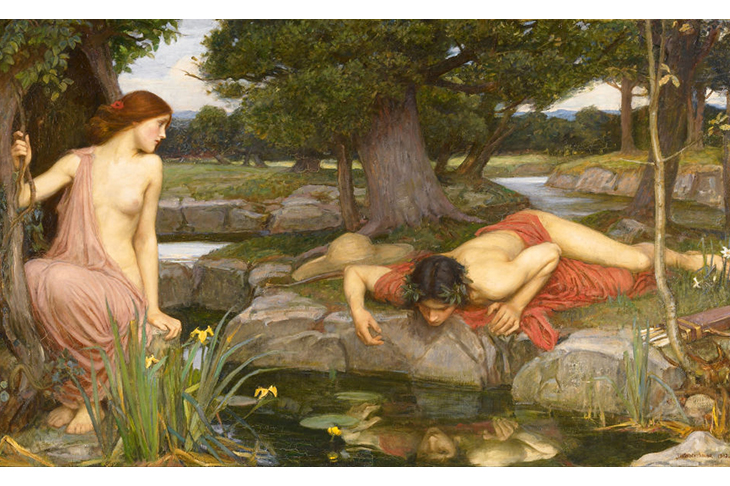
The tragedy isn’t ignorance but self-absorption – a political class so entranced by its own reflection that it mistakes hesitation for virtue. Holden’s Bill may deal with cousins, but the impulse behind it reaches further. Endogamy – the closing of the circle – has become the governing mood of our age. Every party, every platform, every bureaucracy now marries its own reflection. What began as moral caution – anxious progressives terrified of appearing colonial, conservatives terrified of appearing cruel – has hardened into cultural narcissism: a fear of touching anything beyond the familiar. That is solipsism’s final form – not vanity exactly, but a kind of moral inbreeding. A civilisation that can no longer tell the difference between sensitivity and surrender.
The delicious irony is that cousin marriage is banned across much of the world – including North Korea, China, the Philippines, and large swaths of where Hillary’s ‘deplorables’ live, the American South. But here’s the part that should sting: those nineteenth-century American bans weren’t mere spasms of prudery. They were framed in the language of health and hygiene, but their effect was civic. By discouraging cousin marriage, legislators weakened the old kin dependencies that tethered loyalty to family rather than to nation. They stumbled into a kind of civic architecture – expanding the circle of trust from kin to community, from clan to republic.
Endogamy of the mind follows endogamy of the blood. A people that stops looking outward begins to fold in on itself – families into factions, factions into tribes, and finally tribes into parties that speak only to their own reflection.
In Australia, the retreat has become routine. The political class mouths multicultural pieties but recoils from the substance of citizenship. To say that not all traditions are benign would require conviction, and conviction offends focus groups. So the government manages feelings instead of realities.
Anthony Albanese sits at the centre of it all like a kind man trapped in a mindfulness app. The only thing missing is the auto-renewing subscription to his own virtue. Every problem elicits a tone of caring detachment – the bureaucratic equivalent of a scented candle. Announce an inquiry. Establish a task force. Extend the consultation period. Imagination is the only thing that never renews.
Labor’s ministers preen as empathetic technocrats, listening deeply to the people they’ve never met. The Liberals rehearse outrage like method actors preparing for a role they no longer believe in. The Greens hold moral Pilates sessions on the hour. And the Teals – all pale linen and podcast energy – have turned solipsism into a lifestyle brand.
Across the chamber, the Liberals drift between self-pity and self-promotion – too busy performing seriousness to practise it. Once, the party’s leaders could smell reality. John Howard governed like a man allergic to abstraction: he touched things, counted costs, spoke in declaratives. Even Paul Keating, his old adversary, shared the same civic reflex – the belief that politics was about building a country, not narrating one. Both men understood that a leader’s first duty is to resist the gravitational pull of his own reflection. Their successors scroll through focus groups looking for a pulse. What passes for conviction now is mood management; what once built nations is reduced to messaging.
And then there’s Senator James Paterson. What undermines him isn’t intellect but intonation. He habitually finishes declaratives with a high-rising terminal, the conversational tic that turns statements into solicitations. Linguists call it uptalk; your aunt calls it uncertainty. The effect is comic and corrosive: every sentence becomes a soft request for permission to exist. It’s a delivery so eager to avoid offence that it ends up signalling timidity.
That tic is more than performance; it’s political style as philosophy. The high-rising terminal is the audible signature of solipsism – a politics that seeks validation rather than resistance, asking the mirror whether one’s doing it properly. Paterson’s obvious merits are wasted when his tone invites agreement instead of demanding it.
Still, the ailment is instructive. The high-rising terminal is only the vocal symptom of a larger civic condition – a class of leaders so anxious to sound reasonable they’ve forgotten how to be right. Just like solipsism – and cousin marriage – the cure isn’t vocal coaching but the experience of human contact. Let the world push back. The opposite of solipsism isn’t louder talk but harder touch: policy that meets resistance, leaders who risk being wrong publicly, and the occasional sentence spoken without asking permission. When ideas stop marrying out, debate becomes inheritance, not exchange. The outward turn that once built nations has reversed; politics now breeds within its own tribe. The result is a culture of factions playing house – trust collapsing into patronage, conviction dissolving into performance.
Solipsism isn’t cured by more talk or better tone. It’s cured when politics touches something rough and real – work, risk, resistance, the ‘inconvenient’ public itself. Holden tried to name it in Westminster. If we can’t name it here, we’ll end up governing our own reflections and calling it leadership.
Got something to add? Join the discussion and comment below.
You might disagree with half of it, but you’ll enjoy reading all of it. Try your first month for free, then just $2 a week for the remainder of your first year.