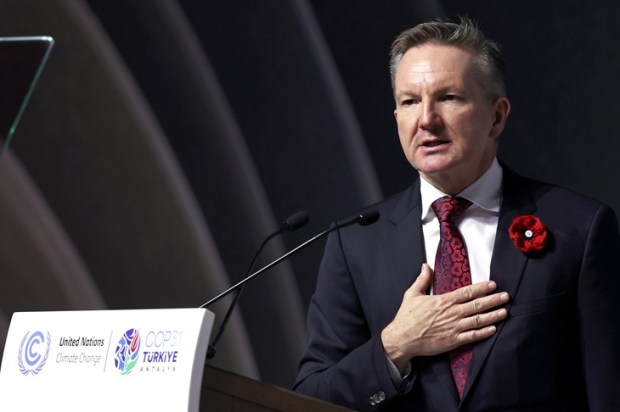
The rhetoric at COP31 has been no less alarmist than in previous years, but the increased focus on climate litigation highlights that the battleground is shifting from parliaments to courts. With popular support for drastic and economically destructive measures on the wane, activists see opportunities for lawyers and sympathetic judges to build on quasi-scientific arguments to legitimise opposition to coal, oil, and gas projects.
In the absence of sufficiently scary data on climate averages and trends, the UN Secretary General António Guterres doubled down on the official line that we have ‘entered a new age of climate extremes.’
On cue, the World Meteorological Organisation (WMO) released its annual State of the Climate Update, with WMO head Celeste Saulo claiming, ‘Heatwaves, cyclones and rainstorms are intensifying faster than our historical baselines prepared us for.’
The tactic is to draw a link between natural disasters – and even run-of-the-mill weather events – and human-induced climate change. The problem is that there is insufficient evidence of an increase in extreme weather events, much less proof of human action as the causal factor.
Indeed, the WMO report does not attribute cyclones and rainstorms to climate change, but merely lists them in the report that is then presented to a climate change conference and invites readers to draw the connection themselves.
Enter ‘climate attribution science’ – a relatively new methodology that has been promulgated to rapidly link weather events to human-induced climate change.
Climate attribution studies are political advocacy disguised as science, produced to satisfy demand from organisations such as the Environmental Justice Australia (EJA) which seek to legally and administratively challenge coal, oil, and gas projects for ideological reasons.
Professor Friederike Otto, a climate change academic at Oxford University, in 2021 said, without equivocation: ‘Unlike every other branch of climate science or science in general, event attribution was actually originally suggested with the courts in mind.’
More recently, a 2025 article in the journal NPJ Climate Action explained how the objective of ‘bridging the divide between scientific evidence and decision-making requires frameworks that link greenhouse gas emissions to tangible consequences.’
One of the authors of that article was Professor Sarah Perkins-Kirkpatrick, a climate scientist at the Australian National University. In February, the same Perkins-Kirkpatrick authored a report in February purporting to link Woodside’s North West Shelf Development Project, also known as the Browse Project, off the coast of Western Australia, to harms to the Great Barrier Reef over 3,000 kilometres away.
In new research published by the Institute of Public Affairs, physicist Dr Peter Ridd examined the claims in the study that the Great Barrier Reef would lose almost 30 million coral colonies each time there is a ‘mass bleaching’ event due to the Browse Project. He found the evidential basis of the claims unreliable, given, among other things, it relies on outdated data and ignores the massive growth of coral coverage in the reef in recent years.
Nevertheless, the environment minister Murray Watt accepted an application in June 2026 by the Australian Conservation Foundation and EJA to delay the Browse Project, on the basis of the climate impact outlined in the Perkins-Kirkpatrick report.
This presents yet another unnecessary hurdle for a project with a total direct and indirect contribution to the Australian economy estimated at $141 billion over its lifetime, with 4,760 jobs at peak operations.
There is, meanwhile, related litigation in the Federal Court instigated by the same parties on the same grounds which, if successful, would also have the effect of blocking Woodside’s investment.
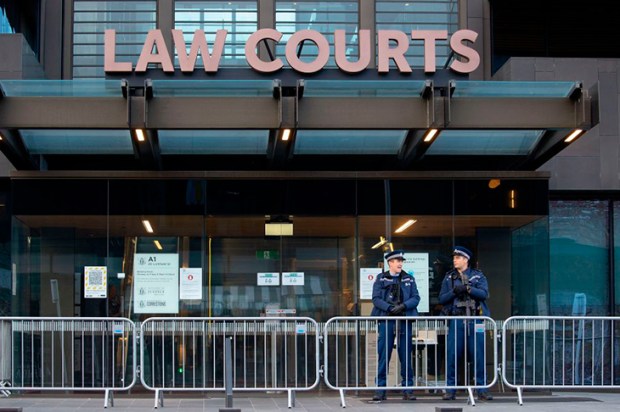
There is a real danger the courts might embrace these pseudoscientific approaches. Already this year Justice Edelman in the High Court entertained the idea of attribution studies being presented as evidence to estimate the local environmental impact of a project’s indirect addition to global emissions.
This approach is a product of political strategising rather than scientific investigation. One of the key themes of COP31’s Law and Governance Day, held on November 13, was ‘advancing climate justice’, which entails engaging ‘the legal community, courts, law associations and others in raising climate ambition and accelerating climate action’ including by ‘supporting access to climate justice and climate litigation’.
Australia’s environmental approval processes already provide too many entry points for activist litigation, carefully baked into legislation by sympathetic parliaments wishing to bypass responsible Ministers.
Without staunch resistance – both scientific and political – we now face increased risks to individual projects and further harm to Australia’s reputation as a reliable destination for investment, while entrenching in the law what can only be called pseudoscience.
Scott Hargreaves is the Executive Director at the Institute of Public Affairs