‘There is a minority of intellectuals …whose real though unacknowledged motive appears to be hatred of Western democracy and admiration for totalitarianism.’ – George Orwell
‘People are often trapped in their own delusions, and what’s worse, they think that those delusions are the truth.’ – Erasmus, In Praise of Folly
‘Once the delusion is in place, the facts themselves will be interpreted in light of the delusion.’ – Carl Jung
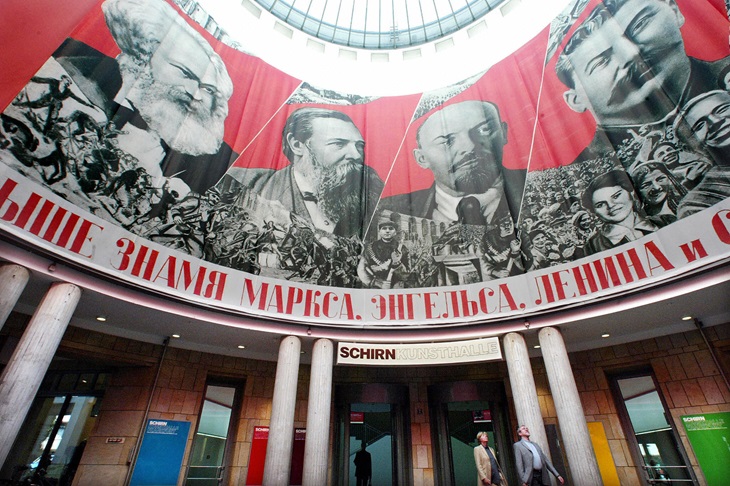
Marxism is an excellent example of a closed, unfalsifiable – and therefore unscientific theory – aptly described by Karl Popper (1947) as a ‘secular religion’. Paradoxically, this partly accounts for its enduring popularity despite a long series of disastrous failures wherever implemented. Marxism has a horrific history, blithely ignored by its advocates, causing more violence and bloodshed than any other ideology in human history with over 100 million dead so far (Courtois et al., 1999).
What was it really like? Life in a Marxist society
Understanding life in a Marxist society is almost impossible for someone who has never personally experienced a monolithic totalitarian state. Here, all social institutions are subordinated to a single, unquestionable tribal narrative enforced by a dictatorial state. I grew up in such a world, in communist Hungary, forced to study Marxism in college for several years before escaping at the age of 22.
Everyday life was full of absurdities. Huge banners with red stars announced that ‘for us, socialist labour is a matter of glory and pride’ on the walls of empty stores that had nothing to sell. The system encouraged deception and morose resignation. Instead of effort and enterprise, workers adopted the cynical principle that ‘as long as they pretend to pay us, we will pretend to work’.
Oppressive ideological control pervaded everyday life, as described in Orwell’s novel, 1984. Micro-management and a complete lack of trust in the citizenry – and even between the party apparatchiks – was the norm. In the 1950s, the black cars of State Security might still arrive in the early hours to take away neighbours, never to be seen again. At any point, someone might denounce you to the secret police and you would be under suspicion and perhaps arrested and interrogated. The party is in complete control. There is no appeal or way to resist or object. You are disempowered and defenceless.
The State Protection Authority had tens of thousands of secret informers operating in every workplace, village, church, office, school, or residential building reporting on colleagues and even friends – and you never knew who might report you, sometimes out of malice. All media were under direct Communist Party control, spreading centrally approved party propaganda. All public speech was strictly regulated to serve the dominant ideology, language control that is once again common in our universities. Ideological indoctrination pervaded the entire educational system, and everything was taught from a Marxist perspective as the only approved truth.
The threat of dismissal, prohibitions on travel or study, forced internal exile, denial of food stamps or housing (all state-controlled) was sufficient to ensure near-complete compliance. Fear, self-censorship, and disengagement from public affairs naturally followed. Foreign travel was strictly controlled. Passport applications could not even be submitted without multiple signatures by residential block representatives, trade union bosses, party secretaries and managers, all confirming your political reliability. If one of them refused to sign this was the end. Hungarians trying to illegally cross into neighbouring Austria were jailed or even shot when caught at the border.
Marxist totalitarianism focused on class identity and ideological conformity rather than competence and merit. Barely literate members of the ‘right’ proletarian class could become government ministers. Communist Hungary’s Minister of the Interior in the 1950 was a country butcher, Laszlo Piros, who converted to Marxism in a Russian prison camp with promises of improved meat rations.
Everyday life was grey and dull. As teenagers we listened to prohibited short-wave radio stations like Radio Free Europe that were constantly jammed by the secret service, not just for snippets of political news, but also to catch up with the latest music, fashions, and trends. It seemed that everything that was colourful, exciting, and interesting was happening ‘over there’, in the West.
Competent and educated people from the ‘wrong’ class were routinely assigned to menial jobs. It was identity-based discrimination which has now been re-discovered by neo-Marxist ‘Diversity, Equity, and Inclusion’ activists exercising ideological control in our universities. Being of the ‘wrong’ class meant discrimination and sometimes murder; the communist Khmer Rouge in Cambodia shot anyone wearing glasses as ‘class enemies’ for being an ‘intellectual’.
I was 21 in 1968 and with my life ahead of me, I, like thousands of others, decided I did not want to live my life in a communist dictatorship. I escaped from Hungary by crossing the border into Austria in the boot of a car. Once in the West – and especially after I became a university academic – I was surprised to find that many of my new colleagues and friends continued to have a completely false idea of what a Marxist society really was like.
The psychological appeal of Marxism
So how can we explain the enduring appeal of Marxism? Marxism remains attractive partly because it resonates with our age-old evolutionary tendency to see the world through the lens of simple tribal conflicts. Its current incarnations as ‘critical theories’ present a serious challenge to liberal democracies by advocating intergroup conflict to promote progress, instead of focusing on individual rights and opportunities. Consider Zohran Mamdani, now Mayor of New York, and member of the Red Star Caucus of the Democratic Socialists of America who promote Marxism as a ‘living, breathing, theoretical framework, which is not and never can be a static set of dogmas’.
Tribal conflict ideologies like Marxism exploit five fundamental human psychological needs to seek (1) simplicity, (2) certainty, (3) positive identity, (4) moral superiority, and (5) utopistic hope when trying to make sense of confusing and complex reality.
Simplicity: Marx initially assigned people into simple identity groups or ‘classes’ as capitalists or workers depending on their economic functions. This definition of class was never more than a verbal invention that lost its economic relevance long ago, as neither workers nor capitalists ever formed cohesive, self-contained social entities. Such deceptively simple – but false – answers to immensely complicated social and political issues also lend themselves to more effective communication and propaganda. As Lenin famously said, a simple ‘lie told often enough becomes the truth’, a proven maxim of psychology and political communication that still works today.
Certainty: Marxism is constructed so as to be immune to falsification. Marx made very strong predictions, asserting, ‘My object in life is to dethrone God and destroy capitalism.’ His labour theory of value falsely asserted that only live labour produces value so any profit retained by the owners of capital amounts to theft. He predicted the inevitable pauperisation of the exploited proletariat leading to violent revolutions. Actually, working people became increasingly well off everywhere and joined the despised bourgeoisie instead, except paradoxically, in Marxist societies.
Positive group identity: Marxism appeals to the powerful human evolutionary need to seek status, significance and ‘mattering’ by joining ideological groups (Forgas, in press). Arthur Koestler describes how membership in the illegal German communist party in the 1930s gave him an all-encompassing sense of positive identity, for a while, an experience shared by another former Marxist, the economist Thomas Sowell. Positive tribal identity becomes especially valuable when lack of personal achievement or traumatic group experiences drive a need to compensate for failure. The manipulation of emotions such as righteous anger, grievance, or envy remain common features of neo-Marxist identity politics and ‘critical theories’.
Moral absolutism: Marxism’s emotional appeal lies in its claims to fight for justice and equality. The ancient human desire to signal virtue and moral status also has deep evolutionary roots, and virulent attacks on those who question the dogma remain an enduring feature of Marxist ideologues even today. Marxism’s moral absolutism became state policy for all communist dictatorships. Neo-Marxist activists still display the same moral intolerance in cancelling and silencing all opposition, denying the need for open debate and rational exchange, once advocated by John Stuart Mill as essential for the functioning of a liberal society.
Utopia is another crucial psychological attraction, and Marx promised ‘the return of modern society to a higher form of the most archaic type – collective production and appropriation’, a future proletarian paradise. Rational ideologies promising slow and gradual progress cannot match the heady grandeur of such utopistic dreams (Scruton, 2019). Ironically, Marx’s idealised communal bliss never really existed in our ancestral societies anyway – fights, conflicts, and aggression were always part of human existence. As the Harvard biologist E. O Wilson, expert on social insects, once remarked about Marxism: ‘Great theory. Wrong species.’
How the theory survived: From Marxism to critical theory
Marxism survived by making falsification impossible. If the working class fails to revolt, it is because the bourgeoisie created ‘false consciousness’. Marx’s idea virtuous victimhood continues to appeal to privileged intellectuals who often pose as exploited ‘workers’ despite occupying privileged positions in our capitalist economies.
Neo-Marxists like Antonio Gramsci, the Frankfurt School, and radicals like Rudi Dutschke explained away the glaring absence of proletarian revolutions as due to the ‘cultural hegemony’ of the bourgeoisie. To eliminate false consciousness, Gramsci advocated a ‘long march through the institutions’ and predicted that ‘socialism will [eventually] triumph by first capturing the culture via infiltration of schools, universities, churches and the media by transforming the consciousness of society’. Max Horkheimer of the Frankfurt School similarly argued that ‘the revolution won’t happen with guns, rather … we will gradually infiltrate their educational institutions and their political offices, transforming them slowly into Marxist entities.’
This is actually what happened. As Niall Ferguson summarised, ‘Back in the 1980s, when capitalism won the economic argument over the Marxist-Leninist idea of class struggle … the left reconfigured the idea of the struggle into the terrain of culture … all that mattered was the hierarchy of victimhood … defined by how much [our group was oppressed in the past].’
Thus Marxism survived in the guise of critical theories as an elite tribal ideology of intellectuals. Instead of proletarian class struggle, an endless number of antagonistic identity groups defined by race, sex, gender, ethnicity, religion, health, appearance, disability, or anything else have now been invented to generate righteous conflict. Liberal Western democracies are condemned as systematically racist, sexist, patriarchal, and colonialist.
Neo-Marxist narratives like Black Lives Matter, Antifa, de-colonisation, or intersectionality offer the same simplistic and absolutist framework for radical activism that Marx once envisaged. Puzzling slogans like ‘silence is violence’ seen at BLM rallies illustrates the moral intolerance of these neo-Marxist movements.
By denying any role for individual agency in producing different life outcomes, neo-Marxist theories promote helplessness and harm the underprivileged (Sowell, 2023). The civil rights movement of Martin Luther King once called for equal individual opportunities in a colour-blind society. Neo-Marxists insist on exclusive focus on race as a permanent mark of victimhood and entitlement.
Marxism’s habitual disrespect for evidence has also infected the academic world, where social activism now often takes precedence over the dispassionate discovery of truth. DEI units administer positive discrimination favouring some identity groups, just as Marxist dictatorship have always done in the past. Absurd claims appear in some scientific journals stating that ‘objective truth, like merit, does not exist … truth is a social construct created to suit the purposes of the dominant group’ (Delgado & Stefanic, 2024). The spread of such extremist tribal ideologies presents a serious danger for our liberal democratic societies.
Marxists in Hungary often mocked religion as ‘the opium of the masses’. Now Marxism itself has become the preferred religion of many misguided Western academics. The French sociologist Raymod Aron pronounced Marxism as the ‘the opium of the intellectuals’, and Lenin famously called Western intellectuals who supported his bloody communist cause as ‘useful idiots’. Those of us who have experienced the system firsthand cannot but agree with them.
Prof. Joseph P. Forgas, University of New South Wales, Sydney