Have you read Xavier Herbert’s masterpiece, Poor Fellow my Country? You should, it’s about life in the Northern Territory between the first and second world wars.
It covered the time when Australia was recovering from the trauma of the first world war and the storm clouds were gathering over Europe before the second world war.
Reading it, you will be able to compare life for many of our Aboriginal people today, with the life of their ancestors a hundred years ago.
You may also contemplate the role of the Aboriginal elite in Australia with those who are not so privileged.
In the modern era, we are being told stories of Aboriginal communities that are assaulting our sensibilities; ‘our fellow Australians’ seem intent upon destroying themselves and their children.
We know drugs and grog are among the chief causes of this devastation; substances, which are recreation for some and poisons for many. Too often, they also cause irreparable damage to the unborn.
It is a national shame that the slow and progressive destruction of our own people has until recently remained unreported by our media and uncommented upon by our leaders both political and communal.
Do the media just go ‘up there’ for a story on remote communities and then skelter home back to their real world? Or is the rest of Australia deliberately being shielded from the truth by an overtly bureaucratic and political self-protection racket?
The people in the outback, like much of rural Australia, don’t have much power to elect governments, so their attention from a state and a federal Labor government is proportional to their significance in Labor’s national and constant re-election campaign.
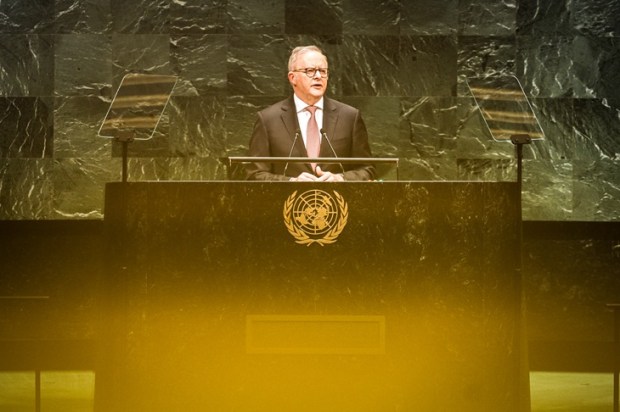
Albanese has just spent over a week ponsing around at the United Nations, giving meaningless speeches and receiving a meaningless award, doing his best to impersonate Nero and avoiding the AFL Grand Final and meeting Kylie Minogue.
How many times in the last 12 months has Albanese and his Minister for Indigenous Affairs, Malarndirri McCarthy, visited Aboriginal communities in the remote parts of Australia and seen for themselves the squalor and filth that social workers see every day of their lives?
How many times has the Premier of Western Australia, together with his Department of Child Protection (DCP) Minister Jessica Stojkovski, visited Port Hedland as a result of the multiple reports of child sexual abuse and neglect which were not addressed by the DCP?
Why were the ministers, federal and state, apparently not aware of the condition depicted by the pictures which appeared in The Australian of the condition under which unsupervised Aboriginal children were living in Frisby Court in South Hedland?
The Australian described what they found:
A putrid bedroom littered with dog excreta, soiled clothing, makeshift bedding reeking of urine and of the unwashed bodies of the two sisters, 11 and 14, their little brother, aged just seven, and a boy cousin, five.
The dreadful tale in which it is alleged that as many as 15 children – the youngest aged five and seven – had been living in that squalor, alone and fending for themselves for up to a week at a time should not have surprised anyone.
Why, when a neighbour, fearful of another Alice Springs, tells of older girls living in the same house doing drugs and having sex with local boys, torching cars and blowing up wheely bins with an accelerant, was nothing done?
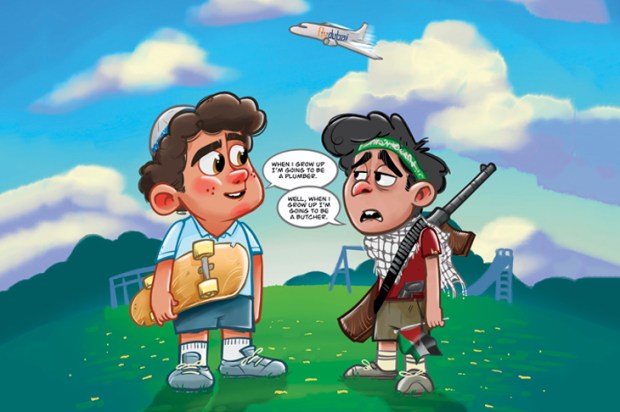
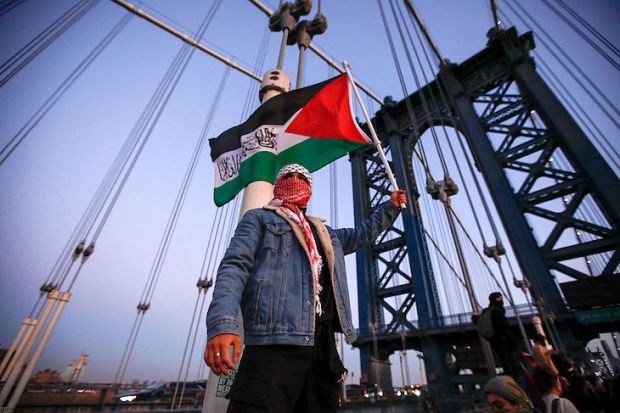
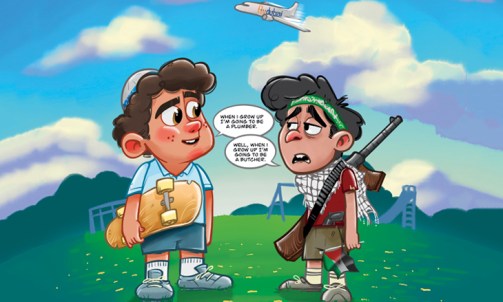
We live in a perverse, a grossly irrational society. For years in our cities our patience has been ruthlessly tested by students, their activist teachers, and members of rent-a-crowd, (many living on welfare) demonstrating against poverty and deprivation among the children of Gaza and Palestine and blaming Israel and the Jews for their predicament.
They scream their slogans, ‘From the river to the sea, Palestine shall be free!’ They demand an Intifada, which is a demand for a bloody uprising against the Jews and Israel when they should have been demanding justice for the downtrodden, defenceless, and underprivileged Aboriginal children in their own country.
He who pays the piper calls the tune and in this case it is my opinion the state is more interested in deriding Israel rather than addressing the suffering in remote Aboriginal communities.
Remember the savage death, not so long ago in Alice Springs, of Kumanjayi Little Baby?
The scene is all too familiar. Before she was murdered, more than 12 child-protection reports were made, some of them, apparently, uninvestigated.
In both Alice Springs and in Port Hedland there were no doubt reports written about appalling conditions under which our most vulnerable live. How many remain unanswered?
On May 21, 2022, in his first acceptance speech, Anthony Albanese made this commitment to the Australian people:
‘During this campaign, I have put forward a positive, clear plan for a better future for our country. And I have shared the two principles that will be part of a government that I lead.
‘No one left behind because we should always look after the disadvantaged and the vulnerable. But also, no one held back, because we should always support aspiration and opportunity. That is what my government will do.
‘That is the what, but the how is also just as important? Because I want to bring Australians together.
‘I want to seek our common purpose and promote unity and not fear and – optimism, not fear and division. It is what I have sought to do throughout my political life. And what I will bring to the leadership of our country, it is a show of strength to collaborate and work with people, not weakness.’
On Wednesday 30, August 2023, Prime Minister Albanese, launching the ‘Yes’ campaign for the ‘Voice’ referendum, a move which split Australia asunder like never before, said this:
‘With a Voice though, we’ll be able to hear directly from Aboriginal and Torres Strait Islander communities about the challenges they face in health and education, in jobs and housing, and we’ll be able to learn about the things are working in local areas, so we can replicate them and make them work right around the country.
‘Learning from communities in Arnhem Land where the parents and teachers co-operate to make sure children are going to school and aiming high.
‘Or the health services employing Indigenous nurses to deliver health checks and immunisations in remote communities.’
Within months of the announcement of the referendum, it was obvious that Australia was a nation divided.
Noel Pearson, Rachel Perkins, Ken Wyatt, together with Aboriginal luminaries like Professor Marcia Langdon, Prof Tom Calma, Prof Megan Davies, and many more supported the ‘Yes’ vote.
The trading banks and the majority of industry followed the leaders from the Aboriginal lobby and put their money into the ‘Yes’ campaign.
Apart from Nyunggai Warren Mundine and Jacinta Nampijinpa Price. no other prominent Aboriginal that I can recall campaigned for the ‘No’ vote.
After the country, by a resounding majority (60-40) voted the referendum down, those who supported the ‘Yes’ vote, including the Prime Minister, immediately dropped their baton for change and disappeared off the referendum stage.
Since they were defeated, where have they gone, those fighters for change in the world of Aboriginal politics?
Has the Prime Minister walked away from the challenges of Aboriginal Australia?
Is it worthy of being an election issue?
A final word from Prime Minister Albanese when he launched the referendum:
‘My fellow Australians.
‘What Aboriginal and Torres Strait Islander people want for their children is what you want for yours.
‘Staying healthy, doing well at school, finding a job they love.
‘Being safe and leading fulfilling lives.
‘That’s what they are asking you to say Yes to at this referendum.’
But Australia voted ‘No’.
I was going to tell you, my story as a onetime station manager and consultant to government on matters Aboriginal. Perhaps I should just leave it at this?
In 60 years, nothing has changed.
Poor fellow my Country is about life in the Territory one hundred years ago.
When you read it, you will realise that nothing has really changed in one hundred years, nothing!