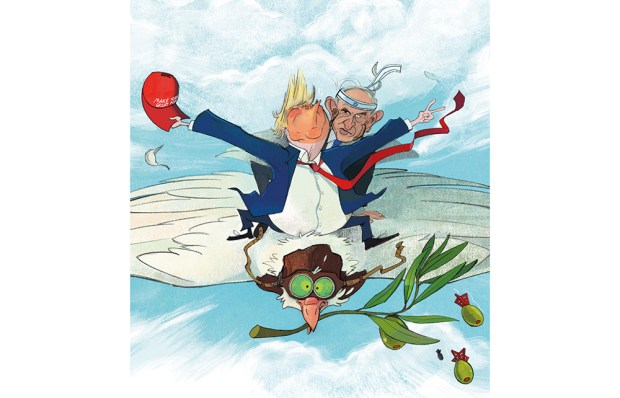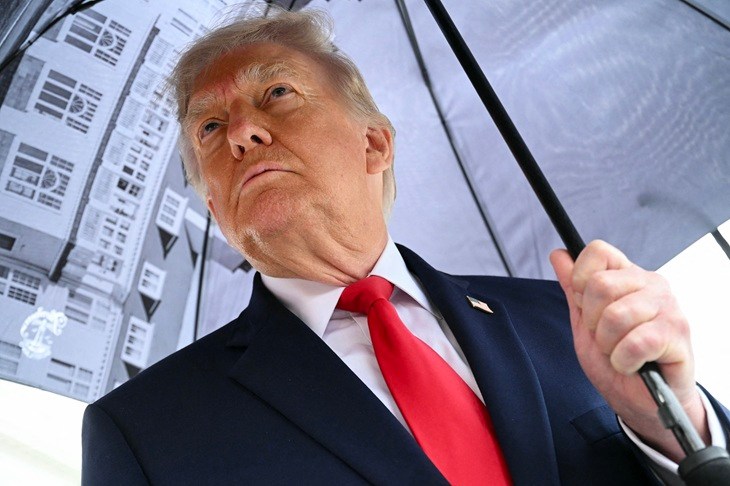
The MAGA movement has hit a wall. The US mid-term elections held earlier this week were a wipeout for the Republicans, with the Democrats on track to pick up almost 50 seats in the House of Representatives where they have won a large majority. They are also set to pick up at least seven Senators while winning a large majority there also. Not to mention winning five extra state elections at the same time.
The party that holds the Presidency often struggles in the midterms, and the Republicans were predicted to lose the House and maybe 1-2 Senators. However, the results have been much worse than expected.
It wasn’t surprising that they lost their Senators in Maine and North Carolina, which are swing states. If that was all that happened then the Republicans would have kept control of the Senate, which they previously held by 53-47.
Ohio and Iowa also fell to the Democrats. The Senate race in Texas was the most expensive state election in history and ended with a Democrat winning for the first time in almost 40 years. South Carolina was another safe Republican seat that went to the Democrats for the first time in nearly 30 years. Though the most shocking outcome was arguably in Kansas, where the Democrats won for the first time in nearly 100 years. The races for Alaska and Mississippi are currently too close to call, though the Democrats are ahead in both. The consequence is that the Democrats will now easily control the Senate with at least 54/100 Senators.
The big question is, why?
There’s plenty of theories to explain how the Republicans went from a smashing victory in 2024 to one of their worst defeats in only two years. Perhaps the most notable contribution so far has come from the Vice President JD Vance, who put a large chunk of the blame on the Iran War.
There is undoubtedly some truth to this claim. One of Trump’s promises that attracted a lot of support in 2024 was the idea of ‘no new wars’, and his campaign regularly warned that a Democrat President would start an unnecessary war with Iran. Now that Trump has started that war, many of the MAGA base feel betrayed, including some loud former supporters such as Tucker Carlson, Thomas Massie, Matt Gaetz, Joe Kent, and Marjorie Taylor-Greene.
Though the Iran War is only part of the answer. One of the top answers given by voters is the rising cost of living. This is now consistently rated as more important than immigration and cultural issues, and was the main focus of the Democrat campaigns. As with Australia, there are several causes:
- The Iran war itself is pushing up fuel prices around the world, which feeds into the price of everything else.
- The US government has racked up eye-watering levels of spending and debt. Trump first came to power promising to empower Elon Musk and his DOGE team to find trillions of spending cuts across the government. Within a few months that was scaled back to $150 billion, and by the time Trump passed his ‘big beautiful bill’ the level of US government spending was actually higher than ever before. US government debt is now over US$40 trillion (>120 per cent of GDP) and rising by an extra $2 trillion every year. Interest on the debt alone is costing over $1 trillion every year … and all this extra spending is pushing up prices.
- Unlike Australia, the US government also pushed up prices by raising taxes on imported products. Trump has always been transparent about his love for tariffs, but the general public did not enjoy the impact, and as Tim Andrews argues, the tariffs arguably marked the end of Trump’s honeymoon in office.
The other big issue cited by voters is corruption, though this is a double-edged issue, with both parties convinced that the other is beyond redemption. Still, there is a growing unease about some of the family deals and crypto schemes done by Trump, which have created an impression that the government is not putting Americans first.
As Vance sees it, the four lessons from the election are:
- End the war
- Focus on cost of living/inflation
- Put America First
- Change our relationship to Israel
This agenda represents one side of a growing divide within the MAGA movement. Indeed, it could be argued that the MAGA moment is over, and the Republicans are now splitting into neocon and antiwar factions, with prominent voices on both sides of that divide. The race for the 2028 Republican Presidential nomination will almost certainly include several contenders from both factions, and sparks will fly.
Where is the antiwar right in Australia?
I’ve long argued that the missing niche in mainstream Australian politics is the antiwar right. The Libertarian Party and People First Party are the closest approximations, but both remain small players on the political stage. Matt Canavan (Nats), Alex Antic (Libs), and Malcolm Roberts (One Nation) have made antiwar comments, but their parties are mostly stuck in the old neocon orthodoxy, and they remain loyal to their parties.
Australia tends to follow US political trends, but with a ten-year delay. The Trump movement shook US politics back in 2015, but we are only now seeing Pauline Hanson do the same in Australia. If that trend holds then it may take a few more elections before a prominent antiwar right emerges in Australia as it is in America. Ruddick and Rennick are attempting to carve out that niche now, but they may be ahead of their time.
That said, the rate of change in politics is speeding up, and we do seem to follow US trends eventually. The open question is who will be able to coalesce the antiwar right down under and establish themselves as the Australian version of JD Vance, Tucker Carlson, or Thomas Massie? Time will tell.
This was first published to Substack. Follow and subscribe here.