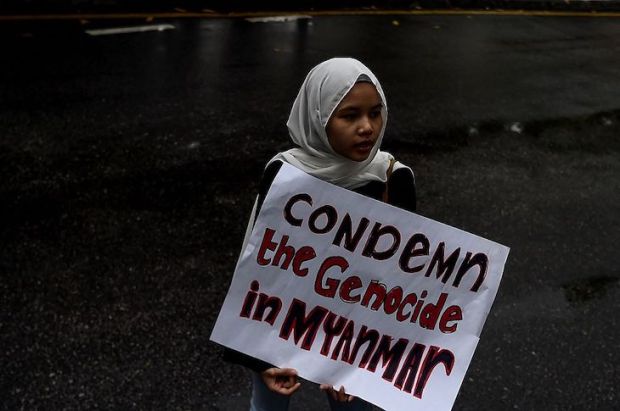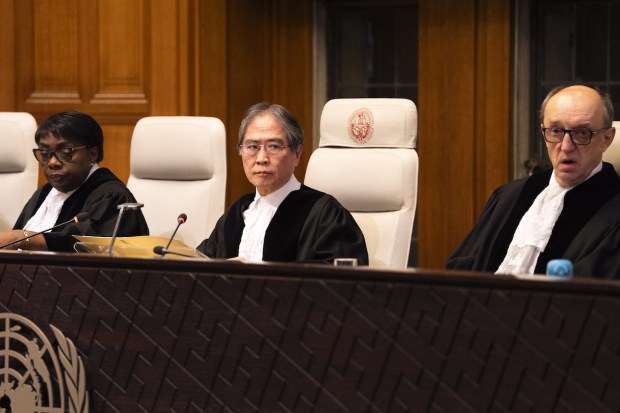
The International Court of Justice (ICJ) made history on Thursday as it ruled for the first time that a state had committed genocide. Myanmar was found to have both ‘committed genocide against the Rohingya group in northern Rakhine State’ and to have ‘violated its obligations… to prevent genocide’. Experts are now considering what this verdict means for Israel, itself facing trial at the ICJ over its actions in the Gaza Strip.
The Myanmar verdict was the conclusion of a seven-year case brought by The Gambia and which featured eleven state interventions, including by the United Kingdom. While the case was already considered one of the most significant cases ever examined in international law, it took on even more significance after 2023 when South Africa referred Israel to the ICJ using the same mechanism. So, following this ruling, does it make it more likely that Israel will become the second state to be found guilty of genocide?
Several Israeli outlets recognised the implications for Israel’s Gaza case
The ICJ found that a ‘reasonable inference’ could be made that ‘Myanmar forces acted with genocidal intent’. The Court found that the Rohingya amounted to a distinct people, who faced large scale killings by security and state forces – organs of the state – and who faced acts of extreme violence. The Court found the number targeted was ‘significant’ and the Rohingya saw their rights ‘progressively eroded’ leaving them marginalised and vulnerable.
Speaking after the ruling, British barrister Philippe Sands, part of The Gambia’s legal team, stated that the judgment was an ‘extraordinarily thorough, rigorous, well documented, thoroughly assessed example of how evidence should be dealt with’, and he argued that the ICJ has stood up for the ‘rule of law’ at a time when international law is under attack.
Following Thursday’s ruling, Israeli outlets recognised the implications for Israel’s Gaza case. Israeli website Ynet quoted unnamed senior Israeli officials calling the ruling a ‘dangerous precedent’, as well as Tammy Caner of the Tel-Aviv based Institute for National Security Studies, who pointed out that the Myanmar judgment clarified that a military objective does not exclude genocidal intent. This implies that an Israeli defence predicated on actions taken in response to the October 7th attacks, however proportionality was judged, would not be enough.
Ahead of the ruling, legal experts explained to the Spectator that the case against Israel was seen as clearer than that of Myanmar. This is not to say that either would be found guilty, just that in their assessment there was stronger evidence and access when it came to the case against Israel.
This has been compounded by statements by Israel officials. One of the hardest issues when trying to judge genocide, is that of intent. Statements by Myanmar officials were considered. For example, Min Aung Hlaing – the current President of Myanmar – called it the ‘Bengali problem’ and an ‘unfinished job’. For Israel, there are several directly relevant examples. Several days after the October 7th attacks the Israeli defence minister Yoav Gallant referred to ‘no electricity, no food, no water, no fuel’ adding ‘we are fighting human animals’, while Israeli president Isaac Herzog apportioned blame to all Gazans saying, ‘it is an entire nation out there that is responsible’. By May 2025, finance minister Bezalel Smotrich was still asserting that Gaza would be ‘totally destroyed’. Some of these statements were used as evidence by a UN commission, which concluded they amounted to ‘direct and public incitement to commit genocide’. Israel vehemently rejects the genocide allegation.
In the Myanmar case, the ICJ ruled that a state should foresee that its actions could lead to one of genocide, even if one was not being perpetrated at the beginning of a conflict and thus should be reasonably expected to take preventative measures. This has clear implications for Israel – it means the Court, similarly, might accept that there were legitimate grounds for the response to the October 7th Hamas attacks but that Israel should have foreseen that the response could lead to, or increase the risk of, one of genocidal intent. In the case of Myanmar, the Court also found there had been historic prejudice and discrimination against the Rohingya people.
Legal experts had cautioned that the US may retaliate against the ICJ if a verdict of genocide was found. So far the US state department has greeted the result with caution and warned against ‘politicisation’ of the ICJ.
The US state department greeted the result with caution
Many legal scholars point to the sanctions that the International Criminal Court (ICC) has faced from the US. The ICC – also based in The Hague – which prosecutes individuals not states, was originally targeted at the end of the first Trump administration. However, after Biden revoked sanctions, they were reinstated and ramped up during the second Trump administration, in response to the ICC’s actions against Israeli leaders. The ICC’s issuing of an arrest warrant against Netanyahu was itself criticised as ‘outrageous’ by the Biden administration.
Israel has benefitted historically from strong American bipartisan support for its actions, not just from the Trump administration, but this has changed dramatically since the October 7th attacks, evidence of which is seen not just in opinion polling but in the recent American midterms. The war with Iran, and support for Israel, was a major factor in the Democratic ‘tsunami’. A new generation of Democrats – including the first Muslim senator – have been elected, a group who certainly don’t demonstrate the same unconditional support for Israel.
In the last two years of the Trump presidency, it is now advantage Democrats and attention will turn to who their presidential nominee will be. One such contender is Georgia senator Jon Ossoff who, when asked if Israel was committing genocide, said it was ‘a question for the ICC. There is no doubt in my mind that Israeli forces prosecuting the war in Gaza violated the law of armed conflict’. He also dismissed his Republican opponent’s support for sanctions against the Court.
The ICJ may yet face retaliation from the Trump administration. For Israel, however, the midterms offered some evidence of how far American opinion has shifted. Less than three weeks later, the Court handed down its historic judgment on Myanmar. Israel’s final written submission is due in May 2029, with a judgment issued later that year or even into 2030, by which time Trump will have left office. Israeli governments have long banked on bipartisan support in Washington, but by the time the judges rule, Israel may find it has fewer friends there. In The Hague, the precedent set by the Myanmar judgment will still be there.