It is my view that the Liberal Party and News24 are making a serious mistake by persistently conflating the Ben Roberts-Smith affair with the hate speech laws.
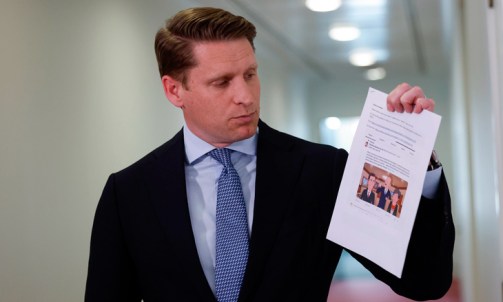
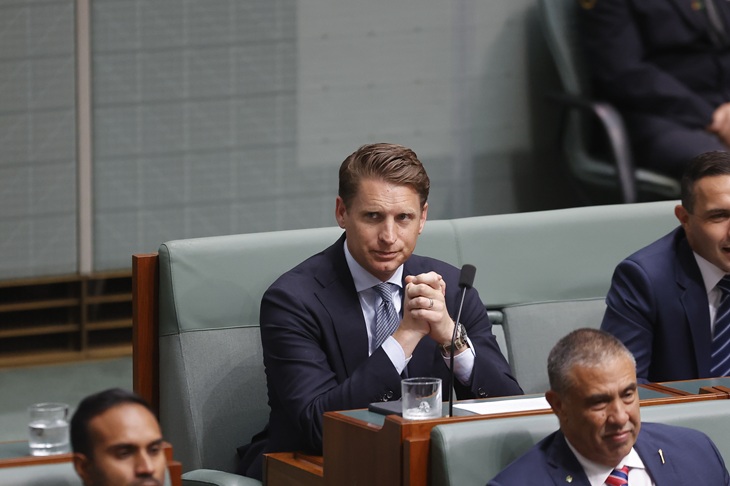
I am from Western Australia, the home of the SAS, and my brother served abroad with the regiment in recent wars. Andrew Hastie is already facing threats against himself and his family, threats serious enough to require increased security. While those threats are indefensible, anyone who understands how close, fiercely loyal, and formidable the SAS community is should recognise the danger of inflaming this dispute any further. The legitimate target of political anger is the Albanese regime that retrospectively changed the law with a primary vote of 34.6 per cent.
The vote on the hate speech laws, however, is in my view the betrayal Andrew Hastie cannot argue away. Military service commands respect, but it does not confer political immunity. ‘Lest we forget’ is a civic injunction belonging to the whole nation, not a shield behind which voluntary political decisions can be placed beyond scrutiny.
Lest we forget, Andrew Hastie denounced the original hate speech legislation as ‘an attack on our basic democratic freedoms’. Yet he voted for the narrowed bill on the grounds that its sweeping racial-vilification offence had been removed. What remained in the hate speech bill was, nevertheless, profoundly censorious. Worse, this hate speech bill was part of the government’s absurd legislative response to the Islamist terror attack at Bondi Beach on December 14, 2025 – an absurdity compounded by the media’s willingness to blithely accept it.
It is all very well to say that these provisions presently apply only to Nazi symbols, but Bondi was attacked by Islamists, not neo-Nazis, and extending the principle to additional symbols, like our Eureka Flag, now requires only sufficient political will. Indeed, similar far-left regimes in the UK, notably the Birmingham City Council and Oxfordshire County Council, have taken legal action to stop the unauthorised hanging of national flags on public infrastructure.
In Australia, thanks to the votes of Andrew Hastie and the Liberal Party, a prohibited-symbol display can attract criminal liability where a court concludes that a reasonable person who is a member of the targeted racial or ethnic group would consider that it could incite another person to ‘offend, insult, humiliate or intimidate’ members of that group. Incitement to violence is not required. This is probably the clearest remaining restriction on expression in the narrowed legislation.
Lastly, the Act imposes a reverse evidential burden upon defendants relying on its protections for legitimate expression. While not formally eliminating the presumption of innocence, it forces people accused over journalism, scholarship, religion, or art to establish an evidential foundation before those protections are considered. It is hard to impress upon people just how malevolent that arrangement is: the state first brings legitimate expression within the reach of criminal law, then requires the accused to explain why it should be protected.
In my view, it has been a huge mistake to remind us why we turned away from the Liberal Party in the first place. The political shift was already in motion after the appalling, bland, and ineffective period of Coalition government. However, this particular Liberal Party vote became the emblematic act that turned the trickle into a flood. Moreover, the truth could finally be seen that there is no place for conservatives in a party called ‘Liberal’.
They shouldn’t have reminded us that we have been in the crosshairs of a bipartisan authoritarian ratchet since Hawke and Keating totally outfoxed the Coalition in the 1980s. For every attempt by the ALP to censor us, the Coalition has been there to horse-trade over the details and ultimately validate the assault.
Nor should we forget that all four National Party Senators voted against the legislation, even though Michael McCormack supported it in the House. The Nationals subsequently broke with the Liberals, but returned just 18 days later to a party that had decided we were a rabble to be managed rather than a people to be represented. And while it is hard not to like Senator Matt Canavan, by remaining in the Coalition he demonstrated that, to paraphrase Nigel Farage, he did not have the courage to put country before party when it truly mattered. So he can share their fate.
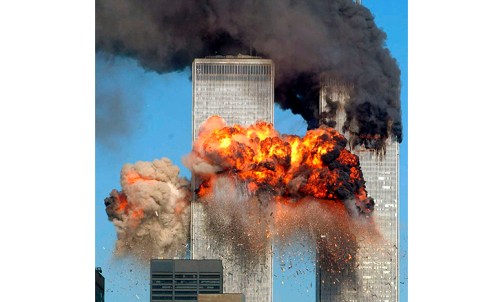
As I write this, the USA has commemorated 25 years since the Islamic terror attacks on the World Trade Centre. The Prime Minister released a statement on X in which he again refused to name Islamic terrorism as the ideology responsible. It was as if to remind us of his political impotence and unpreparedness to protect us from the terrorist ideology that had swept the world for 25 years, including several fatal and foiled attacks here, before the Bondi Massacre of December 14.
That event, and the cowardly legislation and squabbles that followed it, are a large part of the reason One Nation has surged, becoming potentially our only hope of protection from one party that appears to hate us and another that has long been too gutless to defend us.
And to be clear, we have not forgotten.