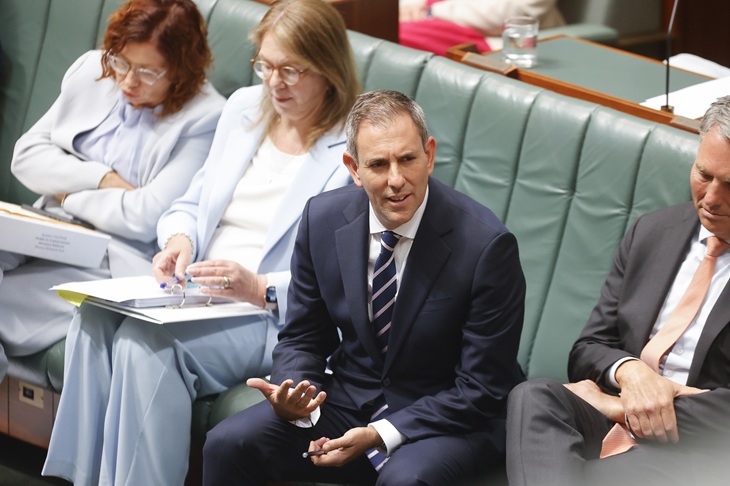
The Chalmers Budget is regularly described in the media and by political commentators as having produced ‘unintended consequences’.
These ‘unintended’ or ‘unforeseen’ economic consequences include crashing the property market, increasing rents, chilling investment, reducing rather than improving home affordability, and weakening an already fragile economy.
Surely these descriptions are intended ironically or said wryly.
There could surely be nothing unintended or unforeseen about the impacts of the May Budget. If these consequences were not foreseen, or were indeed unintended, then there must be catastrophic levels of incompetence and economic illiteracy amongst the designers of the budgetary tax changes.
What outcome was reasonably expected from a 360-degree ‘change in position’ in long settled tax settings that were emphatically confirmed as not subject to amendment ‘50 times’ before Budget night?
Rather, it seems more likely that the market response was largely predicted and in fact designed to occur by the Treasurer and his bureaucratic servants, even if its extent was perhaps underestimated.
The likely reality is that government and its Treasurer saw its thumping electoral majority as a once-in-a-lifetime opportunity to implement major wealth redistribution reforms and to reshape Australia as a capital-unfriendly, high-tax country with the government at the centre of every Australian’s lives. Any unforeseen impacts will surely be the serious political, rather than economic, consequences caused by the Budget measures, especially the fallout within the groups Labor regards as its core constituency.
Take the hitherto seemingly set-in-stone negative gearing on loss-making residential investment properties.
The ability to claim losses on income derived from investment property coupled with the capital gain discount has been for many decades the most common pathway for average Australians to accumulate wealth and make owning an investment property viable. Without negative gearing property investment is out of reach for most Australians. The combination of tax deductions and an expectation of capital gain make residential property investment a relatively safe investment option for lenders and investors. It also provides rental stock.
Of course, it also means that investors are competing with new homeowners.
We are told in solemn and patronising tones that this produces so-called intergenerational inequity, so the settings were ripe for reform. There is validity in this view. But to spring on Australians the abolition of negative gearing concurrently with the changes in capital gain taxes in an already high interest and inflationary environment was always going to tank the property market, increase rents, and suppress the stock of housing for rent and sale. The exemption for new builds does not come close to mitigating these effects because the supply of new builds is seriously constrained, wildly expensive, and buyers of off- the- plan and new developments need to feel comfortable that they can on-sell their investment to the widest possible market.
The impact has been immediate and drastic. The data is unequivocal on the impacts on the property and rental markets. Enough time has elapsed since May to see a genuine trend rather than a blip.
Now, if tanking the property market was seen as a fair price to pay to reduce competition between investors and first home buyers, then okay this might be a defensible position, but no one wants to sell or buy in a falling market and the reduction in home prices was always going to be offset by the increase in interest rates which was also bound to occur given the other big spending aspects of the May Budget.
The impacts of the abolition of negative gearing and capital gains discount coupled with massive spending were entirely foreseeable. Prices have crashed, confidence is low, mortgage stress is rampant and it’s not just Boomers or a small cohort of wealthy Australians who don’t vote Labor feeling the pain. The measures have proven self-defeating with the dual impact of ruining the investment market and at the same time hindering the opportunities for new buyers to enter the market with cheaper house prices.
The shift from tax on labour to tax on capital and consequent redistribution has also backfired. The total tax take will never match spending, and state transaction-based taxes such as stamp duty which rely on turnover have plummeted producing problems for state budgets. On top of this, notional household wealth and consumer confidence has been destroyed producing stagflationary conditions.
There are several adverse consequences flowing from other budgetary measures, including out-of-control spending and energy policies which have increased debt levels and resulted in successive interest rate increases to curb spiralling inflation. Attempts to blame this on global events have fallen on unreceptive ears. Even if global events have played their part, these events were well known in May when the budget was delivered.
Small businesses and enterprises have also been hammered by the cessation of the capital gains tax concession and clampdown on trusts. Internet memes abound of start-ups and SMEs sarcastically welcoming Albo as their silent business partner. Despite the government swelling the ranks of the Commonwealth public service to unprecedented levels (who are about to receive at least a 9 per cent pay increase), small and medium business remains the engine of the economy and the principal driver of wealth, but are being bludgeoned.
The great reforms envisaged by the Treasurer facilitated by his party’s electoral majority were seemingly designed in an echo chamber with input from advisors and bureaucrats who have either made gross miscalculations of micro and macroeconomic principles, and of the real world, or who were alternatively prepared to take great economic risks on behalf of Australians.
Whilst forecasting errors can legitimately be made, what is astounding is that in recent weeks, many months after the ill effects of the budget are playing out, yet further impactful measures such as surcharge fee changes, changes to discretionary trust laws, and the ATO refusing to accept tax payments via credit cards are being implemented, with again predictable ill effects and hostile reactions from the business and general community emerging.
There is significant hubris being exhibited by the Treasurer and Prime Minister. Perhaps they figure the dust will settle in a few months and the reforms will ultimately prove to be positive and gain electoral support as time unfolds. Given recent polls such thinking seems very optimistic.
The opportunity to use its huge electoral majority to implement sweeping reforms has clearly proven to be an irresistible one. A more moderate approach which recognised the need to hasten slowly and cautiously with radical tax reform in a volatile economic environment might have been more electorally palatable and possibly resulted in fairer outcomes for Australia over time with a rebalancing of tax settings.
Instead, the government seriously overplayed its hand and failed to assess market realities. Having done this, the response has been a curious blend of doubling down on key reforms and cocky denial, coupled with embarrassing backflips on less central and impactful reforms. None of this displays sound economic management or political acumen and will likely have major electoral consequences.