As someone unfortunate enough to use LinkedIn for work, the amount of AI slop I wade through daily has become unbearable.
It’s no surprise, then, that recent research found more than half of LinkedIn posts are AI-generated.
I’m tired of people confusing the ability to generate words with the ability to write.
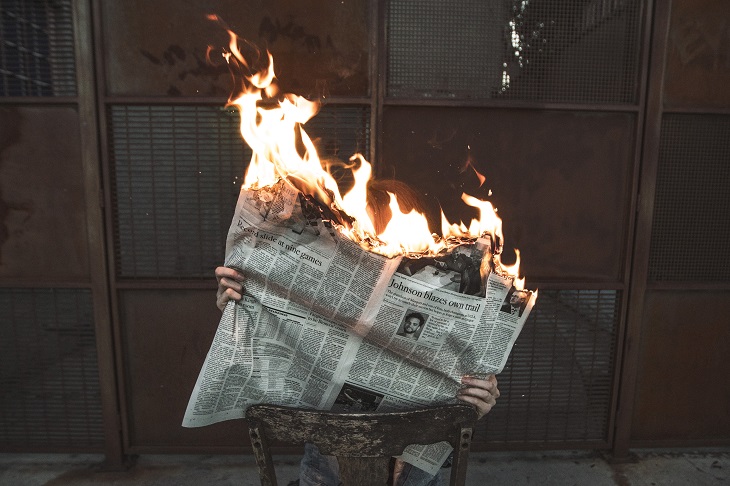
Copying ChatGPT’s output and passing it off as one’s own has become so common that it’s spawned an entire online trend of exposing famous people who use AI to write their ‘insightful’ posts.
The irony is that some of the loudest AI evangelists are the ones getting caught.
AI has its own accent, once you learn to hear it. The lists. The pauses. The perfectly balanced sentences. The trite, smooth conclusion wrapped up in a tidy final line. The metronomic rhythm of an argument that never quite breathes.
Reading it is like biting into a pizza only to discover it’s a piece of paper with the words ‘a delicious pizza’ printed on it.
As a freelance journalist, I sometimes ask AI to edit my work. It has a habit of deleting my favourite lines.
That’s irritating, but what worries me far more is how the model learned to write that way in the first place: by reading people like me, without asking.
Of course, the words I write here may one day become part of the data used to train future AI models to be better writers.
Which brings us to why the current push for Big AI copyright exemptions matters so much.
Writing is not just the final product that appears on a page. It represents years of reading, reporting, rewriting, being edited, making mistakes, and learning what makes a sentence work.
For freelancers like me, the process is relentless: pitching, reporting, and writing hundreds of articles a year, most of which never see the light of day.
Our work is scattered across thousands of publications, each one representing hours of reporting and years of honing the craft.
Unlike the large media companies negotiating licensing agreements with AI firms, we freelance journalists do not have lawyers or executives bargaining over the value of our work.
Now, AI companies are asking the Australian government to change copyright rules so they can train on that work, without fair compensation for the people who created it.
I first saw this conflict emerging while I was studying at New York University. In 2023, I visited the New York Times on a class trip.
A few months later, the Times became the first media organisation to sue AI companies for copyright infringement.
There are now more than 100 such lawsuits filed against AI companies.
AI companies are ingesting vast amounts of human creative output, often without consent, compensation, or credit, while building commercial products that could eventually replace many of the people whose work helped train them.
This isn’t liberating human creativity. It’s strip-mining it, homogenising it, pasteurising it, and selling it back to us, all while calling the theft ‘training data’.
Last week, Microsoft signed an agreement with Nine to ‘reference’ content from its mastheads.
In my view, this is a slap in the face: a performative gesture by Big AI to look like it cares, timed to appease a government under real pressure to grant copyright exemptions for AI to ‘train’ on Australian creatives’ work.
To my knowledge, the compensation terms have not been publicly disclosed, and freelance contributors like me have no guarantee of sharing in any value created from those deals.
Independent publishers, like this one, are forgotten about.
Australia’s willingness to regulate technology has made it an important battleground in the global AI debate, and AI companies are anxious that the precedent set here can spread across the world, as with the (ineffective) social media ban.
Sam Altman has reportedly floated offering the US government a financial stake in OpenAI, a proposal dressed up as benevolence that critics have warned could blur the line between regulation and corporate influence.
I have no doubt that AI-written work will eventually become indistinguishable from human writing. But only because it learned from ours.
Australia has pushed back against Big Tech before, forcing global platforms to recognise the value of Australian journalism. We have the chance to do it again.
AI may become the largest uncompensated transfer of creative work in history. Its scale is so vast that it is hiding in plain sight.