I never thought I’d write a sentence beginning with, ‘My fifteen-year-old daughter has changed my mind about quotas.’
Yet here we are.
For years, I’ve regarded quotas as one of those modern political inventions that solve the wrong problem. The idea that Parliament can somehow become more representative simply by ensuring a prescribed number of men or women are elected always struck me as reducing people to nothing more than their biological plumbing.
It seemed a strangely shallow way to define diversity.
Then my daughter, Mim, unintentionally dismantled my own argument before replacing it with a far better one.
She’s fifteen. She tolerates school more than she enjoys it. Ask her about algebra and you’ll receive a shrug. Ask her about cattle and she’ll talk until the cows come home.
Agriculture is where she comes alive.
She spends her weekends leading steers, preparing cattle for showing, and working with animals that each require completely different handling. In her little team there are six head of cattle. Four are beautifully broken in, calm, predictable, and perfect for younger handlers to learn on. Then there are the other two. The difficult ones. The animals no textbook can teach you how to handle. Those are hers.
Proud father moment, I make no apology for it, but she has that rare instinct stockmen recognise immediately. She understands animals in a way that simply can’t be taught. More importantly, while she’s handling the hardest cattle, she’s quietly teaching the younger students how to improve their own skills.
A few weeks ago, she came home asking what a quota was. She’d heard the word in class but hadn’t been paying enough attention to know what it meant. We sat down and talked about quotas, where the idea originated, and how the modern political class has largely reduced them to debates over gender representation.
She listened. Thought for a moment. Then laughed. ‘That’s a good way to weaken your herd.’ Five minutes earlier she didn’t know what the word meant. Five minutes later she’d reduced decades of political debate to a cattle breeding analogy that made uncomfortable sense.
Then she completely flattened me.
‘If you’re going to have quotas,’ she said, ‘make them about ability, not whether someone is a man or a woman.’
Now that is an idea.
Imagine a Parliament that genuinely reflected Australia, not by chromosomes, but by experience. A boilermaker. A farmer. A doctor. A nurse. A small business owner. A truck driver. A teacher. A union organiser. A police officer. A paramedic. A single mother. A single father. Someone who has built a company. Someone who has gone bankrupt. Perhaps even someone who has served their sentence and rebuilt their life. That is diversity.
Not because every group deserves a guaranteed seat, but because every one of those people sees problems through a completely different lens.
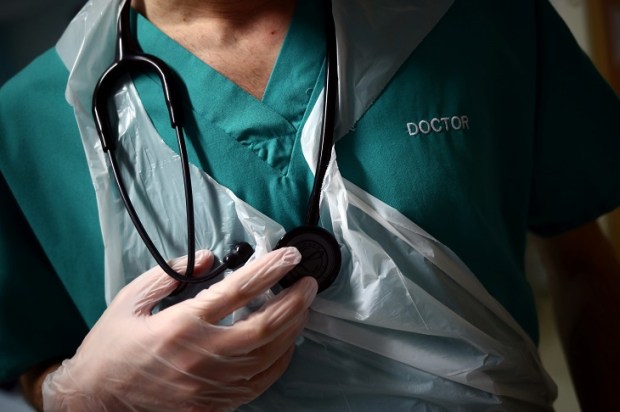
The doctor diagnoses. The nurse notices what the doctor missed. The lawyer spots the unintended consequence. The boilermaker asks whether the thing can actually be built. The farmer wonders who’s going to feed everyone while they’re arguing about it.
That’s representation. Not identity politics. Competency politics.
Then Mim wandered back into cattle breeding. She explained that breeding the same bull over the same bloodline year after year eventually narrows the bloodline.
It works … until it doesn’t.
Eventually you’re breeding weakness into the herd. And that’s when she asked the question adults seem afraid to ask. ‘Isn’t that what’s happening with politicians?’ It’s difficult to argue otherwise.
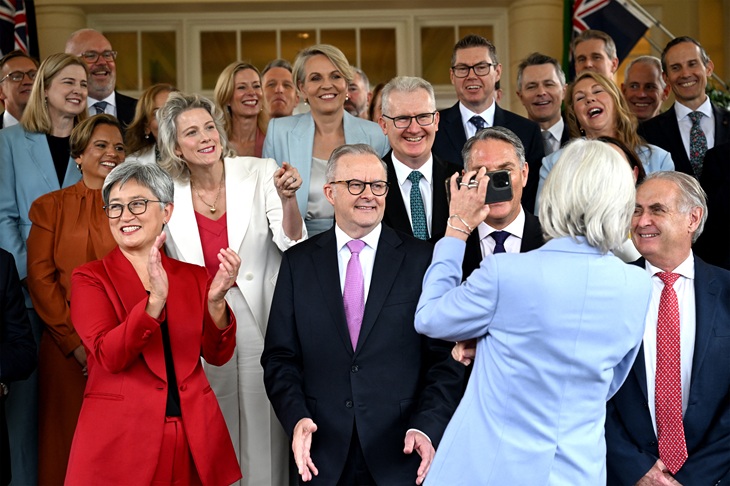
Attend conferences held by the major parties and you’ll notice something remarkable. Different coloured shirts. Almost identical people. The same universities. The same career pathways. The same advisers. The same think tanks. The same consultants. The same books. The same television shows. Even the same RM Williams boots.
They’ve become less like competing philosophies and more like rival football clubs whose members all attended the same private school before joining different teams. Politics has become its own breeding paddock.
Every generation produces politicians who increasingly resemble the previous generation. Not because they’re related by blood, but because they’re selected from the same increasingly narrow pool of professional political operators. No cattle breeder would deliberately narrow a bloodline for seven generations without expecting defects to emerge. Yet that’s effectively what we’ve done with politics. Perhaps that’s why Australians increasingly vote for micro-parties. Not necessarily because they agree with them. But because they’re searching for fresh genetics. The established herd no longer looks healthy. Some newcomers are excellent. Others are complete disasters.
Anyone involved in pest management knows exactly what happens when an ecosystem loses balance. New populations emerge to exploit the vacuum, and by the time anyone notices, the problem has become considerably harder to solve.
The answer isn’t to eliminate diversity. Quite the opposite. It’s to encourage the right kind of diversity before the system fragments beyond recognition. Parliament shouldn’t look like a university political science tutorial.
It should look like Australia. Not Australia’s demographics. Australia’s experience. Have the lawyer. But also have the carpenter. Have the union official. But also have the employer who signs the wages. Have the surgeon. But don’t forget the nurse who keeps the hospital functioning after the surgeon has gone home. Build a Parliament whose members have actually built things. Fixed things. Raised children. Run businesses. Driven trucks. Served in uniform. Worked night shift. Lost jobs. Started again.
That Parliament would probably spend less time performing outrage for television cameras and more time worrying about whether the lights stay on, the crops get harvested and the country becomes wealthier.
Perhaps that’s a naïve idea. Then again, it didn’t come from a political strategist. It came from a fifteen-year-old cowgirl who knows enough about breeding to understand something many of our political leaders seem to have forgotten. A healthy herd isn’t built by making every animal look the same. It’s built by selecting different strengths to produce something stronger than any one bloodline could achieve on its own.
As the old saying goes, wisdom sometimes comes from the mouths of babes. This time, it arrived wearing dusty boots and carrying a show cane and a school backpack.