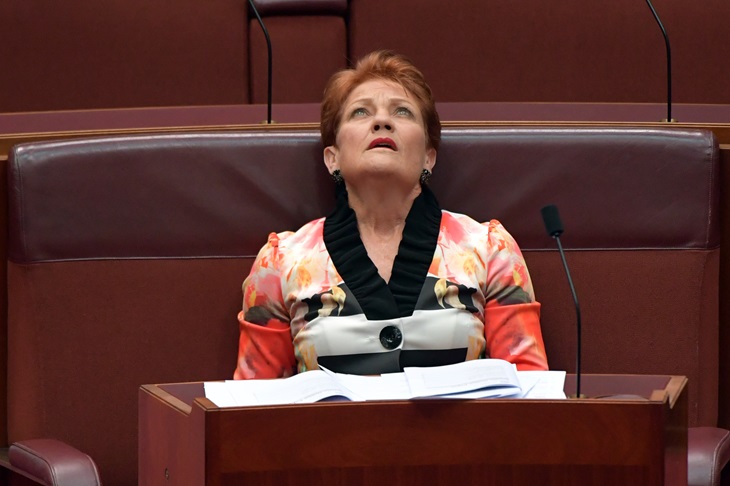
‘I just want my country back.’
It is one of the most misunderstood phrases in Australian politics.
Pauline Hanson says it. So do many of her supporters. It’s often dismissed as nostalgia or caricatured as a longing for some mythical Australia that never existed.
But I suspect many of the people saying it are expressing something far more profound.
The general assumption is that they are talking about immigration, demographics, or the people who have arrived over recent decades. I’m not convinced they are. Countries are not fundamentally transformed by people without power. They are transformed by the people who possess it.
That is an important distinction because it forces us to ask a very different question. When Australians say they want their country back, who exactly do they think took it?
The answer is almost certainly not the family that arrived from India, China, or Lebanon looking for a better life. They did not rewrite the school curriculum. They did not redesign public institutions. They did not reshape government departments or impose corporate diversity policies. They did not redefine the language of public debate.
Those decisions were made somewhere else.
Over the past several decades, Australia has witnessed the steady rise of what might be called the permanent institutional class. Not politicians, who come and go with elections, but the bureaucracy, regulators, universities, publicly funded organisations, corporate boards, professional associations, cultural institutions and large sections of the media. These are the institutions that increasingly shape how Australians work, educate their children, conduct business and even think.
Unlike governments, they rarely face the voters. Unlike ministers, they are seldom removed. Unlike political parties, they continue largely unchanged regardless of who wins an election.
This is where I think many commentators misunderstand the frustration driving movements such as One Nation. The complaint is not simply that governments have made poor decisions. It is that governments increasingly appear unable – or unwilling – to change the institutions that shape those decisions in the first place.
Critics often respond by suggesting this sounds like a conspiracy theory.
It isn’t.
A system does not need a mastermind if enough minds think alike.
Most senior bureaucrats attended similar universities. Corporate executives participate in the same professional networks. Regulators, academics, consultants, and board members often move between the same institutions throughout their careers. They read the same reports, attend the same conferences, absorb the same assumptions and increasingly arrive at the same conclusions.
Nobody needs to issue instructions.
The culture does that work for them.
Perhaps that explains why Australians increasingly feel that changing governments changes very little. Prime ministers come and go. The bureaucracy remains. Cabinets change. Departments continue. CEOs retire. Corporate cultures endure. Policies are amended. Institutional assumptions survive.
That is why so many debates now feel strangely predetermined. Whether the issue is immigration, energy, housing, education or freedom of speech, there often appears to be only a narrow range of acceptable opinion inside the institutions that shape public life. Views outside that range are not merely challenged; they are frequently dismissed as ignorant, extreme or morally suspect.
Democracy depends upon disagreement. Institutions depend upon legitimacy. The two are not the same thing. When institutions become convinced they already possess the right answers, they stop seeing disagreement as part of democracy and start treating it as a problem to be managed.
That is a dangerous place for any society to find itself.
It is also why so many Australians feel increasingly disconnected from the institutions that claim to represent them.
This is not an argument against bureaucracy. Every modern nation needs an independent public service. Nor is it an argument against business, universities or the media. Strong institutions are essential to a healthy democracy. The question is whether those institutions still see themselves as servants of the public or as custodians of a particular worldview.
There is a profound difference.
When Pauline Hanson says she wants her country back, her critics hear a debate about race. I suspect many Australians hear something else entirely. They hear a desire to recover institutions that once reflected the values of the people they were created to serve rather than attempting to reshape those values from above.
Whether one agrees with that sentiment or not is almost beside the point. The more interesting question is why so many Australians increasingly feel it.
Perhaps the country has not been taken at all.
Perhaps what has changed is that too much power has quietly migrated away from the ballot box and into institutions that most Australians neither elect nor meaningfully influence.
If that’s true, then the question facing Australia is not who lives here. It’s who governs here. Not every three years during an election campaign, but every day in the institutions that quietly shape how Australians live, work, speak and think.
Australians have every right to want their country back.
But if they are serious about doing so, they must stop directing their anger at the symptoms and start confronting the source.
Because countries like Australia are not lost at the border.
They are lost inside the institutions that gradually forget who they were created to serve.