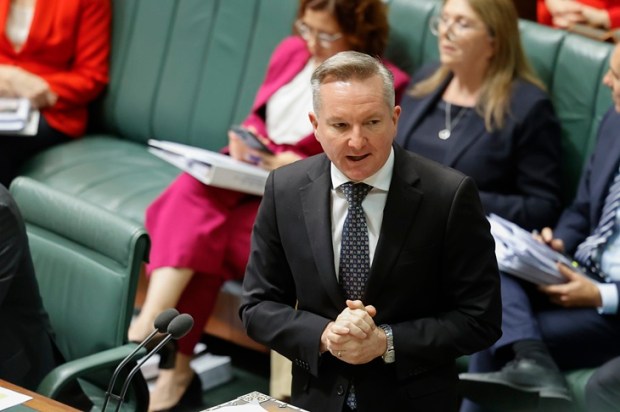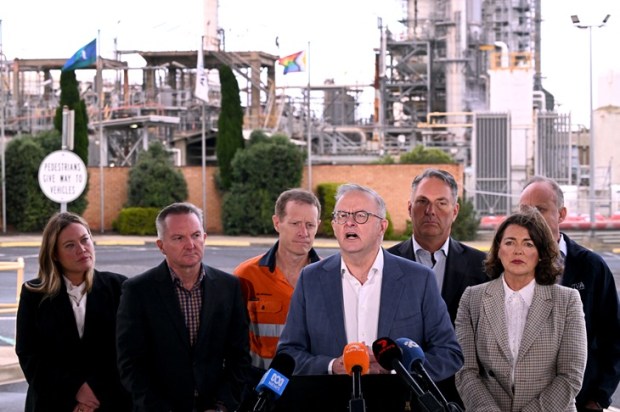
Britain’s Energy Security and Net Zero Minister, Ed Miliband, and Australia’s Minister for Climate Change and Energy, Chris Bowen, are, in my view, the messianic standard-bearers for the permanently incensed and mirthless green apocalyptics. Equally dedicated to the cause is the President of the European Commission, Ursula von der Leyen.
Both Miliband and Bowen have wagered their political futures on the need for renewables to prevent global boiling, while providing a new, supposedly low-cost energy future towards which commercial entrepreneurs need to be guided by farsighted politicians.
Both are hurtling along into the wrong lanes of the motorway, ignoring all information that contradicts their deeply held views.
Thus, the IPCC has recently and reluctantly acknowledged that its favoured ‘RCP8.5’ scenario, which projected warming of 5-6°C by 2100, could never come about. That scenario was the platform on which coal/gas energy policies throughout the world were built, but its discrediting barely perturbed green fanatics and certainly caused no policy reconsideration by the Miliband-Bowen-von der Leyen axis.
They have shown a similar disregard of the graphic evidence from diverse electricity markets that the higher the share of renewables the higher the price. Higher prices for renewables were portrayed as a passing phenomenon, but subsidies to smooth the ‘transition’ from traditional energy supplies began 30 years ago and, despite raising aggregate electricity prices, they remain essential to enabling wind and solar to gain market share. And, as Squadron Energy recently acknowledged, failure to close coal generators is placing downward pressure on market pricing, ‘which makes the investment decision for renewable facilities very difficult’. Well duh!
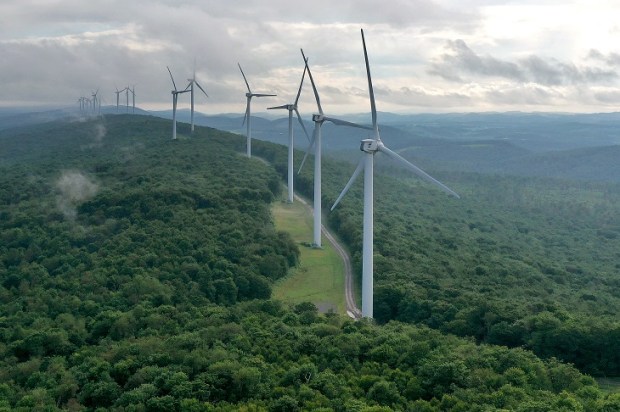
Moreover, as the wind/solar share is increased, so do blackouts. Politicians blame fortuitous events for the collapses of renewable-rich grids (South Australia, Broken Hill, Texas, Spain, Chile). But the risk of these blackouts increases as the share of wind and solar grows, because their inherent lack of ‘inertia’ removes a buffer that would otherwise avert sudden power loss. Batteries can provide some insurance to moderate normal daily peaks but cannot, except at unrealistic costs, supply coverage for lengthy wind and solar droughts. In South Australia, the green energy poster child, even a tenfold increase in its present battery capacity would not cover an eight-hour lack of solar and wind.
Miliband and Bowen are promoting expanded energy subsidies for renewables and the transmission required for their delivery. Both have presided over a vandal-like destruction of coal stations – Miliband in the UK is even planning to shut down North Sea gas supplies that, as well as reducing dispatchable energy, will require billions of pounds in compensation to investors.
The upshot of these policies is the destruction of industries requiring low-cost energy.
But the vast majority of politicians still fail to recognise the climate con and the renewables fallacy. This is testament to the incapabilities of the political class.
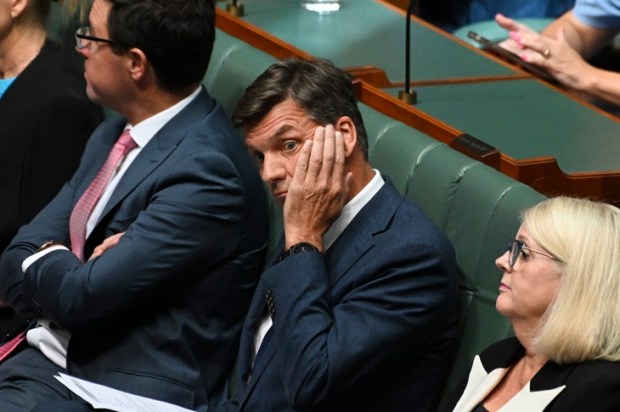
Donald Trump stands alone among world leaders in fully decrying the ‘climate con’ and economic harm of wind/solar power it has brought in its wake. Radical Opposition leaders in the Anglosphere: Farage and Hanson were always on board – as now are many establishment conservatives, like UK Tory leader Kemi Badenoch and the Nationals’ Matt Canavan in Australia (with Angus Taylor crab-walking towards it).
How will energy-reforming politicians extricate economies from the damage of this green empire in the future? How can they address the problems left behind by the forced ‘transition’ in the commercial, market-oriented energy system?
Well, if they were to try energy policy reform in Australia, some damaging policies can be addressed by simply allowing them to expire or by ministerial discretion. This applies to the renewable subsidies to grid-based roof solar, wind and batteries.
Others, like the lending/direct subsidising agencies, including the Clean Energy Finance Corporation, the Australian Renewable Energy Agency, and Hydrogen Headstart, would be required to cease new lending and call in existing loans. This would also be the case for additional requirements applying to the top 215 businesses under the Safeguard Mechanism.
Some, like the Capacity Investment Scheme, should also be promptly terminated but where ‘sovereign risk’ commitments have been made, pressure may be necessary for the beneficiaries to forego the subsidies inherent in their long-term contracts for renewables. The Trump Administration has used persuasion combined with buy-outs contingent on the beneficiaries investing in gas, coal or nuclear.
In the case of new transmission/Snowy 2, the best approach, in my view, is simply to walk away from incomplete contracts.
With energy balancing, which in yesteryear’s industry would cost under one per cent of energy, the policy must be to make renewables pay for the costs they impose by requiring backup and other reliability features.
Massive savings are also available by downsizing the ‘independent’ energy agencies and the policy-making functions within the energy and other departments. At least this would strip regulatory agencies of powers to plan (AEMO), and set prices (AER), while abolishing the ‘clean power’ regulators, advisory agencies and energy advisory personnel from all departments. Vital for both energy and other commercial investments is the need to pare back the regulatory intrusion of environmental and indigenous regulations and scope for activists to impose costs and delays.
All this said, winning power hasn’t been accomplished yet and that itself is only the first step. The second step is actually dismantling all the features that are suppressing economic well-being and that too will prove to be a longer process than politicians seeking reforms hope.
After that comes the cleansing of the economy and the associated re-incentivising businesses to invest in commercial energy prospects. All this could take a decade before we return to the sorts of development security that were prevalent 20 years ago.