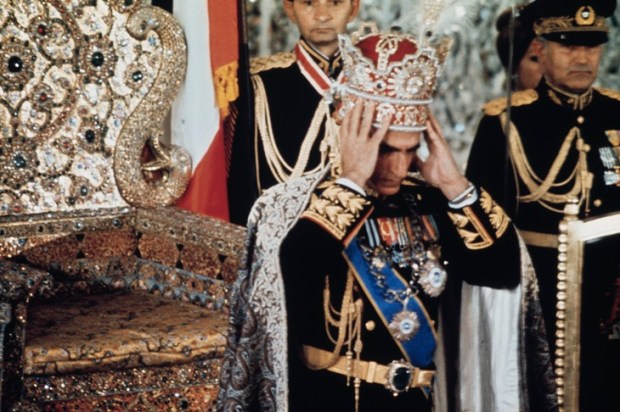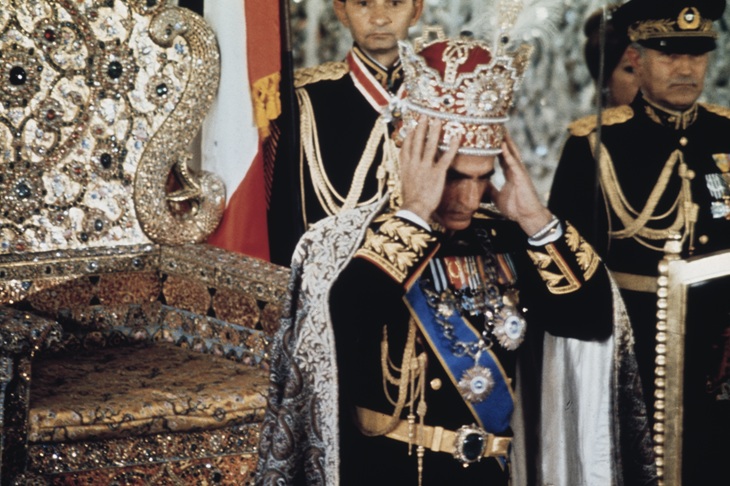
The Pahlavi Crown, created for the coronation of Reza Shah Pahlavi in 1926, was intentionally designed to reflect the grandeur of pre–Islamic Iran and the ancient tradition of Iranian kingship. The Pahlavi monarchy sought to present itself as a continuation of the idea of ‘Iranshahr’ and the long tradition of Persian monarchy, particularly the legacy of the Sasanian Empire, and this vision is clearly visible in the design of the crown.
The Pahlavi Crown, created in 1926 in Tehran, Iran. It is adorned with 3,380 diamonds totaling 1,144 carats, including a central 60 carat yellow brilliant, along with five emeralds, two sapphires, 369 natural white pearls, and numerous smaller stones. pic.twitter.com/S9s9ZBDRRl
— LeoDaVinciWave (@LeoDaVinciWave) January 16, 2026
A significant part of what Iranians preserved for centuries as their historical and cultural identity was rooted in the ancient Iranian concept of kingship, the idea of Iranshahr, and the political and cultural heritage of ancient Persia. Even after the Arab Muslim conquest of Iran, many of these elements survived through historical memory, Persian literature, mythology, art, the Persian language, and popular traditions, and were passed down from generation to generation. The Pahlavi era began with a strong emphasis on Iranian cultural revival, and many of these ancient elements were consciously revived and reintroduced throughout the country. One of the clearest examples of this cultural restoration can be seen in the Pahlavi Crown itself.
The crown reflects several major inspirations from the glorious Sasanian period and ancient Iranian symbolism:
- Overall Form of the Crown Unlike many European crowns, which are often dome-shaped, circular, or marked with Christian crosses, the Pahlavi Crown has an open, vertical, and imposing structure. Its design resembles the crowns seen in ancient Persian rock reliefs and coins of Sasanian kings. In depictions of rulers such as Khosrow II and Shapur I, one can observe elevated and highly symbolic crowns that were not merely decorative but intended to express royal authority and the concept of kingship itself.
- The Battlement Like Upper Edges The serrated upper edges of the Pahlavi Crown resemble the battlements of ancient Persian fortresses and city walls. In Achaemenid and Sasanian architecture, such forms symbolised protection, stability, and authority.
Originally, battlements served as defensive positions for guarding cities, and over time they became symbols of safeguarding the homeland. In ancient Iranian political thought, the king was regarded as the guardian of order, security, and the unity of Iranshahr. For this reason, the use of fortress-like forms on the crown was not simply decorative, but symbolic of the king’s role as protector of the nation and defender of royal order.
Geometric and square architectural forms were also associated in many ancient civilisations with structure, stability, and earthly order. In the Iranian tradition, a fortified city represented civilisation, law, security, and prosperity. Thus, city walls were not merely military features, but symbols of central authority and the ideal city itself.
During the Sasanian era, these ideas became even more symbolic. Some Sasanian crowns were deliberately shaped like city battlements to represent the king as the ‘Guardian of Iranshahr’ and protector of the Iranian realm.
- Sun Motifs and Radiating Forms the upper parts of the crown contain radiating lines and shapes that evoke the image of the sun. In Iranian tradition, the sun symbolised light, divine glory, royal legitimacy, and the cosmic order connected to kingship. In ancient Persian thought, the king was believed to possess ‘Farreh’ or divine glory, a sacred radiance that legitimised his rule.
- The Red Velvet, the use of red velvet in the crown also draws from ancient royal traditions. In many imperial cultures, including Persia, red colour, symbolised power, magnificence, sovereignty, and royal ceremony. Combined with gold, diamonds, and precious gemstones, the red velvet gave the crown an imperial and ceremonial appearance.
At the same time, red is one of the most striking colours cast across the sky during sunrise and sunset. Since ancient times, this colour has been associated with vitality, grandeur, strength, and majesty in many cultures.
Emphasis on the Concept of Divine Glory, in ancient Iranian political philosophy, the king was not viewed as merely a political ruler. He was expected to possess ‘Farreh Izadi’ or divine glory, a concept associated with legitimacy, wisdom, and heavenly approval. This divine glory was not based solely on military strength or wealth, but on wisdom, justice, and the ability to create order and prosperity.
In Iranian thought, the ideal king was one who reflected cosmic and moral order on earth through justice, generosity, and protection of the people. The height of the crown, the brilliance of its jewels, the reflected light of its diamonds, and its majestic structure were all designed to communicate this idea. The king was therefore portrayed not only as a ruler, but as the guardian of order, dignity, and the unity of Iranshahr.
Moving Away from Qajar and European Styles, the Pahlavi Crown was intentionally designed differently from the Qajar Kiani Crown, while also avoiding becoming entirely European in appearance. The aim was to create a distinctly national Iranian crown, one that referred more to the Achaemenid and Sasanian heritage and the ancient Persian concept of kingship than to Western royal traditions.
Many historians of art, Iranologists, and scholars of political symbolism consider the design of the Pahlavi Crown part of a broader cultural project during the reign of Reza Shah. This project emphasised the revival of Iranian historical identity, the rediscovery of ancient Persian grandeur, and the reconnection of modern Iran with its Achaemenid and Sasanian heritage.
By Leila Naseri: Author | Composer | Social Cultural Analyst