President Trump claimed several times, particularly during the course of the Iran war in March, that regime change had already been accomplished in Iran. He even suggested that while the first and second regimes were more radical, a third, more ‘reasonable’ regime had emerged.
For Iranians inside the country, these claims could not be further from the truth.
While there may have been some decapitations at the top, the structure of power remains unchanged. The Supreme Leader may have shifted from Khamenei Sr. to Khamenei Jr., but the president remains Pezeshkian, the head of the Islamic Parliament is still Ghalibaf, and the judiciary continues under Ejei; exactly as before the war.
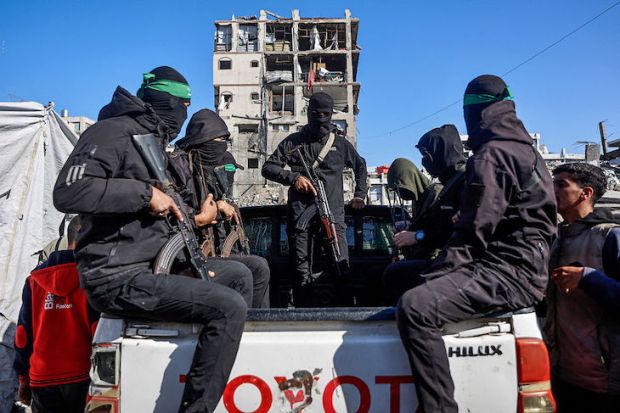
Meanwhile, the regime continues its repression unabated. Young protesters are still being executed. Security forces and ideological soldiers parade through cities almost every evening as a show of strength. Despite calls from figures such as JD Vance for a moderation of rhetoric, videos from even this week show regime supporters chanting ‘Death to America’ and ‘Death to Israel’ with renewed intensity.
To any serious observer, while the regime may have suffered severe damage, their core structure endures. The position of the Supreme Leader may have weakened, but the Islamic Revolutionary Guard Corps continues to wield vast military, economic, and political power. The ideological framework of the regime, i.e. an ideological cause masquerading as a state, remains unchanged.
Many of Trump’s statements, at best, appear contradictory. He has declared regime change complete, yet in meetings such as his discussion with Qatar’s Emir at the G7, he insisted that regime change was never part of his plan.
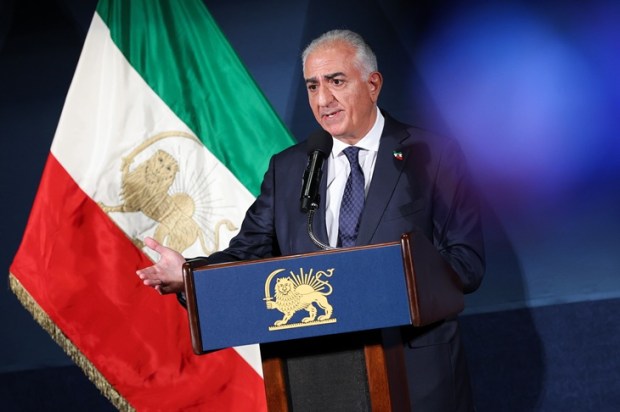
In this context, it becomes necessary to define what genuine regime change in Iran would actually look like. A compelling argument can be made that, symbolically and politically, regime change will only occur when Reza Pahlavi is back in Tehran.
There are three reasons for this.
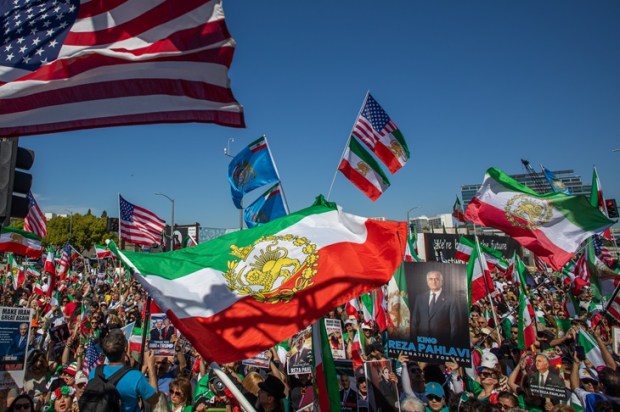
First, as recently as January 2026, millions of Iranians took to the streets across the country chanting his name. Over the past two decades, the Iranian freedom movement has never presented a clearer or more unified vision of an alternative to the Islamic Republic. For genuine regime change to succeed, the nation must embrace this alternative.
Second, Pahlavi is the only opposition figure who has articulated a comprehensive roadmap for Iran’s future. His proposals include national reconciliation, reintegration with the international community, and reconstruction through initiatives such as the Iran Prosperity Project; an effort comparable, in ambition, to a Marshall Plan in the context of post-war recovery.
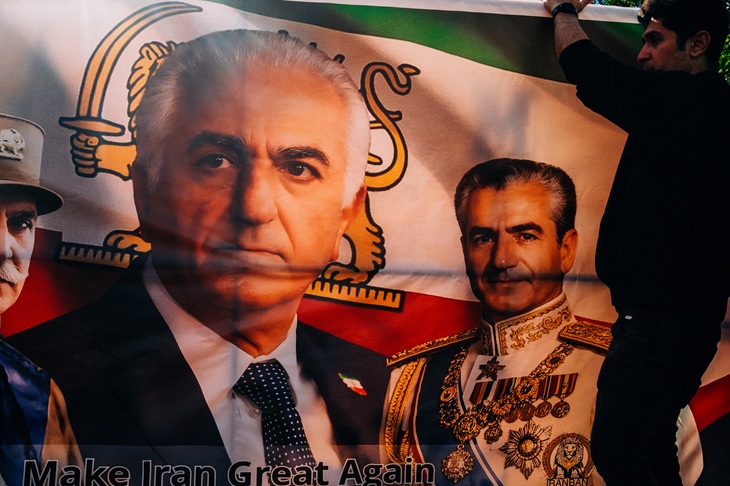
Third, Pahlavi represents the modern Iranian state as it emerged from the Constitutional Revolution of 1906. For many, references to ‘making Iran great again’, often made by Trump himself, evoke the memory of the pre-1979 era, when Iran functioned as a modern national state under the Pahlavi dynasty.
As the son of the late Shah and Crown Prince within that constitutional framework, Reza Pahlavi embodies an alternative vision: one grounded in secular governance, national unity, and global engagement. His presence in Tehran would not signify a superficial reform within the existing system, but a fundamental rupture with the ideological foundations of the Islamic Revolution. That is the only realistic alternative that would signal replacement, not reorganisation.
Symbolism shapes and constitutes the politics of change. The fall of regimes is often crystalised in moments that capture broader transformations and are historically legible, e.g. the fall of the Berlin Wall, the return of exiled leaders, or the occupation of symbolic spaces. In Iran’s case, Pahlavi’s arrival in Tehran would represent such a moment. It would signal that both the physical and psychological barriers sustaining the current regime have been dismantled.
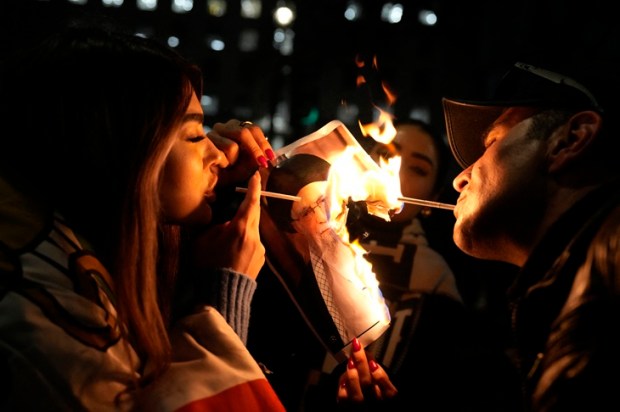
This symbolism is rooted in the voices of the people themselves. One of the most frequent slogans during the January 2026 uprising declared: ‘This is the final battle; Pahlavi will return.’ Despite immense repression and the reported massacre of tens of thousands, this aspiration has not been extinguished, but more desired.
In addition, the argument that Pahlavi’s presence symbolises regime change does not necessarily imply a restoration of monarchy. While it is true that part of Pahlavi’s significance lies in his legacy, his four-decade-long conduct as a unifying leader of a national movement reflects his capacity to serve as the only figure committed to secular democracy, the rule of law, and the reconstruction of state institutions.
In this landscape, Pahlavi’s arrival in Tehran serves as a powerful symbol of systemic transformation. It captures the essence of true regime change: a shift from an ideological political order to a national, rational one anchored in Iran’s interests, committed to democratic governance, and dedicated to the country’s unity and territorial integrity. For the United States, this would represent a genuine strategic victory. President Trump appears to confuse military defeat with strategic victory. The US and its 47th President need the latter; not the rebranding of a militarily defeated yet still cunning and destructive ideological regime as a new one.
Reza Arab is a political advisor to the Iran Prosperity Project and a lecturer at the University of Queensland.