The federal Budget papers reveal that Australia will admit 765,000 new migrants in the next three years. This figure does not include temporary visa holders, for example, overseas students. Net migration in the current 2025-26 financial year was 295,000 arrivals, but it is anticipated that this number will reduce to 245,000 in 2026-27 and further reduce to 225,000 in the 2027-28 financial year.
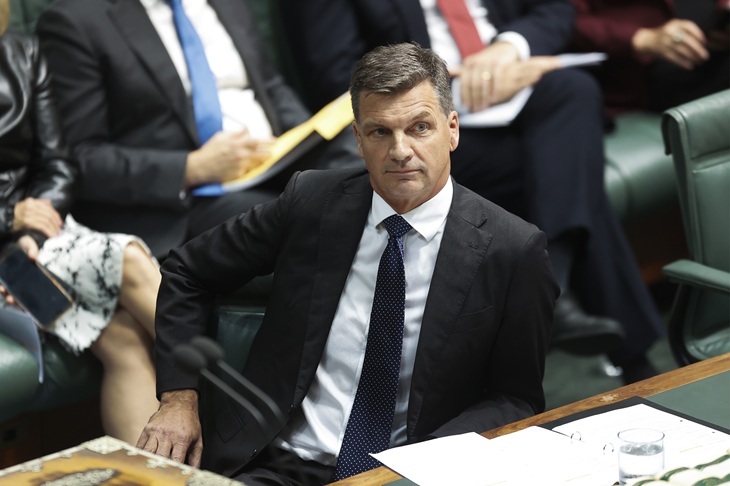
In contrast, the Opposition Leader, Angus Taylor, in his Budget Response Speech, promised (without nominating a number) that a future Coalition government would cap immigration to the number of houses that could be built. He also undertook to rigorously assess applicants’ values to ensure their compatibility with Australian values, and to ensure that welfare programs are only available to Australian citizens; this would require the withdrawal of seventeen programs currently offered to non-Australians.
These vastly different perspectives, exemplified by the main parties’ immigration policies, has nurtured a rancorous and controversial debate about the ideal level of immigration and the values of applicants. At one end of the debate is the open borders philosophy, tolerated by certain groups and political parties that deny, or disregard, the existence of a causal link between heightened levels of immigration and lack of suitable housing. At the other end, the deficiencies in Australia’s housing infrastructure are largely blamed for the social unease, often associated with elevated levels of immigration. This controversy is responsible, at least in part, for the emergence of One Nation as a credible and formidable political force.
According to news reports, as many as 1,400,000 migrants, including permanent and temporary visa holders, could settle in Australia during the next four years; this is another ‘Adelaide’ added to this country. Although critics of the government’s Big Australia program argue that this elevated level of immigration is unsustainable because of a demonstrable lack of infrastructure (housing, hospitals, schools, etc), there could be an even deeper, and disturbing explanation for what immigration might be doing to the Australian fabric.
This explanation, floated by the United States Department of State, accuses the United Nations of facilitating ‘replacement migration’ aiming to replace the local populations of the United States and its Western Allies, thereby critically undermining national sovereignty. ‘The United States objects to the Global Compact on Migration and UN efforts to facilitated replacement migration to the United States and our Western Allies,’ the Department stated.
Under President Trump, replacement migration will never be the standard. The United States objects to the Global Compact on Migration and UN efforts to facilitate replacement migration. https://t.co/KCuMjoi32L pic.twitter.com/2ASW0NqGIg
— The White House (@WhiteHouse) May 13, 2026
As Australia is undoubtedly a Western ally of the United States, the Department’s battle cry should not be disregarded. Of course, although some might consider this explanation to be implausible, even far-fetched, it is nevertheless prudent to carefully consider this ‘replacement migration’ theory as accused by the US Department of State. This is because conjectural evidence indicates that many of our immigrant readers, who return to their home countries for a visit, feel like strangers in their own hometowns. Moreover, any critical comments about this theory may be construed as an odious form of racism and xenophobia but, even so, the feeling of alienation is real.
So, it is reasonable to consider whether these uncontrolled levels of migrants to Australia who now arrive by plane should be dramatically reduced.
During his election campaign launch in August 2013, the then Opposition Leader Tony Abbott promised ‘to stop the boats’ if elected to government. This promise was implemented and while more than 300 boats arrived in Australia prior to the launch, hardly any arrived after the Abbott government took power. It turned out to be a phenomenally successful slogan (among others that were equally successful), and it catapulted the Coalition into government.
Why was Abbott’s message so successful? The slogan’s success relied on its simplicity. It was precise, clear, succinct, and represented what people wanted to hear. The simplicity of the message ensured that its recipients would instinctively understand it, namely that immigrants and asylum seekers must arrive legally. In practice, that meant they should arrive by plane.
Let us contrast this with the present Liberal/National Coalition’s immigration policy paralysis. After a long time of hand-wringing and indecisiveness, the Opposition Leader, Angus Taylor, addressing a Big Australia policy in his Budget Response speech, indicated that immigration numbers are too high and the assessment standards are too lenient.
Although most people would probably agree with this sentiment, this approach fails to convey clearly where the Coalition stands on the issue of immigration. Indeed, its vagueness and generality make his announcement into a problematic motherhood statement. Although Taylor’s immigration announcements reveal the Coalition’s determination to substantially reduce the level of immigration by aligning it with Australia’s housing infrastructure, we still do not know how many immigration applicants will be invited to settle in this country. Arguably, linking immigration levels to housing availability, while a superficially appealing idea, introduces yet another unknown number in the debate, namely the number of houses that will become available. This approach has the potential to cloud any clear understanding of Australia’s ideal immigration intake.
In our opinion, Taylor’s promises, although well-intended, are thus bereft of any precise content that could be gleaned from his Budget Response Speech. It would have been more powerful to simply have announced that the Coalition would ‘stop the planes’, meaning that the problem now is the unsustainable influx of immigrants arriving by plane. This surely would have been a simple, powerful, effective, and clear promise which all electors would have understood instinctively. Of course, when elected, an honest Coalition government would have to implement this slogan to maintain its credibility. The planes would have been stopped!
The problem is compounded by the fact that millions of immigrants are encouraged to maintain their own culture and values, which unfortunately sometimes do not have the same level of appreciation for Australian values such as the rule of law, the equality of all before the law, and the recognition of inalienable rights that no government should derogate from. What we are witnessing is the ongoing balkanisation of our once harmonious society, deliberately orchestrated by the ruling political class, perhaps as a way of maintaining the status quo by increasing their electoral dominance, as the native population suddenly realises that their voices are not heard and they are in the process of eventually becoming a minority in their own country.
In addition, it is important to consider that democracy itself is as much a socio-cultural achievement as it is a matter of legal-institutional design. English political philosopher John Gray reminds us that a stable democracy cannot be entirely multicultural, because, according to him, ‘It depends for its successful renewal across the generations on an undergirding culture that is held in common.’ In other words, a truly functional democracy, as one which is based on the rule of law and equal protection of inalienable rights, requires shared cultural values that are historically linked to cultural traditions passed down to citizens from generation to generation. This is precisely the message that American legal philosopher Jeffrie G Murphy tried to convey when he reminded us that ‘values come to us trailing their historical past; and when we attempt to cut all links to that past we risk cutting the life lines on which those values essentially depend’.
But due to ill-conceived multicultural policies adopted by the ruling class against the will of the Australian people, there is now a growing tendency for some newcomers to maintain their primary allegiance to their original ethno-religious identities, rather than more seriously trying to embrace the values and culture of the host nation that generously welcomed them.
For example, in an extreme example, local media have long reported violent protests on the streets of Sydney, where radical Muslims are equipped with banners and placards with slogans such as ‘Sharia will rule the world’ and ‘Behead all who insult the Prophet’. These religious extremists live in Australia, but they are, above all, individuals who appear to despise our values, culture and laws, and basically want to impose Sharia Law on society at large.
This is why the unsustainable influx of countless numbers of immigrants, especially those derived from parts of the war culturally, ideologically, and literally at war with each other, is a major factor in the undeniable collapse of Australia’s social cohesion.
There is no doubt that, combined with such unsustainable influx of immigrants to Australia, multiculturalism has further contributed to elevating religious and subnational identities above our common national identity. As advocated by the nation’s ruling class (and special interest groups), this form of social apartheid divides the people of this once great nation into enclaves of ethnicity, so that the socio-cultural factors that once united all Australians (and aided the gradual assimilation of immigrants) are all but gone.
Politicians, if they want to make a favourable impression on the electorate, must deliver their immigration policies and messages clearly. It is fair to speculate that people are not likely to respond enthusiastically to the infantile squabble about the right number of migrants who should be allowed to come to Australia. In any event, the present surge in One Nation support suggests that many people would like to have immigration paused for several years – a type of gap period – to assess what is needed, to enable infrastructure to be built, and to allow for an accurate assessment of the values of immigration applicants. Regarding the values’ assessment, we have argued in another article that culture and its values are dependent on religion, and as Christianity, our nation’s traditional religion, is constantly under threat in the public arena, it becomes difficult to truly assess the values of intending applicants without being accused of discrimination. As an assessment of values may thus be a challenging process, extra care would need to be taken by the authorities to ensure a smooth assimilation of immigrants into the Australian melting pot.
The foregoing reasons propel us to argue that a ‘stop the planes’ slogan would be a potent political tool to ensure the achievement of Australia’s immigration interests and would assist recently arrived migrants to assimilate quickly. It is a slogan that undoubtedly would resonate with the electorate. It has also the potential to stop Australia’s immigration imbroglio. And so…
Let’s ‘Stop the Planes’. It’s Time!
Gabriël A. Moens AM is an emeritus professor of law at the University of Queensland and served as pro vice-chancellor and dean at Murdoch University. He also served as the Garrick Professor of Law at the University of Queensland.
Augusto Zimmermann is foundation dean and professor of law at Alphacrucis University College. He served as associate dean at Murdoch University. He is also a former commissioner with the Law Reform Commission of Western Australia.