Sun Tzu, the Chinese strategist of the 6th Century BC, teaches that the highest form of victory is achieved without battle. But such an outcome often requires shaping the battlefield with great care.
In 2026, the United States and Israel have begun by using kinetic force to degrade the IRGC’s defensive and offensive capacities. However, the threat to the Strait of Hormuz and the entrenchment of second-tier IRGC commanders appear to have altered the strategic outlook. It should also be taken into account that the US administration is designing its strategy through the narrow prism of defeating the regime without a prolonged war.
What followed in April shows interesting similarity to Sun Tzu’s theory of war: that before the full-scale invasion to defeat the enemy, one must deploy all available instruments: economic, diplomatic, intelligence, and internal pressure. When it is possible to render a regime untenable from within, it is neither prudent nor necessary to destroy it from without.
It is in this context that Operation Economic Fury emerges as an opportunity. According to the US Department of the Treasury, the operation targeted illicit oil-smuggling networks run by Islamic regime elites, effectively imposing a blockade on maritime navigation to and from Iranian ports. In simple terms a blockade on a blockade.
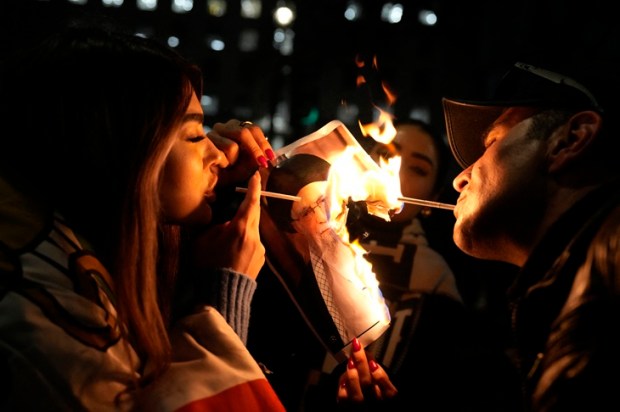
For the regime, survival depends on maintaining morale and unity in the face of mounting domestic challenges. Its remaining leaders understand that internal cohesion matters more than external force. This explains their reluctance to loosen control over the internet and their continued use of nighttime street mobilisation by security forces to intimidate the population.
To confront a totalitarian system built on apocalyptic ideology, one needs to understand its ideological logic, not just its military posture. Such understanding is rare within US administrations. Yet Marco Rubio offered a perceptive observation on April 27 by stating that regime leaders are all hardliners, and they are motivated by theology.
Within a Sun Tzu framework, this insight is decisive. If all factions within the regime are cut from the same ideological cloth, negotiation cannot aim at genuine compromise; instead, it must be used to expose divisions, intensify internal fractures, and weaken cohesion. At the same time, every available pressure point must be brought to bear in a coordinated manner.
From this perspective, Economic Fury is a necessary step, particularly if it fulfils the prediction made by Scott Bessent that Iranian oil exports will be choked, as well as leading to widespread shortages of petrol across Iran. From this viewpoint, Trump’s Economic Fury may yield strategic success, provided that economic pressure is sustained to the point of systemic strain – where fuel shortages and economic paralysis are felt nationwide. At the same time, intelligence operations can work to enable and empower the Iranian people, equipping them to resist and confront regime enforcers.
Systems collapse not merely under external assault, but when they become strategically isolated, internally divided, and incapable of adaptation. This process appears to be unfolding in real time in Iran. However, as long as the Iranian people are not supported to exercise agency over regime change, external pressure alone will remain insufficient – as demonstrated by past cases. Iranians, on the other hand, may not be successful without help if the regime is still capable of staging another massacre on a scale larger than the one in January.
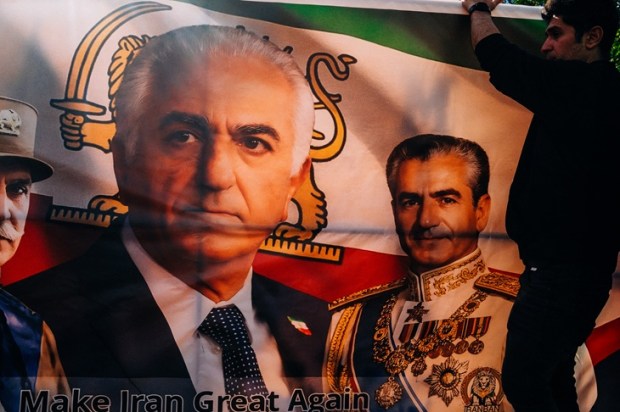
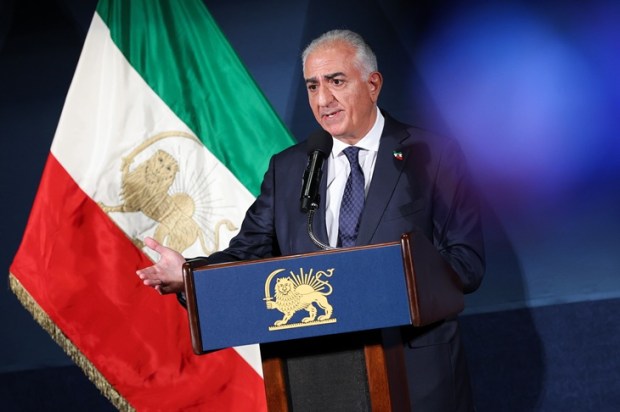
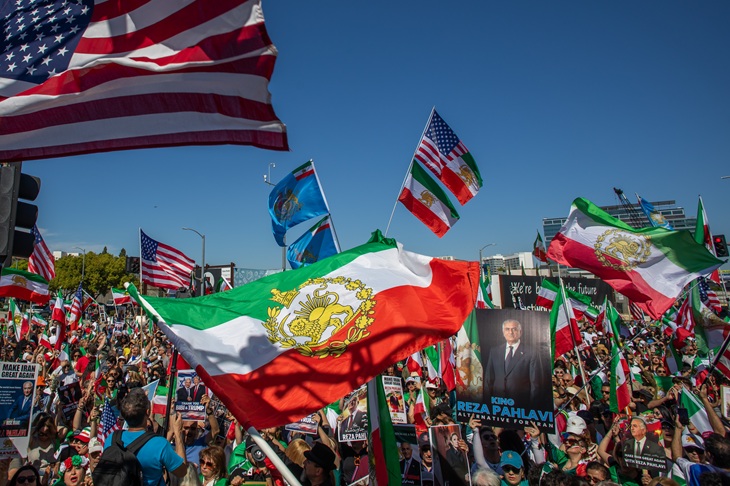
The people of Iran are the most effective allies of the United States and Israel as well as the free world, and ultimately the only force capable of bringing about regime change. Achieving change without conquest – by allowing the enemy to collapse under its own weight – is a central lesson drawn from Sun Tzu. Along these lines, there are already signs that the structural preconditions for another wave of protests are forming in urban centres across Iran. Many are looking for a call to action from the nation’s leader for transition, Crown Prince Reza Pahlavi, though even in its absence, shortages of fuel and essential goods are likely to generate unrest.
This must be underscored to all responsible states around the world, especially Australia: the necessary intelligence groundwork must be laid now, and connections with transitional figures established. What is unfolding in Iran presents an opportunity for timely, strategic decision-making by countries willing to act as responsible stakeholders. While Europe has lost its way, Australia can step in and play a constructive role.
Reza Arab is a lecturer at the University of Queensland, and an advisor to the Iran Prosperity Project.