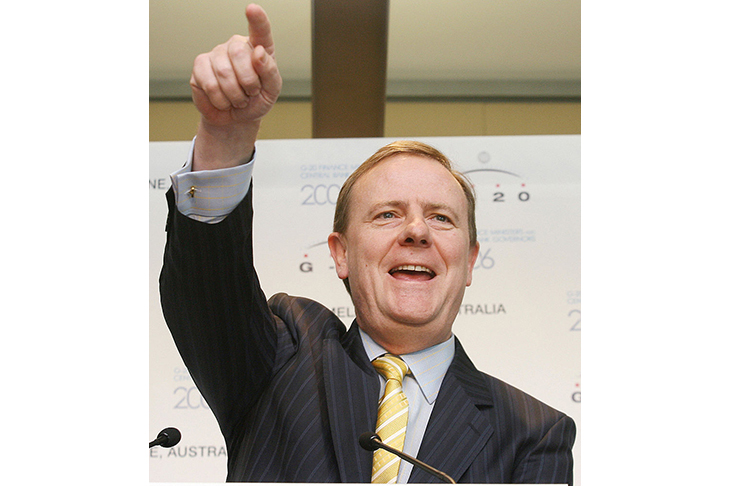
It was an event that was largely ignored by the mainstream media. On 21 April, it was the two-decade anniversary of achieving zero government debt, a feat accomplished by Australia’s longest-serving treasurer, Peter Costello.
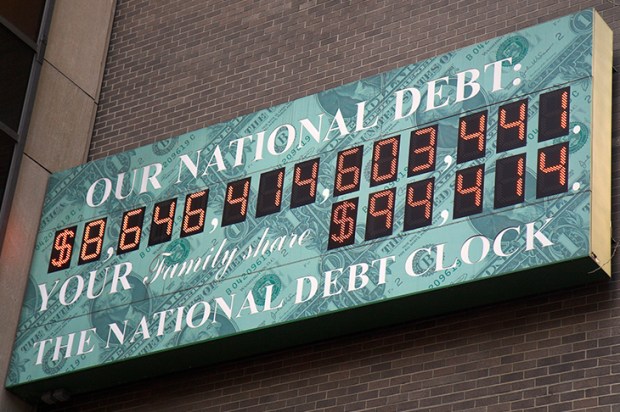
Had it not been for some financial manipulation, it would also have been the same date when our government debt reached one trillion dollars – this will now happen in a month or two. Clearly, Jimbo, our current Treasurer, realised that the optics wouldn’t be good for him and so the timing of bond retirement and issuance was rejigged to ensure this outcome.
Jimbo was quick to point out that we don’t have nearly as much government debt as a percentage of GDP as other economies. And that’s true. But saying we are less bad is not the same as saying we are good. He also didn’t mention the fact that state and territory debt nearly doubles the real amount of government debt.
He also didn’t bother to point out that the build-up in government debt does confer an award of sorts on the country for the fastest rate of increase of government debt among advanced economies.
It’s worth going over the figures here. From a zero net government debt position 20 years ago, the Australian government has essentially added around $50 billion a year to government debt. Gross debt is now around one trillion dollars, while net debt for 2026-27 is estimated at $647 billion. The gap between the gross and net debt is mainly because of the assets of the Future Fund. For this, we also owe a vote of thanks to Peter Costello.
As government debt has risen, so has the interest payable on the outstanding amount. Two decades ago, the amount paid out was trivial. This financial year, net interest payments are expected to be around $18 billion or 0.6 per cent of GDP; it has been the fastest growing spending item of the federal government in recent years. By 2028-29, net interest payments are expected to reach $29 billion or 0.9 per cent of GDP. It’s very expensive to be in debt.
When we compare Australia’s debt position internationally, we are now in the middle of the pack, having been right at the front in terms of low debt. Highly indebted countries include Japan, Italy, the US, the UK, France and Spain. Mind you, their records are not something we should be trying to emulate, particularly as we are a relatively small open economy with a narrow export base.
What then explains the lack of interest in the two-decade anniversary of zero debt in this country? Was it so easy for Costello to achieve this outcome? One argument is that it was easy for Costello to eliminate debt, particularly because of high commodity prices. So nothing to see. In any case, debt is important for building an economy by financing important infrastructure and making nation-building investments.
Let’s take these two points separately. The notion that it was a shoo-in for Costello is fanciful given the driving role of iron ore prices in determining the budget bottom line. For most of Costello’s period of office as treasurer, the iron ore price hovered around the $US13 per metric ton mark. In 2006, it had risen to $33, but the rise was relatively recent.
Compare this with today. The iron ore price currently stands at around $110. The terms of trade – the ratio of export to import prices – had been at historical highs for several years, until recently. The terms of trade are currently more than double the figure that prevailed when Costello left office.
It’s simply a myth that Costello was able to pay down debt because of a commodity price windfall.
The reality is that paying down debt is hard work; it’s a daily grind to say no to those begging for more government spending, including ministerial colleagues. Most of the programs that have led to our current fiscal problems were being discussed in Costello’s day, including the Gonski school funding model and the National Disability Insurance Scheme. The same interest parties that were able to succeed in the future were knocking on his door back then.
Based on a clear understanding of federal financial arrangement, Costello’s response was generally in two parts: these functions are the responsibility of the states and territories; and the federal government cannot afford the outlays. He was friendly but firm.
At the same time, he made it a habit of ensuring what the government spent represented value for money and that other senior members of the cabinet understood he was keeping a close watch on their spending requests and the quality of their programs and policies. Our current Treasurer, Jimbo, simply refuses to undertake these thankless tasks. They are not a highway to popularity with colleagues.
So, what about the argument that the debt that has been allowed to build up has been used to improve the workings of the economy and society? Just as we take out a mortgage to purchase a home that provides long-term benefits, governments can borrow to fund useful assets that also generate long-term benefits.
The trouble with this argument is that it is difficult to identify these nation-building assets. There is the National Broadband Network, the value of which has had to be written down dramatically because it is a dud. There may come a time when it is valueless, as alternative technologies – think Elon Musk’s Starlink – come to dominate the market. Then there is the investment in Snowy Hydro, including the federal government buying out the Victorian and NSW government as shareholders. (These governments were well advised to bail.) Equity in the corporation has had to be added to as the out-of-control costs of Snowy 2.0 continue to build up. There is also an incomplete inland railway link.
But one of the real tragedies of the build-up of federal government debt is the fact that much has been accumulated essentially to pay the grocery bill, to pick up the tab for recurrent expenses. This is because in the twenty years since government debt reached the magical zero mark, the federal government budget has been in surplus in only four years and in balance one year. Cumulative deficits inevitably lead to higher government debt.
Too many political leaders now regard government spending as something that is close to being unlimited. Sure, there is interest in tax reform but that is just code for imposing higher taxes on voters who would not be inclined to vote for the government of the day. Costello’s view that tax reform should be about making the tax system more efficient to reduce taxes is regarded as completely passé.
The way in which $16 billion of student debt was simply cancelled by Labor as an election sweetener is particularly telling. Of course, this debt was only cancelled in the hands of the students liable to pay back their student loans. Using very obscure accounting methods, this debt will eventually find its way back into government debt because the bondholders aren’t forgiving anything.
That’s right – there’s no such thing as free lunch; it’s just that too few politicians understand this.
Got something to add? Join the discussion and comment below.
You might disagree with half of it, but you’ll enjoy reading all of it. Try your first month for free, then just $2 a week for the remainder of your first year.