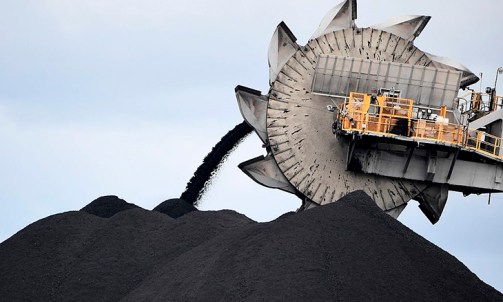
Online publications with a habit of operating like mouthpieces for the renewables industry, have been scathing at the suggestion Australian coal could be liquefied to produce petroleum products.
Of course, any breakthrough along those lines would be yet another blow to the flagging claims that renewables are the key to future energy supplies.
The Iran war is finally forcing parts of the political elite, who were wedded to decarbonisation, to recognise that this is a recipe for economic collapse.
However, a reversal of 30 years of embedded hostility to coal will take time, even if the electorate can bring itself to empower reformist politicians during the next election cycle.
David Archibald shows that even at a cost of $US142 per tonne, coal-to-oil costs $US1.21 per litre or US$135 per barrel; after transport and refining costs, this is close to the current international oil price. And cheap Australian coal – especially brown coal, which is almost infinitely available and can be dug up for the black coal equivalent price of $A25 per tonne – might reduce the price by over one-third to $US95 per barrel. This is well below yesterday’s price and, in fact, close to the average over the past 5-6 years in today’s money.
At issue is the commercial risk. The sudden 15 per cent drop in the oil price once Iran caved into Trump’s pressure to open the Straits of Hormuz underlines this. In the 1970s, the Japanese spent something like $700 million examining the possibility of converting Victorian Brown coal into oil. The cost of this brown coal-to-oil was estimated at something like treble the conventional oil price and the research was terminated.
Later Victorian governments have even tried to kill off brown coal for use in domestic power. One Labor government tripled its royalty rate. That act of bastardry reduced the profitability of existing coal plants and added to the regulatory barriers to new plants, while, in my opinion, finally causing the closure of Hazelwood, one of the four great power stations that gave Victorians low-cost electricity and manufacturing strength.
Victoria effectively refuses to allow new uses of brown coal. The government’s Energy Minister prevented a proposed $2 billion urea facility from going forward – a facility that would have supplied about a quarter of Australian demand for a fertiliser without which agricultural output would be halved.
Victoria is not alone in its hostility to use of fossil fuels. Another proposal, Leigh Creek in South Australia, has been stalled for four years, awaiting approvals under different shifting environmental regulations.
It is likely that at some stage it will make sense to convert brown coal to liquids. At present, this would depend on government support – China has several such plants that supply about one per cent of its petroleum products. For Australia, a re-examination of the technology’s viability is warranted.
However, it is likely that prior to coal-to-oil becoming commercial, there is considerable scope for cheaper supplies of unconventional oil and gas through fracking.
But, idiocy prevails among the key Australian policymakers, and not only do we have approval systems that discourage oil and gas exploration, but fracking is largely forbidden except in parts of Queensland, with even One Nation feeling pressure to oppose it.
Fracking has an 80-year history. Concerns are that the chemicals used to release pockets of gas and oil could reach the subterranean water table and poison crops. But this has never happened with the one million fracked wells. Ironically, the concerns come from the farming community, which applies massive and indispensable amounts of urea as a fertiliser on crop and pasture land. Urea is basically gas or oil!