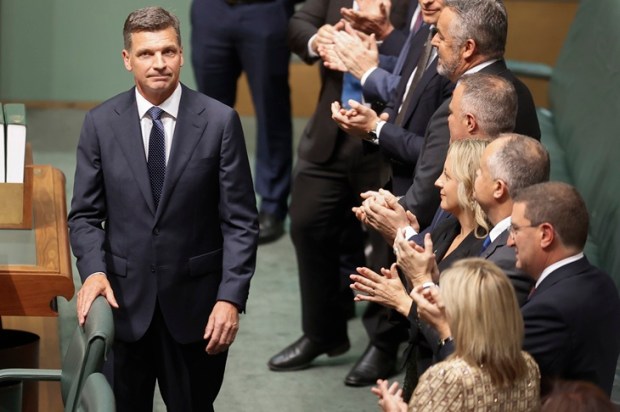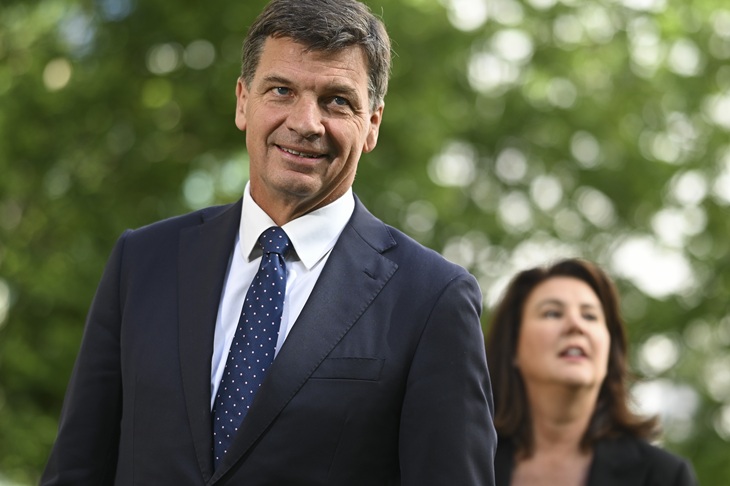
The immigration horse is definitely the one that has wandered off to the One Nation side of the paddock, but if Angus Taylor’s speech Tuesday on immigration was meant to get the horse back, he was pulling the wrong rein.
Our polling shows that while government policies during Covid ultimately broke the faith of centre-right voters in institutions, immigration was the run sending them to One Nation.
Sussan Ley was jettisoned as Liberal leader because, during her leadership, this migration became a stampede of one-third to one-half of the Coalition voter base. It is my view that Angus Taylor has been elected to stop and reverse the flow, quarantining Labor’s advance from to last election, and setting next election up as a stepping-stone back to government.
The Covid breach of faith remains a fundamental impediment to voters returning to the establishment right-wing parties, and until the injury is acknowledged and repented of, gains will be difficult.
But some gains are possible.
However, to regain the trust of voters on immigration you have to first understand what it is they object to, and you have to address those objections, if you can, in a way that does not alienate other voters.
It is actually possible that a good pitch on immigration will appeal to voters who voted Labor last election as well as One Nation converts. (There is also a lesson here for One Nation.)
54 per cent of our respondents think immigration is too high, with 91 per cent of Coalition voters and 96 per cent of One Nation voters agreeing. That’s almost unanimous on the right. However, around one-fifth of the combined total of ALP, Greens, and Cosmopolitan voters also agree, and that’s not insignificant.
The question is, what are respondents really thinking about when they talk about immigration?
One side of the immigration horse is national identity and security. The other is the capacity of the country to deal with the rate of immigration, and its impact on quality of life.
Analysis of open answers from our respondents shows that the part of the issue that engages most voters is actually the capacity and quality of life issue. It’s the direct impact of immigration on their ability to buy a house, buy groceries and petrol, or earn a decent living that concerns them most, not whether immigrants buy the Australian project.
This is true even for former Coalition voters moving to One Nation where 84 per cent mention capacity, and only 42 per cent security and social cohesion (sums to 126 per cent because some mention both). This is similar to voters who are currently sticking with the Coalition.
Out of all the rest – Labor, Greens, Independents, and Cosmopolitans – the break is around 90 per cent capacity versus 20 per cent security and social cohesion.
Yet Taylor’s speech was centred almost entirely on security and cohesion, which is the minority concern, even amongst the cohort currently voting for him.
He wants to put Australian values at the heart of our immigration policy and make the Australian Values Statement legally enforceable, with deportation as one possible enforcement measure.
There would be mandatory social media screening for all visa applicants and a safe-country hierarchy and tighter scrutiny of non-democratic source countries. Learning English would be a national language requirement for all immigrants. The Gaza refugees would be reviewed and 65,000 illegal overstayers deported and temporary protection visas reinstated.
Apart from a passing mention of housing almost every dot point reinforced the view that concerns over radicalisation and social disruption are the biggest problems with immigrants.
Taylor has aimed his speech at the hottest minority language on the issue instead of the broad majority language that can actually turn the next election.
In fact, it is worse than this, as there was a bridge issue that could have made immigration relevant not just to the voters he is trying to woo back from One Nation, and those he is trying to retain in the Coalition, but to voters on the left as well.
That bridge is housing.
There is no doubt that the current rates of immigration are a major cause of the current housing crisis. Instead of prices falling as rates rose, they increased, because demand was supercharged by a Tasmania’s worth of new Australians arriving each year.
When we asked voters what the top election issues were, across the sample it was climate and energy at 28 per cent, followed by housing and cost of living at 22 per cent, government/trust/freedom at 19 per cent, and only then immigration at 17 per cent.
Yes, immigration is the top issue at around 40 per cent with One Nation voters and the Coalition voters decamping to them, but as soon as you move left and hit current Coalition voters, the salience of immigration drops precipitately to 15 per cent and moves steadily down to Greens at 4 per cent.
Housing/cost of living, by contrast, is a concern for around 25 per cent of all voters, apart from current One Nation voters.
If the Coalition wants to retrieve voters from One Nation, or indeed win voter from Labor and the Teals, it isn’t a matter of moving right or left, but prosecuting mainstream issues in a mainstream way.
Its strength has always been that while it has been to the right of the chattering classes it has generally been centred on the Australian majority.
When talking about immigration the right rein to pull is the one attached to capacity and quality of life, and the specific issue to raise is housing. That is a mainstream issue, and that is the mainstream way to address it.
Not only is it a majority concern, but it is particularly concerning to young people, who have seen their hopes of buying a house dashed in just the last five years – almost entirely under this federal government.
And rents have become unaffordable too, so it’s a concern for almost all young voters, and their friends and relatives.
By choosing the minority language of identity and disruption over the majority language of housing and quality of life, Taylor has made immigration sound like a cultural warning rather than a household reality. The result is that many of the voters he most needed to reach will now hear future Coalition migration arguments through a filter of accusation and racial coding.
The right horse was in the paddock. He simply pulled the wrong rein.