The Mandelson scandal continues to metastasise throughout Whitehall. We now know, from reporting in the Guardian and largely confirmed by Downing Street, that Peter Mandelson was initially refused Developed Vetting security clearance before taking up the post of British ambassador in Washington. This seems to flatly contradict previous statements made by the Prime Minister, Keir Starmer. We also know that the refusal was then overridden inside the Foreign Office.
The Prime Minister had always insisted that the usual checks, including security vetting, had been followed. He now, however, says he was not told of the failed vetting until this week. One of two things must be true: either Starmer did know that Mandelson had failed vetting and his public accounts are false, or he did not know and our democratically elected head of government was kept in the dark about the security risks stemming from his preferred choice for our most prestigious and important diplomatic post. Both options seem deeply unpalatable.
This is potentially the true scandal of this entire affair
The law provides us with some guidance. Section 3 of the Constitutional Reform and Governance Act 2010 assigns the power to manage the civil service to ‘the Minister for the Civil Service’ who is, both by convention and presently, the Prime Minister. Conversely, the Act assigns the power to manage the diplomatic service to the Secretary of State (that is, the Foreign Secretary), and expressly says that this includes the power to make appointments to the diplomatic service. The Foreign Secretary, not the Prime Minister, is thus the relevant appointing authority for the diplomatic service. The Prime Minister clearly has political influence, and in practice may be consulted on or even politically try and direct major appointments, but he has no formal legal role in the selection of ambassadors.
The Act also says that the management powers over both the home civil service and the diplomatic service do not cover national security vetting. Vetting sits outside the ordinary management power. A diplomatic appointment and a vetting decision are legally distinct things. Official vetting guidance likewise treats national security vetting as a separate process from the appointment itself.
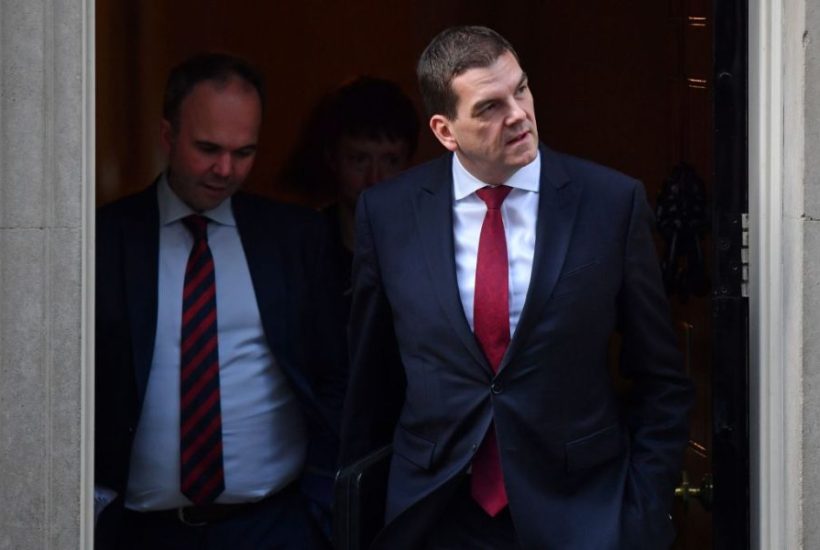
Final decisions on difficult vetting questions and any waiver process ordinarily rest at permanent secretary level. That strongly implies the probability that Sir Olly Robbins, the Permanent Secretary at the Foreign, Commonwealth and Development Office, authorised Mandelson’s clearance. A letter sent jointly by Robbins and Yvette Cooper to the Foreign Affairs select committee on 16 September last year seems to imply this by stating that ‘the [vetting] process is also independent of ministers who are not informed of any findings other than the final outcome’.
On the legal front, therefore, it seems correct to say that the Prime Minister should have been informed only of the outcome of the appointment and vetting process conducted within the Foreign Office, not treated as a formal decision-maker himself. The official vetting process also appears to mandate that ministers not be told anything about vetting other than the final decision.
This is potentially the true scandal of this entire affair: the process as outlined by Sir Olly in his letter to the Foreign Affairs committee requires that he alone bear the responsibility for overturning the findings of the security vetting procedure. He is notionally forbidden from informing ministers of anything other than the final outcome which, taken literally, would prohibit him from revealing that he overruled the security services’ determination.
It is very clear in retrospect that Robbins should not have reached the judgment he did. But it is worth readers and politicians alike reflecting on how appropriate it is that an unelected career bureaucracy is expected to make such monumental decisions with no democratic oversight. Sir Olly made a mistake, but it was a mistake he was effectively boxed into making by a system very clearly designed to keep ministers out of the decision-making chain.
Can we trust Starmer’s ignorance? Tim Shipman discusses on the latest Coffee House Shots podcast: