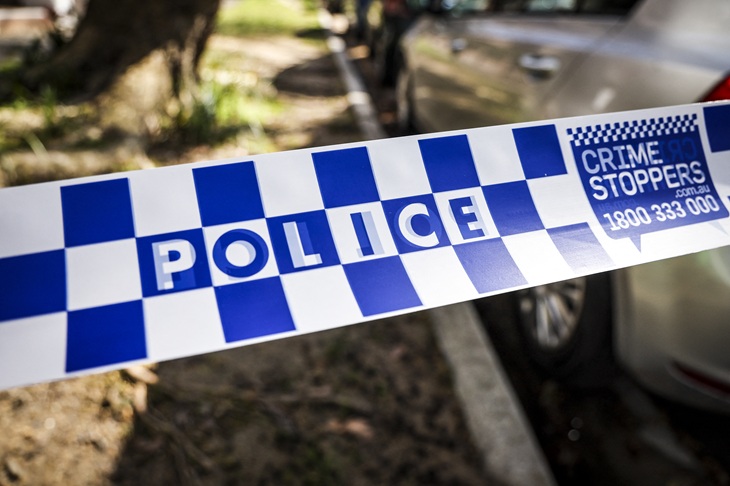
Looking back over the last few years, it seems Australian police are increasingly being attacked – even murdered – as they go about their work.
Make no mistake, frontline cops have a tough gig. Lousy hours, mediocre pay, routinely abused, spat at, punched, kicked, and sometimes run over, stabbed, or shot. They have also had to deal with an increase in severity and prevalence of crime. Bad apples though there are among the ranks, any decent person is rightly disgusted when police become targets.
However, it has become taboo to mention a genuine undercurrent of public fear manifesting. It has grown following Covid and the increase in politically-encouraged snitch culture and thought crime.
It is not rocket science: police are the visible face of the state whose boot has been getting heavier and some would say, applied unevenly.
Australia is not unique to observe a connection between declining liberty and rising conflict toward police put in charge of enforcing political censorship.
To admit the role of the state in creating loss of trust in, and increasing conflict with, police would mean admitting that police bureaucrats – the self-serving, ladder-climbing paper-pushers hiding behind desks – have actively encouraged the toxic circumstances feeding politically motivated violence against their colleagues. Apologists can scream, ‘Victim blame!’ all they want. Individual police are certainly victims, but the institute of law enforcement has a duty to assess if it is still acting in the public interest.
For an example, think back to Covid and what happened to the elderly or those protesting for freedom versus protesters marching for Black Lives Matter or Climate Change. In the UK, we call it two-tier policing, and it has created very real conflict.
It is convenient to claim that police merely enforce laws made by politicians. Nothing is that straight forward. As an organisation, police wield staggering political influence. Law and order is an election issue. It interacts with our system of government.
Police are often given more powers in response to political problems or policy failures. More surveillance. More restrictions. Fewer protections for privacy. Incursions into free speech and political communication.
Politicians may have started to suspect this is causing problems, but they are unlikely to push back. Even the dullest backbencher must harbour the uncomfortable suspicion that reducing these excesses of police power or criticising the petty areas of fining minor infractions rather than focusing large criminal activity might be played back to them by their political opponents.
We live in a police state, but we are not meant to realise it.
There is a tendency to frame those who are uncomfortable with this significant increase of policing in the last few decades as being mentally ill, with distrust of authority proof of their malady. A desire to see increased freedom is viewed as dangerous. (Remember the hashtag: #Freedumb?)
And yes, there are dangerous breakaway individuals and groups who hate police and engage in horrific violence. Those people have always existed, and always will. Those individuals and their actions are not the subject of this article.
I am concerned about the blurring of this line. The linking of anyone with a genuine concern or real fear as being mentally ill rather than a citizen questioning the path of Australia toward over-policing. This neatly sidesteps any consideration about whether people may have valid reasons for their anger and fear. It means we are not forced to face up to what that may say about relationships between individual freedoms and the functioning or otherwise of our democracy.
Do opinions about state overreach automatically constitute mental illness?
Does distrust for the apparatus of the state and those who wield power indicate insanity?
Is it madness to oppose the state’s increasing use of coercive powers in every aspect of daily existence?
Is it delusional or paranoid to think that the state can abuse its powers to harass, persecute, and oppress?
We have seen, during Covid, politicians link political opposition to domestic terror and use it to justify intrusive police powers over what should be protected protest. We saw excess of force and threat used against those who had been peaceful, law-abiding people all their lives. It shocked the world.
Australia should be very careful in allowing mental illness to become the lens through which we seek to explain a desire for freedom. It should terrify us.
No one is seeking to justify violence toward frontline cops. They do a job most of us would not want to, and they deserve to go home in one piece at the end of the day. This is a request to open a more nuanced conversation about the changing nature of law enforcement and its inter-mingling with contentious political instruction.
It is my view that blaming mental illness as a default is a dangerous path to go down. Aside from blithely painting the genuinely mentally ill as murderers in waiting (almost never true), this deception further fuels the conditions that provide such fertile ground for political violence.
It is easy to whip people into a frenzy over the prospect of crazies harbouring ‘unsafe’ delusional beliefs, waiting to explode in a violent rage. Some are warning that there may even be an attempt to paint those who vote for the political opposition as dangerous.
The insistence on a connection between criticism of over-policing, a desire for freedom, an assumption of mental illness, and a narrative of implied violence is, to me, a sequence of events our civilisation should question rather than hand-wave through.
Lillian Andrews writes about politics, society, feminism and anything else that interests her. You can find her on the site formerly known as Twitter @SaysAwfulThings.