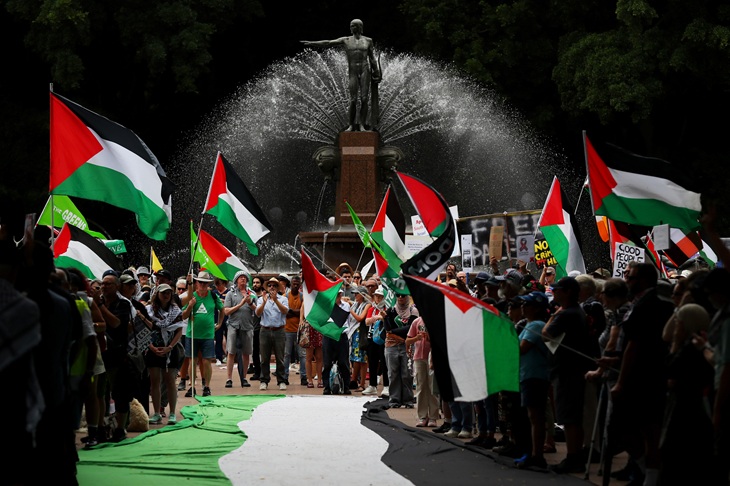
On September 21, 2025, Australian Prime Minister Anthony Albanese stated a recognition of a Palestinian state, presented as an act of diplomacy and moral seriousness. Yet beneath the rhetoric lies a profound legal, political, and moral quagmire. Recognition of statehood is not merely symbolic theatre. Under international law, it carries consequences. If exercised recklessly, it risks rewarding political violence, undermining long-established legal principles, and weakening confidence in the international system itself.
Once might query why I should pen such a piece despite this being ‘old news’. I would counter that the highest quality news is not reactionary but rather takes the time to be well thought out.
For Australia – a liberal democracy built upon constitutionalism, legality, and the rule of law – recognition of a Palestinian state under present conditions would represent a significant departure from established standards of statehood. It would also send a troubling signal in the aftermath of the vile October 7 atrocities committed against Israel by Hamas and Gazan ‘civilians’.
The issue is not whether those who identify as Palestinians deserve prosperity, peace, or civil rights (indeed, since 1948, history is replete with examples of extreme Israeli concessions to try and foster peace). Nor is the issue whether a negotiated Palestinian state could someday exist; though in a post-October 7 world, this is perfectly reasonably contentious. The issue is whether recognition now, under existing legal frameworks and factual circumstances, is consistent with international law and with Australia’s broader commitment to the core principles of law and order.
The central legal problem is straightforward: what exactly is Australia proposing to recognise?
No coherent answer has yet been provided. Indeed, the intellectual and pragmatic behemoth that is Senator Claire Chandler, showed the active farce of what the Australian Labor Party is recognising through their inability to answer the most basic questions pertaining to this matter. The borders of the proposed state remain undefined. Would the state include Gaza? The so-called West Bank (actually Judea and Samaria)? East Jerusalem? Areas under Israeli security control? Territories presently governed by Hamas? International law traditionally requires some degree of territorial certainty before statehood can be meaningfully recognised.
This is where the Montevideo Convention becomes critically important.
The 1933 Montevideo Convention on the Rights and Duties of States remains the most widely cited articulation of the criteria for statehood under customary international law. Article 1 provides that a state should possess:
(a) a permanent population; (b) a defined territory; (c) government; and (d) the capacity to enter into relations with other states. The aforementioned Claire Chandler brought these exact challenges up, with no answers being able to be provided by the ALP.
These requirements are not mere technicalities. They exist because statehood is among the most consequential statuses in international law. Recognition confers legitimacy, diplomatic standing, treaty capacity, and sovereign protections. If states can simply be recognised absent the Montevideo criteria, statehood ceases to be a legal concept and instead becomes an ideological or political reward; a dangerous precedent.
The difficulties become immediately apparent when the Palestinian situation is examined against the Montevideo framework.
First, there is no clearly defined territory. Gaza along with Judea and Samaria are politically and administratively fragmented. Borders remain disputed. Governance arrangements differ radically between regions. Sovereign authority is contested. Indeed, Palestinian political organisations themselves disagree over territorial claims and constitutional arrangements.
Secondly, the criterion of effective government is deeply problematic.
Gaza has long been controlled by Hamas, an organisation designated as terrorist by Australia, the United States, the United Kingdom, and the European Union. Hamas and its supporters did not merely engage in armed conflict against Israel on October 7, 2023. It carried out mass murder, hostage-taking, torture, and sexual violence against civilians. Rewarding the broader Palestinian national movement with recognition shortly after such atrocities risks creating a dangerous precedent in international affairs: namely, that political violence can accelerate diplomatic gains.
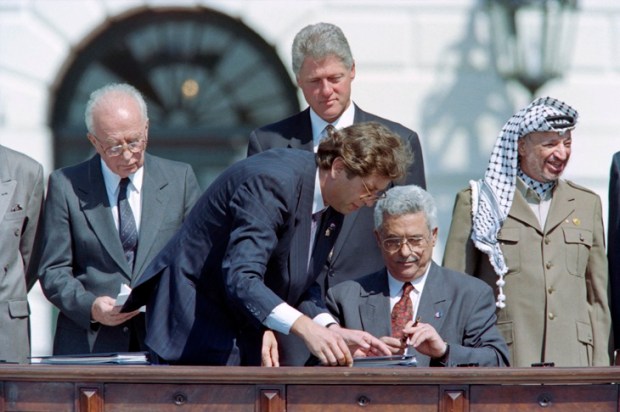
Judea and Samaria presents different but equally serious problems. The Palestinian Authority does not exercise full sovereign control over the territory it claims. Its powers remain heavily constrained by the (arguably problematic) Oslo Accords, particularly the 1995 Israeli-Palestinian Interim Agreement (Oslo II). Those agreements explicitly divided administrative and security authority and restricted the Palestinian Authority’s independent sovereign functions, including aspects of foreign relations.
This matters because statehood requires more than symbolic administration. It requires genuine sovereign governmental capacity.
Thirdly, the capacity to enter into international relations independently remains legally uncertain. A government whose authority is fractured between rival factions, dependent on external actors, and constrained by prior agreements cannot easily satisfy the Montevideo requirement of independent international capacity.
Some advocates of recognition respond that many states were imperfect at birth. That is true. Yet there remains a profound difference between recognising a politically fragile state emerging from negotiated settlement and recognising a state amid unresolved armed conflict, disputed sovereignty, terrorist governance, and uncertain borders. This also says nothing about the foundational Islamic colonialism that led to an extreme imposition from Arab and other Islamic colonisers in the Jewish region (more on this later).
The legal concerns do not end there.
Article 80 of the United Nations Charter preserved certain rights arising under League of Nations mandates. The British Mandate for Palestine recognised the historical connection of the Jewish people to the land and supported the establishment of a Jewish national home. Whatever one’s political position on modern Israeli policy, it is historically and legally inaccurate to portray Jewish claims to Judea and Samaria as recent colonial inventions. Importantly, this article recognise the Jewish people’s rights to Israel, including Judea and Samaria.
A succinct interjection pertaining to history is warranted here. The Jewish connection to Jerusalem, Hebron, Judea and Samaria predates Islam, Christianity, and indeed most modern nation states. Jewish kingdoms existed in the region over two millennia ago, with Hebrew originating there, and Jewish holy sites remaining concentrated there. Historical context also matters when discussing Palestinian identity itself. Prior to the rise of the Egyptian Yasser Arafat and the modern Palestine Liberation Organisation, the term ‘Palestinian’ was used as a regional or geographic description rather than a distinct national identity. Indeed, even many contemporary Arabs state that ‘Palestinian’ are not an ethnic group. The name ‘Palestine’ originates from the Roman designation Syria Palaestina, imposed following the Bar Kokhba revolt in the second century AD. In order to eradicate any vestige of Jewish connection to the land of Israel, the Romans renamed it Palestina, after the previous Philistine inhabitants. This name survived as the region of Palestine until Israel was once again granted full statehood in 1948. Under Arafat and through expert guidance by the Soviet KGB, however, Palestinian identity increasingly transformed into a revolutionary nationalist project rooted in antisemitic ideology broadly, and centred largely upon opposition to Israel and Zionism (which is simply that Jews are indigenous to the land of Israel and have the right to self-determination). Critics argue that aspects of this movement incorporated explicitly antisemitic rhetoric, particularly in earlier PLO doctrine and propaganda which denied Jewish historical ties to the land and portrayed Jewish self-determination as inherently illegitimate. In fact, the Soviets helped provide translations of antisemitic fictions such as the vastly debunked ‘Protocols of the Elders of Zion’. This historical evolution complicates simplistic narratives portraying the conflict solely through the framework of modern anti-colonialism, and indeed the Jewish struggle should invoke support from those claiming to care about ‘de-colonisation’.
Modern international discourse frequently ignores the Jewish indigenous connection. Yet instruments such as the United Nations Declaration on the Rights of Indigenous Peoples recognise the significance of ancestral and historical ties to land. International law cannot selectively invoke indigeneity for some groups while dismissing it for Jews. This would in fact be an example of the very definition of antisemitism.
Recognition of Palestinian statehood without resolving these competing claims through negotiation risks undermining the very legal order Australia claims to defend.
There is also a serious domestic dimension to this debate.
Many Jewish Australians increasingly view sections of the political establishment as indifferent – if not openly hostile – to Jewish security concerns following the October 7 attacks and the extraordinary rise in antisemitic incidents across Australia. Synagogue vandalism, threats, harassment, and extremist demonstrations have left many Jews feeling abandoned by institutions that appear more comfortable condemning Israel than confronting antisemitism. Indeed, the author has been twice assaulted by ‘pro-Palestinian’ thugs in Brisbane, denied service in a business in front of staff for being ‘visibly Jewish’, and was removed from their very successful academic role at one university after speaking out against the October 7 atrocities (specifically those of pertaining to sexual violence).
It would be wrong and irresponsible to casually label political opponents antisemitic carte blanche. Such accusations should not be made lightly. If one wants to (as they should in any well-functioning democratic society) criticise the Israeli government for thing X, then fine. However, where this blurs the line and catapults into antisemitism is where once is only ever seen criticising Israel, whilst ignoring very real problems elsewhere in the world (such as the gross human rights violations occurring in Sudan during the current civil war). However, governments in particular, are properly subject to criticism where their policies are perceived as legitimising movements linked to extremism or as disproportionately dismissive of Jewish historical and security concerns.
In that context, unilateral recognition of Palestinian statehood should reasonably be interpreted by Australians as rewarding the worst types of terror imaginable.
The rule of law depends upon consistency. International law loses legitimacy if legal standards are selectively abandoned for political convenience, especially if they are perpetually targeting Jews, just as the UN currently does. In fact, one just has to see that, while the UN has passed only a few resolutions addressing severe human rights abuses in other nations like Sudan and Yemen, it adopted 15 resolutions targeting Israel in 2025 alone, a number that surpassed the total condemnations issued against all other countries combined, according to UN Watch statistics.
A durable peace between Israelis and ‘Palestinians’ will almost certainly require compromise, negotiation, and eventual coexistence. But genuine peace cannot emerge from diplomatic gestures that ignore unresolved questions of sovereignty, governance, terrorism and legality. Not to mention, us Jews have tried all of this before, in good faith.
Australia should resist the temptation to treat recognition as symbolic virtue-signalling. Statehood is not merely a slogan. It is a legal status carrying profound implications.
If the Montevideo criteria no longer matter, if terrorism no longer disqualifies political movements from diplomatic reward, and if historical Jewish claims can simply be erased from international discourse, then the rules-based order ceases to be rules-based at all. Arguably, we are at that point in time now. Personally, as much criticism as I have for human rights law being used as lawfare against well-meaning, high-trust societies, by bad actors, the fundamentals are admirable and should remain not only aspirational, but defensible. However, the perversion of human rights law and its bureaucracy, is a threat to this ideal.
And once international law becomes untethered from consistent legal principle, it inevitably becomes little more than politics wearing proverbially painted-on judicial robes.
Dr Christopher Haggarty-Weir, Ph.D, MBA. Managing Director of Obsidian Ventures & Capital and is a law student at the QUT Faculty of Business & Law.