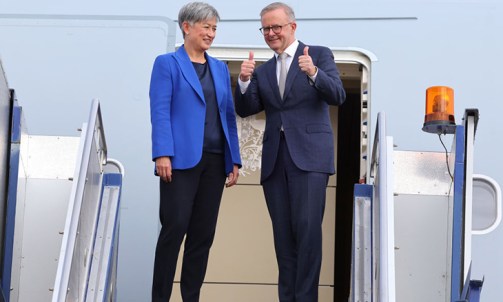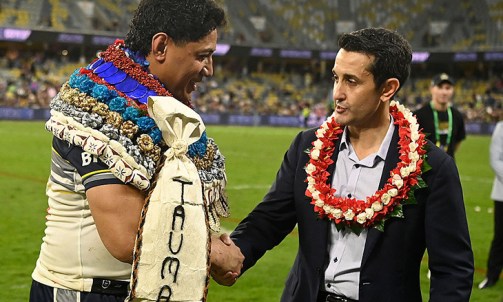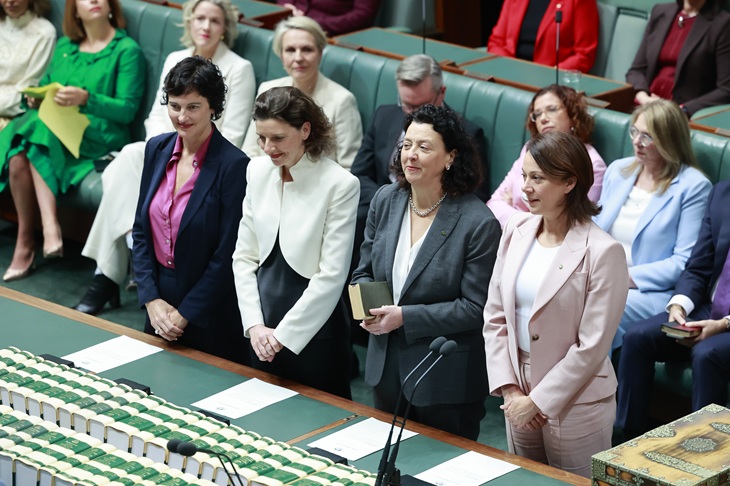
Talk of the Teals forming their own party and running more candidates in the next election complicates the make-up of the emergent rainbow in the House of Representatives, with a spectrum of orange, blue, red, green, teal, and brown looking very likely to result from the next election.
The Teals are a de facto party already with barely a split hair between the six carefully curated and jointly funded candidates on policy issues. The Teals members are by far the most uniform and least diverse group in Australian politics (socially, racially, economically, age, gender etc.) and already have a higher level of Cabinet solidarity than the major parties. The Teals are the polite and educated grievance alternative to One Nation.
While the level of community jaundice with the uniparty is understandable, do we really want a highly fragmented Parliament trying to lead the country out of the looming abyss? The idea of developing a coherent policy framework and ensuring good governance with a House of Representatives that looks like a Dulux colour wheel requires some serious optimism and has a nihilistic flavour.
The two-party system is very imperfect, but it allows political and governance skills to develop, delivers predictability, and the prospect of a coherent legislative program to be implemented under the discipline of an at-scale opposition. A fragmented Parliament will likely result in trade-offs, compromise, and years of policy stagnation. Alas, it seems that the voters have had enough of the longstanding two-party model, not just in Australia but also in the UK and elsewhere. The two-party system has proven to be a robust political model that has served Western democracies around the world very well (if not perfectly) since at least the end of the second world war. In design, it remains a strong and valid model but ultimately cannot overcome the weaknesses of its participants. It also clearly can’t cope with the emerging amortisation and power of social media.
The causes of the growing disenchantment with the major parties have been heavily discussed. The poor track record of economic and social governance, a lack of authenticity, honesty and reliability, hubris and self- referencing, out-of-touchness etc. Bizarrely, the reaction to this disenchantment from the major parties is to double down on the very behaviours that have seen them lose the confidence of the electorate in the first place! Both major parties have dismissed and disparaged One Nation, the major-minor party, as a grievance party, unfit to govern, bereft of leadership capabilities and even more directly as being racist or extreme right-wing. Now of course they cannot govern and presently lack the machinery and administrative foundation to run the country or even develop a coherent policy framework, but One Nation is neither stupid nor extreme. They are more less on the pulse of about 25 to 30 per cent of the population according to the polls. The tactic of dismissal and disparagement only works when you can credibly sell such a message, and the worm has turned on that. Voters have independently formed the view based on empirical evidence gained since at least Covid that the uniparty is largely incompetent, untrustworthy, arrogant, and talentless and that their lives have gotten worse.
So-called ‘ordinary Australians’ have seen the major parties’ performance and the steady erosion in their living standards and levels of contentment and are able to judge things for themselves. Similarly, ‘extraordinary Australians’ being the highly educated, privileged elites who live in the upwardly mobile Teal electorates also don’t like what they see from the major parties. The major parties are copping it from all ends. The other insoluble problem the major parties face in trying to downplay the threat of minor parties as being risky options is that the risk assessment of the status quo against the counterfactual has completely shifted. Voters perceive that things are so bad that opting for minor parties carries low risk. How bad they can be? Could they possibly be worse? The Barbarians at the Gate strategy is not working. Many citizens want to let them in.
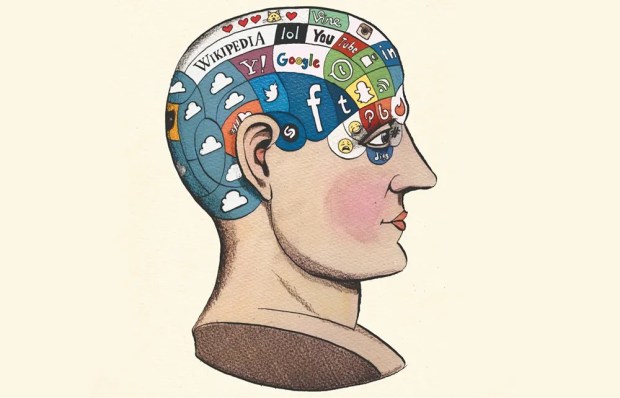
The other hugely significant, arguably dominant, contributing factor to increased fragmentation and rejection of the major parties is the omnipresent role of social media and the revolution in news consumption and political reporting. Legacy media has lost control of the political narrative. The minor parties have equal access to social media, and this is the way 95 per cent of voters now interact with politicians. The minor party leaders also have far higher levels of access to the remaining legacy channels.
Until about 10 or so years ago, the major parties had unmatched access to media and news channels and could readily neutralise and marginalise minor parties like One Nation or the Greens or Teals. That has now irrevocably changed.
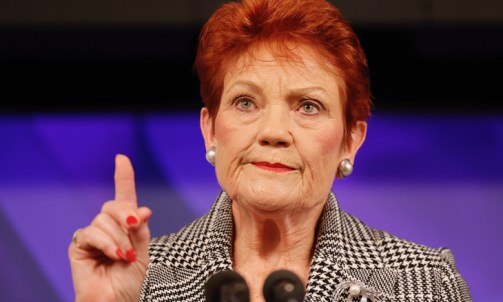
Voters can watch politicians speaking on policy and community issues 24/7 if they want to, and their cheerleaders and supporters can amplify their messages instantly and broadly. Look at the way a savvy media performer like Nigel Farage can completely dominate the news cycle and relegate Prime Minister Keir Starmer to a minor supporting role. Pauline Hanson is playing the same game. Similarly, independent or minor party politicians like David Pocock, Barnaby Joyce, Bob Katter, Zali Steggall, and Allegra Spender, who in reality have very low policy outputs and influence, can convey outsize influence through their media presence. Indirectly, the general population can offer instant amplifying and reinforcing broadcast political commentary via social media, and long-form podcasts are also widely available to deliver more considered and detailed messaging.
The two-party system may yet be capable of resurrection, but this seems very unlikely. The apparent terminal decline in the talent and competence of the major party ranks alone makes this a long shot, but the real challenge is the decline of legacy media and the opening up of the political discourse to all comers. If we are to move into a new paradigm of multiparty representation, there will be many political and practical challenges. It won’t be an easy ride.