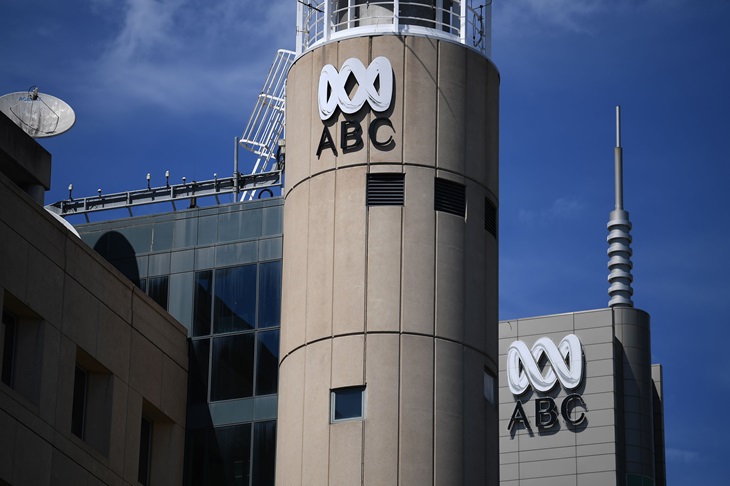
There is something exquisitely self-referential about the ABC reporting on its own strike. It is the media equivalent of a surgeon live-tweeting his own appendectomy – technically impressive, editorially questionable, and deeply revealing of an institution that has lost the capacity for embarrassment.
Last week, ABC staff walked off the job for 24 hours – the first strike in 20 years, which tells you either that conditions have become intolerable or that it takes two decades for a publicly funded workforce to muster the existential urgency of the mildly inconvenienced.
The managing director then sat down with union delegates in a Fair Work Commission mediation and produced a revised pay offer, complete with new provisions for ‘progression through pay bandings’. Sixty per cent of staff had voted against the original deal. The unions will now ‘consult members ahead of a staff vote’. The ABC News website duly reported all of this with the same studied neutrality it brings to covering cyclones in far north Queensland – as though it were an act of God rather than an act of payroll.
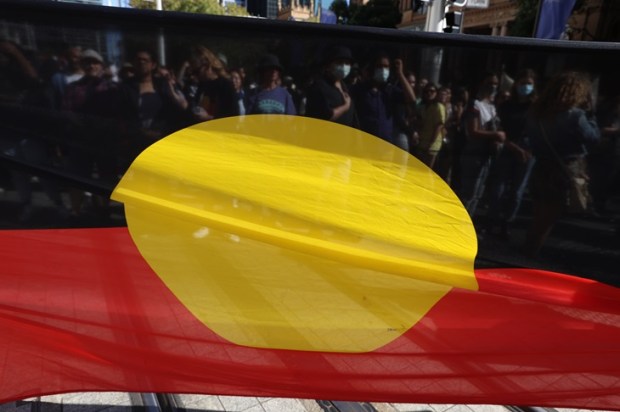
And when the picket lines went up?
The ABC’s news channel switched to BBC World News. Radio National defaulted to a BBC World Service simulcast. News Breakfast, 7.30, AM, PM, Late Night Live – all gone, replaced by content from the mother ship in London. Across the country, the 7 pm news bulletin was replaced by a rerun of Australian Story – a profile of Olympic swimmer Michael Klim, for those keeping score – and 7.30, the nation’s flagship current affairs program, gave way to a repeat of Hard Quiz. Three-quarters of Melbourne’s usual evening audience simply switched off; nationally, viewership collapsed from 948,000 to 308,000. Triple J played pre-programmed music without presenters, which, to be fair, several listeners claimed was an improvement.
Let that settle for a moment. The national broadcaster of a sovereign nation, funded to the tune of over a billion dollars a year, reverted to its colonial default settings the moment staff withdrew their labour. Australians call the ABC ‘Auntie’ – a nickname borrowed, naturally, from the BBC.
When the strike hit, Auntie did what aunties do in a crisis: she rang her mother in London and asked her to take over. If privatisation means anything, surely it means not outsourcing your entire broadcast schedule to the BBC every time someone objects to their pay banding.
One is reminded of the old DuPont decomposition: break any enterprise into its constituent parts and you will discover what is really driving the return. For the ABC, the return on taxpayer equity is, shall we say, leveraged. Over a billion dollars a year in public funding produces an asset whose market valuation – were anyone brave or foolish enough to attempt one – would make a venture capitalist weep. Not with joy.
Privatisation enthusiasts will note that the ABC already behaves like a private company in every respect except the one that matters: it does not have to earn its revenue. It has a board, a managing director, a corporate strategy, enterprise bargaining agreements, industrial disputes, and – if the Friday night comedy programming is any guide – a product development pipeline that would concern even the most patient shareholder.
In finance, we call this a free option. The ABC enjoys all the upside of brand recognition and cultural incumbency while the Australian taxpayer underwrites the downside. The strike itself was a masterclass in option pricing: staff exercised their right to withdraw labour, knowing that the underlying asset – guaranteed government funding – would not depreciate. Try that at a commercial network and see how long the put option on your employment remains in the money.
The case against privatisation is, oddly, also financial. The ABC is what we might call a public good with negative externalities – or, less charitably, an organisation whose outputs are consumed by people who did not ask for them and paid for by people who did not choose them. This is, of course, the textbook definition of a tax.
But here the satirist must pause and concede a serious point. Regional Australia – the Australia that does not live within Uber Eats range of Ultimo – depends on ABC services in ways that no private operator would replicate. No rational profit-maximiser is going to run a bureau in Longreach. The market for cyclone warnings in the Torres Strait is, to use the technical term, thin. Privatise the ABC and you do not get a leaner, more efficient broadcaster. You get a metropolitan podcast network with a nostalgia archive and a very expensive real estate portfolio in Parramatta.
The real question, then, is not whether the ABC should be privatised but whether it should be priced. At present, the ABC operates in a valuation vacuum. It has no share price to discipline management, no earnings per share to embarrass the board, and no hostile takeover threat to concentrate minds. The closest thing to a market signal is a Senate Estimates hearing, which is to corporate governance what a town hall meeting is to urban planning – loud, theatrical, and entirely without consequence.
What if we applied a simple discounted cash flow? The ABC receives approximately $1 billion annually. Discount that at the ten-year Commonwealth bond rate – currently nudging five per cent, thanks to the Iran war – and you get a perpetuity value of around $20 billion. That makes the ABC worth roughly a third of Woodside Energy, which at least produces something that people are willing to pay for voluntarily. Be generous, knock the discount rate down to four per cent, and the ABC is still barely half a Woodside. Of course, a DCF assumes the cash flows are earned, which introduces a category error so profound it would make an accounting professor reach for the sherry.
Here is the deeper irony. The ABC’s industrial dispute is itself the strongest argument against privatisation – not because the dispute is unjust, but because it reveals what the ABC has quietly become: a sheltered workshop for the professional class. Consider the demographics. The median ABC employee is tertiary-educated, inner-metropolitan, and culturally progressive – which is to say, indistinguishable from the median ABC viewer, which is to say, the ABC has achieved the remarkable feat of building an enterprise whose producers and consumers are the same people. In any other industry we would call this a closed loop. In public broadcasting we call it ‘reflecting the national conversation’.
Privatise it and you do not liberate the market. You merely transfer the subsidy from the Commonwealth budget to the advertising market, where it will be laundered through programmatic ad-tech and emerge, blinking, as content indistinguishable from what Channel Nine already produces.
The ABC does not need privatisation. It needs what every over-leveraged, under-governed, strategically confused institution needs: a margin call. Not on its funding, but on its purpose. When an organisation can report on its own strike without irony, broadcast its own industrial grievances as news, and present pay banding negotiations as a matter of public interest with a straight face, the problem is not ownership structure. The problem is that nobody in the building can hear the market laughing.
In the meantime, the unions will consult their members. The members will vote. The pay bandings will be adjusted. The billion dollars will flow. And somewhere in Adelaide, a viewer who tuned in for 7.30 and got Hard Quiz instead will sit quietly with the distinct sensation that the ABC has, at last, answered its own question.