Some people have asked me why the fascination with One Nation in South Australia – after all they have only won one seat at the moment?
That might be true, but if I’m reading the tea leaves correctly, they boosted Labor’s 2PP margin by around five percentage points and delivered them 68 per cent of the seats on a notional two-party-preferred of about 60 per cent.
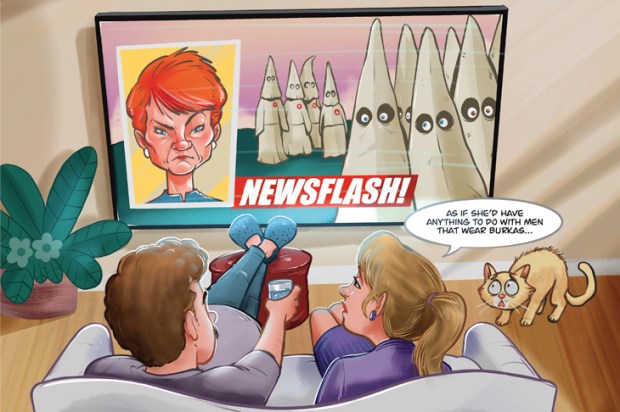
In other words, One Nation are currently kryptonite to the chances of centre-right governments.
Then there is the fact that the Liberal Party, which has been the dominant party in Australia for almost 80 years, came in third on first preferences after Labor and One Nation, with One Nation finishing in the top two in around half the seats.
At the moment it looks like the best the Liberal Party can do is win nine seats. One Nation might win up to six, although some of those are Liberal v One Nation contests, so it’s even possible – on their best result – that it ends up six all.
One Nation will also win three Legislative Council seats, the same as the Liberals.
While the overall first preference swing was clearly to One Nation, there were swings in all directions – both for and against Labor, and for and against the Liberals.
There may have been a net gain to Labor of around five seats, but that includes losses, and some surprisingly large swings. While Waite swung 18.3 per cent to Labor, Elizabeth swung 16.2 per cent against. That suggests a social realignment occurring under the surface.
There is a theory that if only the Liberal Party would move to the right they would start winning elections. This election provides evidence against that. While One Nation did well, it didn’t expand the non-Labor vote, and the state remains decidedly left-leaning.
In fact, before One Nation’s rise in the polling Labor was sitting on around 38 per cent first preference and a 2PP of about 54 per cent. After One Nation’s surge the primary held, but the 2PP lifted to around 60 per cent.
Quick and dirty analysis portrays the rise in One Nation as a defection from the Liberals, but voters were moving in all directions. Some Liberals moved to Labor as well as to One Nation, while Labor voters also moved to One Nation and the Liberals.
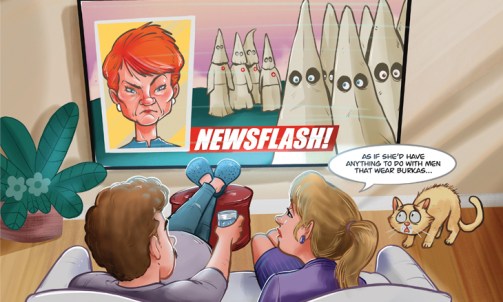
There is a ‘purity/disgust’ element to voting for One Nation. The party has been so heavily demonised that some respectable people cannot countenance ever voting for it. Respectable people often vote Liberal and identify as moderates.
Allocating preferences to the ‘untouchables’, as the Liberals did, can accentuate that purity spiral, damaging Liberal as well as One Nation when it comes to preference flows.
It’s also possible that the fact the Liberals and One Nation were fairly evenly sharing their minority 40 per cent of the vote signalled instability to some voters.
Given the overwhelming expectation that Labor would win, One Nation and the Liberals were really competing for the spoils of opposition. But voters do want oppositions that are fit for purpose.
Voters have certainly chosen to turn South Australia into something approaching a one-party state, suggesting they don’t rate the opposition highly.
The combination of these defections, people’s prior tribal allegiances, perceived instability, the ‘anyone but Hanson’ tendency, and the demographic locations where they occurred meant that, depending on who made the final two, preferences could disproportionately favour Labor.
And there were more metropolitan seats vulnerable to these forces, which is where Labor secured its outsized results.
That suggests that while the One Nation insurgency doesn’t reduce the overall non-Labor vote, it interacts with the compulsory preferential system in a way that makes it even harder to win from the right.
We should not be surprised. In Europe, where proportional representation makes these dynamics easier to observe, there has been a concerted effort by both the left and centre-right to keep National Rally in France and the AfD in Germany out of government despite their large followings. Tactical voting in the UK and Canada has produced similar outcomes, neutering Reform and the Canadian Conservatives.
This election provides limited guidance for the non-Labor parties elsewhere. Victoria is next, but that will be an election where the government should fall. In that case the Liberals and One Nation may be competing for the spoils of government, not opposition.
If One Nation and the Liberals maintain their relative sizes then the question of who forms government and on what basis should dominate the campaign. Would there be a coalition, or a minority government, and whose name would go on the letterhead?
Like South Australia, Victoria is highly centralised. Will the same dynamics play out, with inner-metropolitan seats moving left and moves to the right elsewhere?
Preferences are likely to be raised as a wedge. In South Australia One Nation saw no advantage in a deal, but the Liberals allocated to them anyway, as though there was a deal. That likely affected preference distributions – though not in the intended way.
One Nation would be crazy to enter a formal preference deal, given its positioning against the ‘uni-party’. Deals are not part of that story. The Liberals should probably avoid them too, despite advice from former Premier Jeff Kennett.
Preferences should be determined seat by seat, based on electoral arithmetic. It is also a distraction to concentrate on who the Liberals preference while Labor gets away with playing cosy with the socialists and what some allege is antisemitism in the Greens.
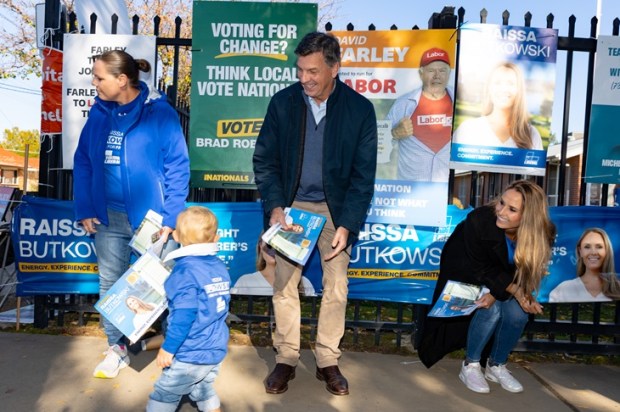
It may be that One Nation recedes again, as it has before, but this time feels different. We have not seen its vote this high in so many places, and it does appear to be attracting some capable candidates, such as David Farley in Farrer.
Much of the analysis of the One Nation vote has been economically reductionist. The Australian, for example, has plotted One Nation support against income, education, employment, and immigration status by seat.
From this they infer that One Nation voters are poorer, less educated, more likely to be unemployed, and more likely to have been born here. That is not what the data shows. It shows that One Nation does well in areas with higher proportions of voters with those characteristics.
Our polling suggests One Nation voters themselves are often better educated and higher earning than the average. There is no contradiction.
As an illustration, I grew up in a working-class suburb in Brisbane in one of the 30 per cent of households that voted Liberal. We weren’t typical of the suburb, but we lived there because housing in the area was affordable when the move was originally made, and later because it was comfortable. Where you live, and who you mix with, shapes your view of the world.
I suspect it is people like our family who are now voting for One Nation in these areas, which suggests the party has access to a reasonable pool of good talent. The question is whether it can retain it.
One Nation is not, as far as I am aware, a properly democratic party. It is another example of the corporatisation of politics, where new parties are not mass movements but top-down, personality-driven brands.
Pauline Hanson, Clive Palmer, Jacqui Lambie, Derryn Hinch, and Nick Xenophon all built parties around themselves.
The Teals have a similar model, though structured as ‘community independents’ backed by Climate 200, effectively operating as a franchised network with individual upfront franchisees being the visible branding hiding the money politics behind it.
These models lack internal democracy. They operate on a take-it-or-leave-it basis: if you don’t like the product, choose another vendor, but you are not invited into the kitchen to refine it.
That is a good model for disruption, but not for governing. It makes scaling difficult and retaining talent harder.
The question for One Nation is whether it can bridge the gap between protest movement and serious governing party, and whether its voters are willing to make the compromises that major party politics requires.
Pauline Hanson’s decision to remove her name from the party brand suggests some awareness of this. But will a loosening of control follow?
Or will One Nation remain an episodic disruptor – splitting the non-Labor vote, driving moderates toward Labor, and delivering it larger majorities than it otherwise deserves?
And, in doing so, ultimately consign itself once again to the political margins?