President Donald Trump was crystal clear at the start of the military action against Iran that it was all about regime change. The United States, in co-ordination with Israel, would do its bit by targeting Iran’s leadership and command structure – but it was up to ordinary Iranians to rise up and finish the job. “The hour of your freedom is at hand, “he declared as US and Israeli warplanes bombed Iran, targeting the country’s supreme leader Ayatollah Ali Khamenei and his inner circle. “When we are finished, take over your government. It will be yours to take…”.
There is no figurehead or leader to galvanise the masses, nor is there any common platform beyond a hatred of the mullahs
So, how will Iranians respond? The most obvious thing to point out is that it would be hard for people with no weapons to topple rulers who are armed to the teeth. Some Iranians with long memories might also cast their minds back to the first Gulf War (1990-91) during which the United States encouraged Iraqis to rise up against their leader Saddam Hussein. Saddam’s opponents eventually heeded the call, hoping to inflict defeat on a wounded regime. Saddam slaughtered thousands of those who took part and clung to power for another 12 years. The parallels with Iran are not exact: Khamenei is dead but Iranians would be right to worry that this is far from the end game for their hated rulers. Whoever – or whatever – replaces Khamenei might be even more bloodthirsty in seeking vengeance against those who rise up.
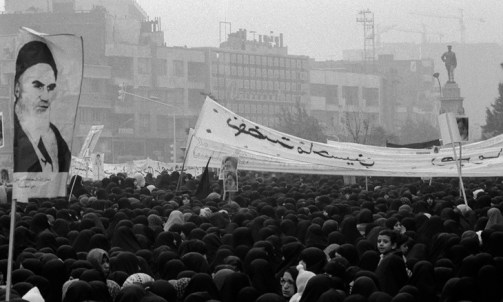
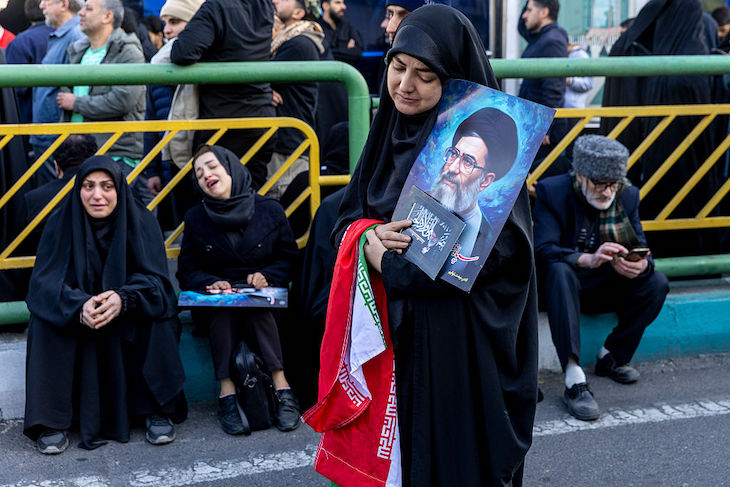
Other lessons from recent Iranian history offer little encouragement. Mass demonstrations, going as far back as the 1980s, have always been brutally crushed. During the most recent street protests, in December and January, thousands of protesters were shot and killed by the security forces. The forces of the regime will do whatever it takes to cling on to power, and killing those who stand in their way has become a norm. This makes defiance an almost impossible task. It is not that the people of Iran lack for courage. At this precarious moment, with fear and uncertainty stalking the streets, many might choose to focus more on the basics of daily life such as safety and survival. Who can blame them?
There are other complications too. The supreme leader and his cohort are despised by the vast majority of Iranians but that doesn’t necessarily mean they will automatically side with the United States – least of all in the middle of a war. Iranians are known to be quite nationalistic and wary of outside intervention, no matter how much they might hate the regime. Older Iranians, especially those in rural areas, have different priorities to the disaffected youth in the capital Tehran and other major cities. There will be plenty of others who may have benefited from the rule of the mullahs – they may well choose to side with the devil they know. Iran’s population, like it or not, is not an amorphous mass, uniformly secular and chomping at the bit for women’s rights, democracy and freedom.
The final nail in the coffin in terms of a revolution led from the streets is the lack of a viable or official opposition. There is no figurehead or leader to galvanise the masses, nor is there any common platform beyond a hatred of the mullahs. The main opposition comes from Iranians in exile, a diaspora that is riven with infighting. Some want Reza Pahlavi, the exiled son of the last shah, to take control of the country. Others are dead set against this outcome. The restoration of monarchical rule, even in temporary form, will prove a hard sell for many Iranians. In any case, Pahlavi, who talks a good game about restoring democracy and freedoms, is a novice who has spent his adult life abroad. It is hard to see how he could impose control on Iran at such a volatile time.
All in all, a popular uprising is not on the cards anytime soon, whatever President Trump might say or wish. Nor is Iran likely to undergo some miraculous overnight transformation into a democracy with equal rights for women and respect for human rights. But change is undoubtedly on the way. The regime no longer exists in any meaningful form: too many in the ruling cadre have been killed for things to continue as before. That much is certain. What is uncertain is whether things will change for the better or even if ordinary Iranians can have a say in events. It is simply too early to tell, and Iran’s long-suffering people know this better than anyone. Talk of taking to the streets and toppling leaders is the stuff of fairy tales. For the moment.