In the expensive march towards a Net Zero utopia, governments and green advocates have long touted electric vehicles (EVs) as the silver bullet for our transport woes. Even Ken Henry the other week thought transport was a Net Zero non-issue because everyone would be driving an EV. Yeah, right.
As any seasoned driver knows, promises from on high often evaporate faster than petrol in a heatwave. And EVs have become such a virtue-signal that the thought of driving one makes me want to puke.
Later this year, we have to get to Canberra to fly to Melbourne before heading to Germany in time for the Christmas markets. It’s the home of the Autobahn, the birthplace of my turbo-charged diesel, and the same place that is banning diesels.
I decided we’d drive down to Canberra Airport, pick up a rental car, then drive both cars back to Gunning before heading off the next morning to return to the airport. It was cheaper than parking my car for five weeks at the airport.
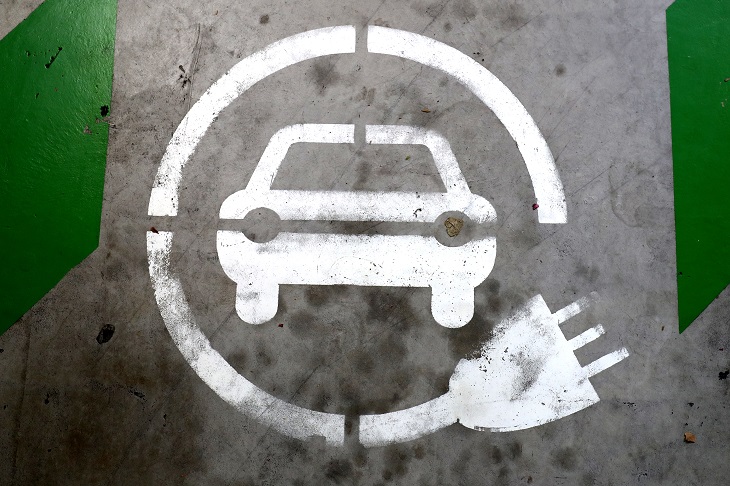
The problem was whether to get an EV hire car to check it out, or a conventional vehicle. I went with a conventional vehicle because aside from the Woke EV charger and two Woke EV parking spots in Gunning that are only used by Woke Canberra-types, I refuse to jeopardise my business-class flight if the Woke EV won’t work the next morning.
My mate’s full hybrid with a flat starter battery the other day couldn’t even be moved – if the battery stops, the car is stopped unless you drag it.
At least if the conventional hire car doesn’t work, I have access to jerry cans of fuel and other expertise that will get me to my flight.
A few years back, I was talking about EV policy at my university. The Wokest of Woke professors had a go at me about ‘range anxiety’. I was referring to the problem where people didn’t want to buy an EV if it meant they’d be stranded because it couldn’t travel as far as their diesel. In the Wokest of Woke manners, he claimed range anxiety was a ‘furphy’. What a Wokester.
The latest real-world testing from the Australian Automobile Association (AAA) delivers a sobering jolt. Many popular EVs are falling short of their advertised ranges by up to 23 per cent, leaving potential buyers grappling with the perennial problem that refuses to die – range anxiety. This isn’t just a minor glitch, it’s a fundamental flaw in the EV ‘narrative’ (there’s that leftie term again) that policymakers seem determined to ignore.
Let’s start with the facts, courtesy of the AAA’s groundbreaking independent testing program, launched to cut through the manufacturer spin and provide Australians with honest data. In their initial round of real-world assessments, models like the BYD Atto 3 SUV clocked in a staggering 111 kilometres short of its promised range – a 23 per cent deficit that translates to real frustration on the open road.
Even premium badges didn’t fare much better, with shortfalls that could strand drivers in regional Australia, where charging stations are about as common as cheap electricity in Australia.
Further, the AAA’s polling underscores the human element: 60 per cent of likely EV buyers cite range and recharging as their top barriers, a figure that should have bureaucrats in Canberra scrambling for answers instead of doubling down on subsidies.
This isn’t an isolated Australian quirk. International studies paint a similarly disheartening picture, revealing that the gap between lab-tested promises and real-world performance is as wide as the Nullarbor. Consumer Reports, in their exhaustive testing of over 30 EVs, found that more than half fell short of EPA-estimated ranges during highway driving – conditions that mimic the long hauls many Aussies endure daily.
Edmunds’ independent evaluations echo this, with only a handful of models cracking the 500-mile club under actual use, while others wilt under factors like speed, temperature, and load. Even in winter climes, as a Canadian Automobile Association test highlighted, ranges can plummet by up to 39 per cent, a reminder that EVs aren’t immune to the elements any more than the rest of us.
These discrepancies aren’t mere anomalies, they’re systemic, rooted in testing protocols that prioritise ideal scenarios over the gritty reality of stop-start traffic, air conditioning, and uphill slogs.
In my opinion, this revelation exposes the folly of top-down EV mandates that treat consumers as guinea pigs in a grand ideological experiment. Governments, both federal and state, have poured taxpayers’ money into incentives and infrastructure promises, yet the infrastructure lags woefully behind. Range anxiety isn’t just about battery life, it’s about ‘charger drama’ (as one recent analysis aptly termed it), where unreliable public stations turn a simple top-up into a lottery.
Australians in rural and regional areas, already underserved by policymakers in urban bubbles, bear the brunt. Why force-feed EVs when hybrids – which sidestep these issues with seamless petrol backup – are surging in popularity precisely because they address these practical concerns?
The AAA’s findings are a timely wake-up call. Earlier hype about how EV technology would have improved by now is like that old adage: 70 per cent of statistics are made up. In the meantime, I’ll stick to my diesel. Anything less is just running on empty.
Dr Michael de Percy @FlaneurPolitiq is the Spectator Australia’s Canberra Press Gallery Correspondent. If you would like to support his writing, or read more of Michael, please visit his website.