The slowly simmering cultural and legal conflicts between the rights of natal females and males who identify as female has finally become a serious issue in federal politics.
There have been major public controversies over the so-called ‘Safe Schools’ transgender sex-education program, numerous calls for federal and state inquiries into the medical transitioning of children, and the British Cass Report that led to the shutting of the Tavistock children’s clinic. Despite these developments, Australia’s federal and state governments have continued to roll out an extraordinary matrix of laws replacing a person’s sex with the term ‘gender identity’.
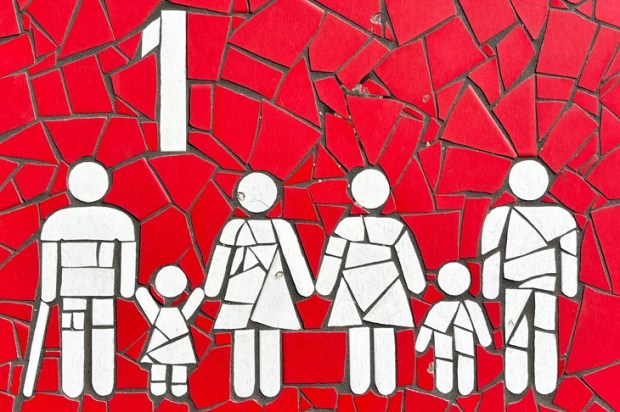
These laws have undermined the sex-based rights of girls and women, undermined parental rights, made it illegal to counsel a gender-confused person to identify with their sex at birth, and had a silencing effect on public debate over the nature of sex, marriage and family.
New political climate
Last month in the Federal Court, Justice Robert Bromwich ruled in the Giggle v Tickle case (see News Weekly, September 7, 2024). He said that, regardless of biology, ‘sex is not confined to being a biological concept referring to whether a person at birth had male or female physical traits’ but is changeable, and takes its new fluid meaning from federal, state, and territory laws.
Writing on the case in The Australian, Angela Shanahan cited our book, Transgender: One Shade of Grey, which, she says, points out the implications of recognising ‘gender identity’ over ‘sex’ in the widening matrix of gender identity laws; they have, ‘…dissolved the meaning of sex as being biological and binary. In the process, it means that males who identify as female can claim access to women’s sports, toilets, showers, change rooms, shelters, and lesbian organisations.’
What is more, dissolving the meaning of sex also ‘dissolves the meaning of homosexual, lesbian, bisexual, and heterosexual’. Indeed, laws have made the meaning of these terms ambiguous, with implications for the 2026 Census.
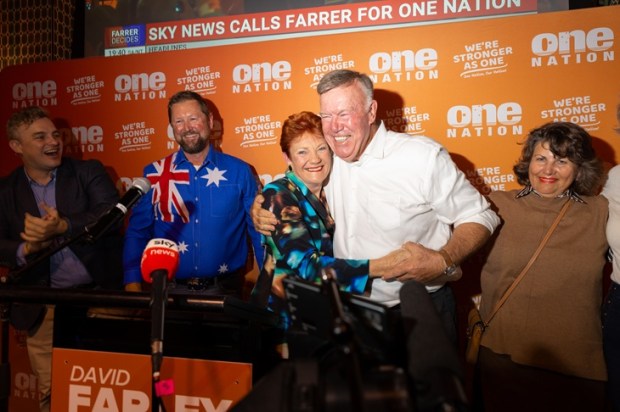
In the wake of Tickle v Giggle case, on September 12, One Nation’s Pauline Hanson moved a bill in the Senate to reinstate the definitions of ‘man’ and ‘woman’ in the federal Sex Discrimination Act (SDA). These definitions were repealed and replaced with ‘gender identity’ in 2013 by then (and current) Federal Attorney-General Mark Dreyfus. Hanson’s bill also sought to remove gender identity from the SDA.
Senator Hanson’s bill was defeated. While 32 voted ‘No’, 27 senators voted ‘Yes’. With this level of support, the issue is not going away. It can no longer be swept under the rug as the Greens, some independents, and Labor sought to do when they used their numbers to refuse the customary first reading of Hanson’s bill.
Between these two events, the British Office for National Statistics (ONS) had an embarrassing setback when it was forced to announce that its 2021 Census estimates of the number of transgender people in England and Wales had to be stripped of their accredited status. The ONS found that too many people misunderstood the 2021 Census question.
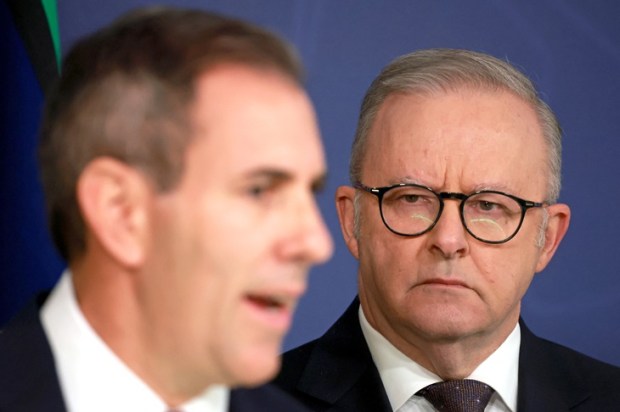
This should have been a warning to Prime Minister Anthony Albanese over controversial plans for the next Australian Census.
As the above events were unfolding, Albanese first announced that he was reneging on Labor’s election pledge to include questions about sexuality and gender in Australia’s 2026 Census, then backflipped under pressure, saying there would be one question ‘on sexuality’. Treasurer Jim Chalmers then announced that a new Census topic would canvass both sexual orientation and gender identity.
Just as there was confusion over the sex/gender question in the last British Census, there was equal confusion in Australia’s 2021 Census.
The following describes what has become of a mess of the Albanese government’s own making.
About the Census
The Census is a major activity of the Australian Bureau of Statistics and costs around $600 million. Over the years, the number of questions asked has grown like topsy.
Whereas the US Census is every ten years with only nine questions, the Australian Census is conducted every five years. The last, in 2021, had 65 comprehensive questions over 26 pages.
It is said that new questions on sexuality are needed to provide a profile and deliver health services based on the needs of transgender and LGBIQ people. But will the proposed question deliver anything useful?
2021 Census confusion over ‘non-binary’
The question on sex on the 2021 Census had three options – ‘Male, Female, Non-binary sex’ (non-binary means not male or female).
Reporting on the outcome, the ABS said the results from the non-binary sex category provided no usable data because ‘the concept of non-binary sex was not consistently understood and was perceived in different ways by different people’.
Of the 43,220 (0.17 per cent) who ticked the non-binary sex option:
- 10 per cent selected ‘Non-binary sex’, but at the same time said they were ‘Female’.
- 7 per cent selected ‘Non-binary sex’, but at the same time said they were ‘Male’.
- 83 per cent selected only non-binary sex.