The 2026 midterms were a referendum on Donald Trump. The verdict was not especially difficult to decipher.
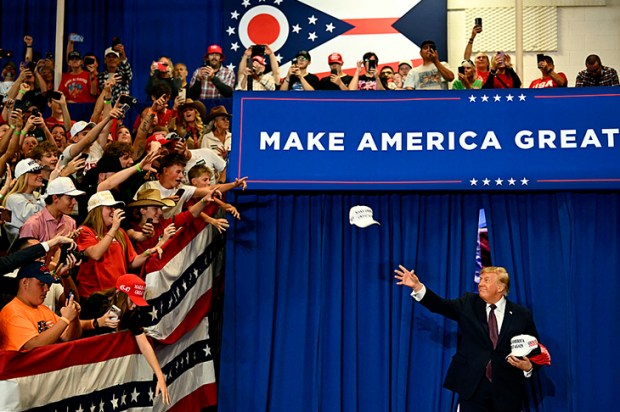
Two years earlier, young men had helped carry Trump back into the White House. In 2024, 56 per cent of men under 30 supported him. Conservative media celebrated their arrival as evidence of a generational realignment. The young were supposedly rejecting progressive orthodoxy, rediscovering masculinity, and marching steadily towards the Right.
By the midterms, they were nowhere to be seen.
Fifty-nine per cent of young men voted for Democratic House candidates. Young women went Democrat by 70 per cent. Overall, voters aged 18 to 29 broke 66 to 31 for the Democrats, producing a 35-point margin. One analysis put the leftward shift among young men at 38 points. Polling methods differ, but the direction does not. Trump’s youth revolution had lasted approximately as long as a TikTok trend.
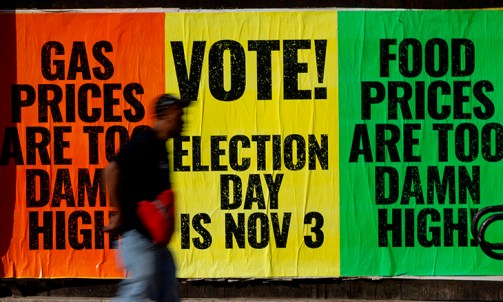
There were obvious reasons. Trump promised to end the forever wars and instead delivered a new one in Iran. He promised to bring prices down, yet young Americans remained unable to afford homes, groceries or, increasingly, adulthood. Allegations of corruption and self-enrichment made it harder to maintain the image of a populist fighting exclusively for the forgotten man. Draining the swamp began to look suspiciously like a renovation proposal.
All of that mattered. Midterms are usually referendums on the president, and this was a particularly emphatic one. But there is something larger at play.
The Right misunderstood Generation Z because it misunderstood what happened in 2024. It saw a generation rebelling against the Left and assumed it had embraced the Right. It mistook hostility to progressive orthodoxy for ideological conservatism. Most dangerously, it mistook a mood for a movement.
I have argued for some time that Generation Z’s apparent turn towards conservatism was never so straightforward. Young people were rediscovering religion, marriage, family, discipline, and physical fitness. That did not mean they had adopted a coherent conservative worldview.
A young man started lifting weights, listening to podcasts and saying he wanted children, and the Right assumed he had also developed firm views on marginal tax rates. It was an ambitious conclusion to draw from a protein shake.
What Gen Z was searching for was structure.
Millennials made virtue cheap and endlessly reproducible. Goodness could be displayed through pronouns, profile pictures, and whichever political cause had been uploaded that morning. Generation Z reached for things that were harder to fake. Religion demands observance. Fitness demands effort. Marriage demands commitment. Raising children demands nearly everything. Each provides stability and belonging in a culture of digital chaos and permanent insecurity.
For many young men, that search extended beyond the home, the church and the gym. It extended to the nation.
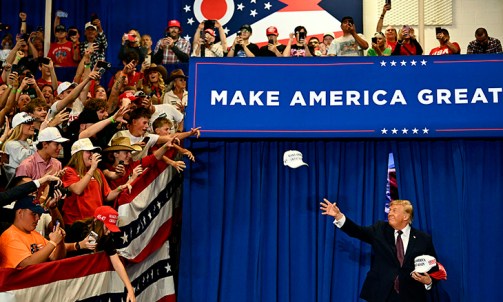
America First offered a political form of belonging. Patriotism gave them a history to inherit, a country to defend and obligations larger than themselves. MAGA supplied boundaries, loyalty and common purpose to a generation raised in an atomised culture that had spent years telling young men those instincts were embarrassing, dangerous or both.
This was more than a collection of Republican policies. It was a compact. America would place its citizens first, secure its borders, defend free speech and stop spending American lives and wealth on other nations’ wars. Trump was trusted as its guarantor.
That is why his failures cut so deeply. The war in Iran was not merely an unpopular foreign-policy decision. To the America First young men who had supported him, it looked like a betrayal of the movement’s organising principle. The man who promised an end to foreign entanglements had produced another one. Other promises stalled or disappeared, while rising prices made the promised national renewal feel increasingly remote.
The Right often treated criticism from these young men as disloyalty. But their loyalty was to America First before it was to Donald Trump. When the man departed from the promise, the loyalty departed from the man.
That does not mean these voters became progressive. A generation can reject language policing while supporting universal healthcare. It can value the traditional family while wanting government to make housing affordable. It can admire personal discipline while believing politicians, corporations and billionaires have rigged the economy against it.
The midterm figures reflect that combination. The economy and jobs were among the leading concerns of 52 per cent of young voters. Healthcare followed at 42 per cent, with the war in Iran at 27 per cent. Among those who said they were falling behind financially, 73 per cent voted Democrat. Those getting ahead divided almost evenly.
These voters are politically homeless, economically anxious and deeply suspicious of institutions. Trump attracted them because he appeared to offer disruption and national restoration. By 2026, he had begun to resemble another part of the establishment they wanted disrupted, only with more gold leaf.
Young men did not suddenly discover the Democratic Party. They issued Trump with a notice of breach.
Generation Z did not betray the Right, because it had never joined it as the Right imagined. If conservatives want to keep these voters, they must connect cultural stability and patriotic belonging with material possibility – and keep the promises on which that allegiance was built.
The lesson applies in Australia. A generation locked out of housing and wondering whether it will live as well as its parents cannot be won permanently through lectures about civilisation, however correct those lectures may be. Family means little as a political promise when nobody can afford the spare bedroom. Patriotism means little when national policy makes young citizens feel like strangers in their own inheritance.
The Right saw the rebellion, assumed it owned the rebels, and mistook a mood for a movement.