Much of the world’s attention remains fixed on the Middle East as the traditional heartland of violent Islamist extremism, or jihadism. Yet the geographical centre of jihadist violence has shifted dramatically towards sub-Saharan Africa. Across the Sahel, West Africa, Somalia, the Lake Chad Basin, Mozambique and the Democratic Republic of Congo, thousands die annually in armed insurgencies and terrorist campaigns.
Governments are struggling to control territory, people are being internally displaced or forced to flee as refugees, and Christian communities face a growing threat.
The collapse of Islamic State’s territorial caliphate in Iraq and Syria in 2019 did not eliminate its ideology or global agenda. Instead, jihadism became more geographically dispersed and increasingly rooted in Africa through regional affiliates. International jihadist ideology has attached itself to local grievances and exploited poorly governed territories, porous borders, corruption, ethnic conflict and criminal economies.
Africa’s extremists are not one unified force. They are often fierce rivals competing for territory, recruits, money and religious legitimacy. But the principal jihadist movements share important characteristics: rejection of secular political authority, legitimisation of armed struggle and an ambition to impose governments based on extremist interpretations of Islam. Their horizons extend far beyond Africa. Islamic State or Isis envisages a transnational caliphate. Al-Qaeda shares a revolutionary Islamist objective but has generally pursued a more gradual strategy of embedding itself within local populations before attempting to transform political systems.
The armed Islamist extremist threat in Africa comes overwhelmingly from Sunni jihadist organisations, particularly those affiliated with Islamic State and al-Qaeda. They include Jama’at Nusrat al-Islam wal-Muslimin (JNIM), aligned with al-Qaeda, Islamic State Sahel Province(ISSP), Islamic State West Africa Province (ISWAP), Boko Haram in Nigeria, al-Shabaab in Somalia, and Islamic State affiliates operating in the Democratic Republic of the Congo and Mozambique.
Yet jihadism is only one component of a broader Islamist landscape. The transnational Muslim Brotherhood, founded in Egypt in 1928, represents a substantially different tradition. Brotherhood-derived or influenced movements in Egypt, Sudan, Libya and Tunisia have generally emphasised gradual political and social transformation rather than revolutionary warfare.
The Brotherhood nevertheless has a complicated historical relationship with violence, and the writings of Brotherhood ideologue Sayyid Qutb profoundly influenced the development of later jihadist ideology. There is also a smaller Shia Islamist extremist dimension, particularly involving Iran and Hezbollah. Iran-backed Hezbollah spans political, military and social structures alongside international financial and operational networks.
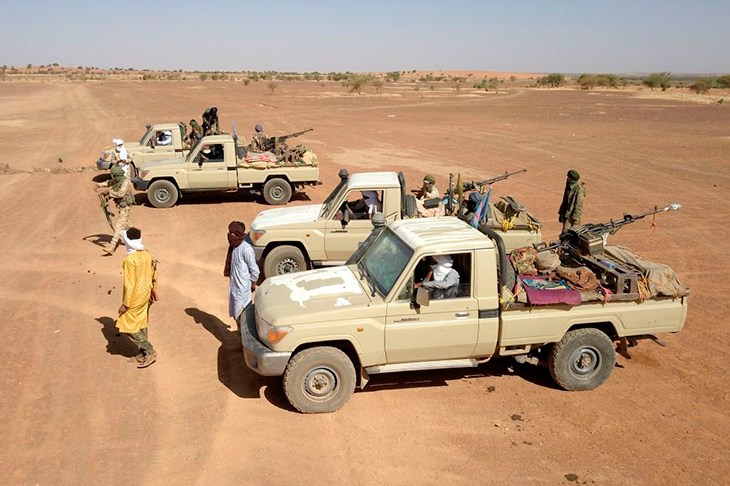
The Sahel, a vast semi-arid belt south of the Sahara, has become a particularly important breeding ground for jihadi insurgencies. Mali, Burkina Faso, Niger and neighbouring countries in the Sahel contain enormous territories where government authority is often weak. JNIM demonstrates the danger. It does not rely exclusively on spectacular terrorist attacks but combines insurgency with efforts to gain influence and control in local populations. The danger is therefore no longer simply terrorism. It is the potential emergence of durable extremist systems of authority where legitimate government has weakened or disappeared.
One disturbing consequence is the escalating persecution of Christians. The US Commission on International Religious Freedom reports serious, ongoing violations, particularly in Nigeria and Central Africa. Nigeria is facing a ‘terrifying crisis of religious violence’.
Boko Haram and ISWAP have attacked churches. Women and girls have been abducted and clergy and worshippers targeted. Armed Fulani herdsmen have also carried out devastating attacks that can involve religious and ethnic hostility, criminality, and land and farming disputes.
Nor are Christians the only victims. Islamic State and al-Qaeda affiliates kill Muslim political leaders, soldiers, religious figures and civilians they regard as apostates, collaborators or obstacles to their authority.
The first international danger posed by African jihadism is the emergence of extremist sanctuaries. African jihadists do not need to recreate the Syrian-Iraqi caliphate. Even partially governed territories can provide bases for recruitment, funding and training.
The second danger is digital. Physical distance matters less when extremist propaganda produced in Somalia, Nigeria or the Sahel can reach potential supporters in Europe, North America, Southeast Asia or Australia almost instantaneously.
The third is state collapse and regional contagion. Jihadist expansion from Mali, Burkina Faso and Niger towards coastal West Africa threatens countries previously less affected by Sahel insurgencies.
The fourth is organised crime and terrorist financing. Kidnapping, extortion, smuggling and illicit taxation provide revenue and connect insurgencies with wider criminal networks.
For Australia, Africa can appear distant. Modern terrorism demonstrates otherwise. Southeast Asia provides a warning. In the Philippines, Islamic State-linked jihadis seized parts of Marawi, triggering a five-month urban battle in 2017. Australia itself has experienced jihadist-inspired terrorism and citizens travelling overseas to join terrorist organisations.
There is a direct African connection as well. Wissam Fattal, Saney Aweys and Nayef El Sayed with ties to al-Shabaab were convicted of planning a terrorist attack against the Holsworthy army base near Sydney in 2009. Yacqub Khayre, who had allegedly trained with al-Shabaab, was also charged but acquitted. He later carried out Melbourne’s 2017 Brighton siege, killing a man, taking a woman hostage and wounding three police officers before police shot him dead.
Australia’s national terrorism threat level remains probable. Asio has warned that more Australians are being radicalised, and more rapidly. The internet and social media play a central role, and encryption impedes investigations.
Australia’s mining and commercial connections with Africa create another vulnerability, as foreign nationals, mining operations and business personnel are exposed to kidnapping and terrorism especially in the Sahel.
Africa’s significance lies in the dangerous convergence of extremist Islamist ideology with dysfunctional government, corruption, crime and ethnic conflicts.
This does not mean Africa is uniformly extremist or that Islam itself is responsible. Millions of African Muslims reject jihadism, and Muslims are among its principal victims.
The destruction of Islamic State’s Middle Eastern caliphate demonstrated a broader lesson. Destroying territory does not necessarily eradicate an ideology. Jihadism adapted and found new environments in which to operate.
The danger is not that jihadist armies from the Sahel are about to march on Europe, America or Australia. Rather, poorly governed territories provide fertile ground for extremist movements to entrench themselves locally while extending their ideology, networks and influence worldwide.
Africa is now at the centre of jihadist violence, but the threat remains global.
Got something to add? Join the discussion and comment below.
You might disagree with half of it, but you’ll enjoy reading all of it. Try your first month for free, then just $2 a week for the remainder of your first year.