Last week on the Irish border, gardaí intercepted a car carrying a viable explosive device containing military-grade explosives, a detonator and a timing unit. The driver, 25-year-old law student Isobella Perrie Sullivan from County Kildare, was charged with possession of explosives.
A second man, 44-year-old Simon O’Donovan, a facilities manager at the National Museum of Ireland’s Collins Barracks in Dublin, was later charged with the same offence. The court heard that he is alleged to have stored the device at the museum itself. Sullivan’s lawyers have said that she was asked to take a bag to Northern Ireland and had not been aware of what was in it. O’Donovan has not yet obtained formal legal representation.
The middle-class young seek transcendence in a mass movement that demands total commitment
This recent case has again potentially highlighted a pattern that is becoming harder to ignore: the recruitment of young, middle-class, educated people – women as readily as men – into networks that can shade into support for political violence. Neither of those charged fits the old stereotype of the hardened street radical. One is a university-educated law student studying for the Bar; the other holds a steady public sector cultural job.
The day after the interception, Princess Anne was in County Fermanagh on a commemorative and military-linked visit that included RAF cadets, war graves and a veterans’ centre. The timing has not been publicly connected to the arrests, but it is a concerning coincidence.
We talk endlessly about the online radicalisation of young men through religion or grievance. We pay far less attention to how anti-imperialist and social justice networks now draw in young women with a clean binary story: the oppressed versus the oppressors. It is Manichean, simple and emotionally satisfying. It offers purpose and belonging at a moment when the promises of education and home ownership feel out of reach for many.
I know something of how such narratives work. My father was Sean O’Callaghan. He came from a deeply republican family, his father and grandfather before him in the IRA, and joined at 15. He planted bombs, robbed banks and killed before eventually turning against the organisation, working with the gardaí and British authorities and spending the rest of his life trying to atone.
Irish republicanism of the physical force variety has long been transmitted through family, ballads and the simplifying story of 800 years of English oppression. The narrative can lie dormant for a generation, then revive when conditions are right. Yet the same simplifying story finds new purchase in a society that, while richer, still leaves many of its educated young feeling short-changed. Ireland is far wealthier than it was 20 or even 10 years ago, yet housing, immigration and questions of national identity remain acute. A younger, educated cohort with high expectations finds those expectations unmet. Those who recruit for extremist causes have always known how to exploit such frustration. Dissident republicanism has, in many ways, been the original template.
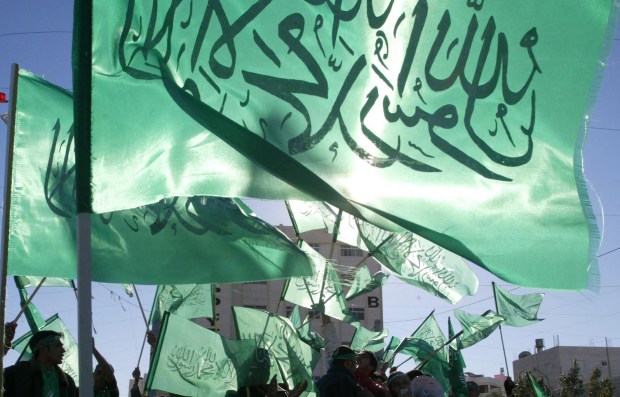
The soft handling in parts of the Irish media and political class of Hamas’s atrocities against Israel, the blurring of ‘resistance’ with terrorism, and the residual tolerance for ‘ooh ah up the Ra’ culture have helped merge the old republican story with a new global anti-imperialist one. Young people are raised on a sanitised version of the Troubles in which the provisional IRA appears as a group of uncomplicated freedom fighters rather than an organisation whose campaign of murdering Protestant civilians, farmers and shopkeepers was detested by the large majority in the Republic. That history has been rewritten. The result is the post-Troubles generation has been offered a black-and-white morality play with no room for grey.
This is not new. It is the bourgeoisie cell that the social philosopher Eric Hoffer described in his book The True Believer: the middle-class young, educated and relatively privileged, who experience their lives as somehow unfulfilled and seek transcendence in a mass movement that demands total commitment. The German far-left militant Baader-Meinhof group demonstrated the same psychology in practice.
Today’s version is smaller and heavily penetrated by informants, but the underlying appeal remains. The new IRA is not a large or particularly capable organisation. Its real threat lies in the combination of online radicalisation and the vulnerability of modern infrastructure. Undersea cables carrying global data traffic land in Ireland; physical sites are rarely hardened to the degree they should be. A single successful attack could inflict economic and strategic damage far beyond the scale of traditional bombings. In a polarised political climate, the old slogan that England’s difficulty is Ireland’s opportunity retains a dangerous appeal.
The bomb in that car was serious and we must await the conclusion of the criminal process. More serious still is the radicalisation of educated, middle-class young men and women who come to believe that political violence is a path to meaning, and to a line in some future republican dirge of a ballad. That belief is as sad as it is lethal.