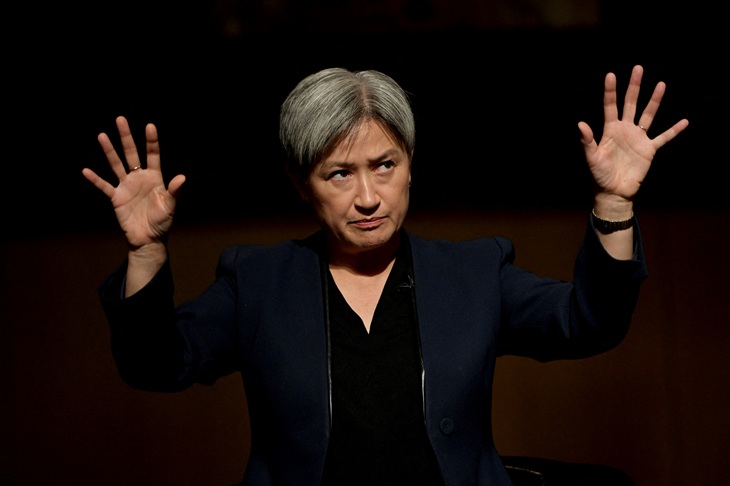
Foreign Minister Penny Wong insists Australia’s foreign policy is guided by international law, moderation, and the pursuit of peace.
Yet the actions of the Labor government, in my opinion, tell a different story.
Time and again, Australia rewards Palestinian leadership while demanding ever greater concessions from Israel. The latest example is Canberra’s decision to provide a further $25 million to the Palestinian Authority.
At face value, it sounds like humanitarian assistance. But it raises an obvious question: Why does Australia continue to deepen its financial commitment to a Palestinian leadership that has repeatedly failed to meet the obligations it accepted under the Oslo Accords?
The Oslo process was never intended to be a one-sided agreement. It required the Palestinian Authority to combat terrorism, prevent incitement, and maintain security arrangements designed to build confidence between Israelis and Palestinians. Yet decades later, armed groups continue to operate throughout Judea and Samaria, terrorist incitement remains embedded within Palestinian society, and the dream of peaceful coexistence has become ever more distant.
None of this appears to trouble Australia’s Labor government. Instead, it continues to reward failure.
The pattern became unmistakable after October 7.
While Israel was still identifying the bodies of more than 1,200 murdered civilians and soldiers, and while more than 250 hostages had been dragged into Gaza, Labor hurried to reassure Palestinian Authority President Mahmoud Abbas of Australia’s continued support, announcing additional funding for the Palestinian Authority.
On that same trip, our Foreign Minister failed to visit the sites of the October 7 massacre or meet with the family of Galit Carbone, the only Australian murdered on that fateful day.
These events took place as serious international questions were emerging about the extent to which aid entering Gaza was vulnerable to diversion by Hamas and evidence that several UNRWA employees had allegedly participated in the October 7 atrocities. Australia eventually paused funding before restoring it, but the government’s instinct was never one of caution. It was one of confidence.
That instinct has been remarkably consistent.
When Hamas or the Hamas-controlled Gaza Health Ministry publishes allegations against Israel, Australia is often among the first Western nation to respond.
Yet when those allegations collapse under scrutiny, the outrage disappears. We hear nothing but crickets.
The Al-Ahli Hospital explosion remains the clearest example. Initial reports blamed Israel and claimed hundreds had been killed. Governments, media outlets, and international organisations reacted immediately. Subsequent investigations concluded the explosion was most likely caused by a misfired Palestinian Islamic Jihad rocket and that the death toll was far lower than first alleged.
The original accusation travelled around the world.
The correction barely left the station.
Australian Jews understand why this matters.
Every time false or exaggerated allegations against Israel are amplified by governments and their leaders, they legitimise hostility towards the Jewish state. That hostility does not remain confined to the Middle East. It finds its way onto Australian streets, university campuses, schools, and outside synagogues.
Words spoken in Canberra have consequences.
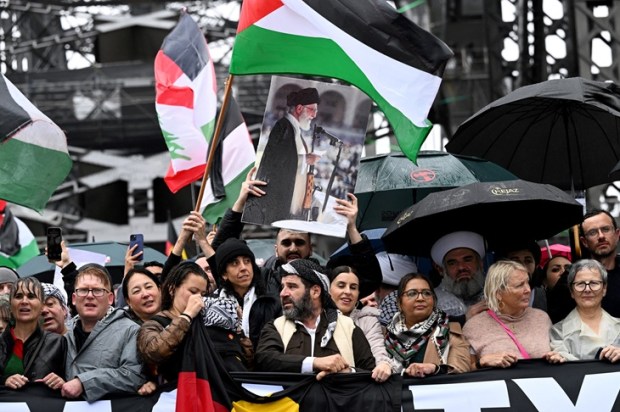
Australia’s Jewish community has endured the worst wave of antisemitism in living memory since October 7. Fire bombings, vandalism, threats, intimidation, and public demonstrations glorifying terrorist organisations have left many Jews questioning whether their government truly understands the scale of the problem – or whether it simply tolerates it.
Yet when Australian Jews needed principled leadership, Penny Wong’s voice was consistently absent.
The contrast is difficult to ignore.
Israeli visitors to Australia can face extensive scrutiny because of compulsory military service or perceived political associations. Yet Australians have repeatedly watched controversies involving extremist preachers, individuals with alleged Islamist sympathies, and even debates surrounding ISIS-linked Australians and Gazans taught to hate, imported into Australia.
The impression is of a government applying extraordinary caution to citizens of the Middle East’s only liberal democracy while showing remarkable confidence that those associated with Islamist extremism present little threat.
Whether that perception is entirely fair is almost beside the point. It is increasingly the perception held by many Australians.
The Labor government insists it is not antisemitic. Its action, however, sometimes raise an uncomfortable question.
At what point does relentless hostility towards the world’s only Jewish state become indistinguishable from prejudice against the Jewish people?
Anti-Zionism is often defended as merely criticism of Israeli government policy. Genuine criticism of any democracy is entirely legitimate. But when Israel alone is judged by standards applied to no other nation; when terrorist organisations are granted the benefit of every doubt while Israel is denied even the presumption of self-defence; when Palestinian leadership is rewarded regardless of its failures; and when narratives originating with Hamas are amplified before the evidence is known, anti-Zionism becomes something far more troubling.
It ceases to be about policy.
It becomes discrimination through double standards.
None of this advances peace. Rewarding a naughty child never teaches them to behave, does it?
Rewarding Palestinian leaders irrespective of whether they confront terrorism, end incitement, or honour their own agreements teaches precisely the wrong lesson. It tells them that international support is unconditional and that responsibility lies almost exclusively with Israel.
That is not diplomacy.
It is appeasement.
It is the sort of thing that leaves Australians wondering why chants of ‘F*** the Jews’ on the steps of the Sydney Opera House passed without meaningful consequence.
Labor must remember that its first responsibility is not to Ramallah. It is to Australians.
That means ensuring Australia’s foreign policy does not embolden those who glorify terrorism abroad, nor import the consequences of those conflicts onto Australian streets. Since October 7, Australia’s Jewish community has experienced an unprecedented wave of intimidation and antisemitism. Foreign policy cannot be divorced from domestic consequences. When inflammatory narratives are repeated before the facts are known, and organisations and leaders with troubling records continue to receive political legitimacy and financial support, Australians pay the price.
A government and its ministers’ foremost duty is to protect Australia’s interests and Australia’s people.
Too many Australians, particularly Australian Jews, no longer believe that duty is being fulfilled.